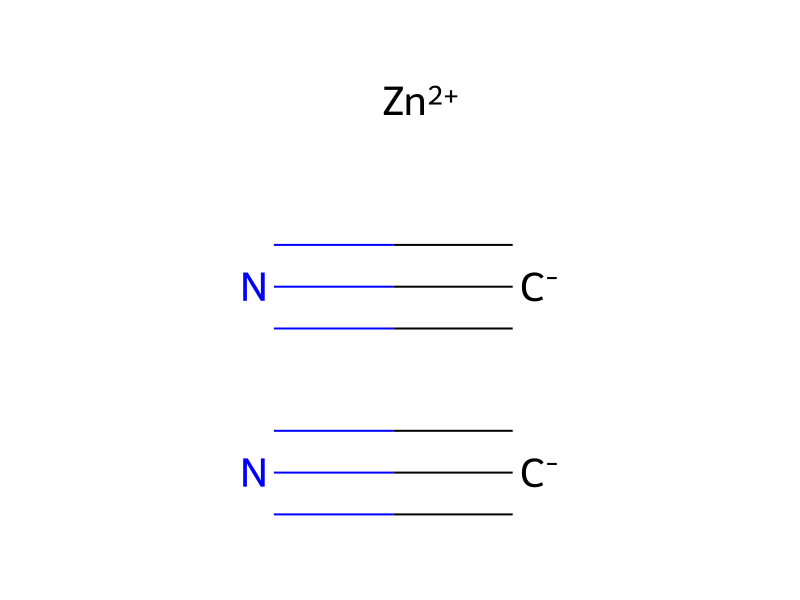
Br[C:2]1[CH:10]=[CH:9][CH:8]=[C:7]2[C:3]=1[CH:4]=[N:5][NH:6]2.[CH3:11][N:12]1CCCC1=O>[C-]#N.[Zn+2].[C-]#N.C1C=CC([P]([Pd]([P](C2C=CC=CC=2)(C2C=CC=CC=2)C2C=CC=CC=2)([P](C2C=CC=CC=2)(C2C=CC=CC=2)C2C=CC=CC=2)[P](C2C=CC=CC=2)(C2C=CC=CC=2)C2C=CC=CC=2)(C2C=CC=CC=2)C2C=CC=CC=2)=CC=1>[C:11]([C:2]1[CH:10]=[CH:9][CH:8]=[C:7]2[C:3]=1[CH:4]=[N:5][NH:6]2)#[N:12]4-Bromoindazole (1.0 g, Judkins et al., WO 9641803) and zinc cyanide (0.6 g) were added to N-methylpyrrolidinone (12.5 ml) and placed under an argon atmosphere. To this mixture was added tetrakis(triphenylphosphine)palladium(0) (0.88 g) and the reaction was heated to 85° C. overnight. The reaction mixture was cooled and partitioned between ethyl acetate and water, the organic layer was washed with brine, dried (MgSO4), and evaporated to dryness. The product was purified by chromatography on silica gel using ethyl acetate-dichloromethane (5:95) as the eluting solvent to afford 0.581 g pure 4-cyanoindazole.