Reaction equation
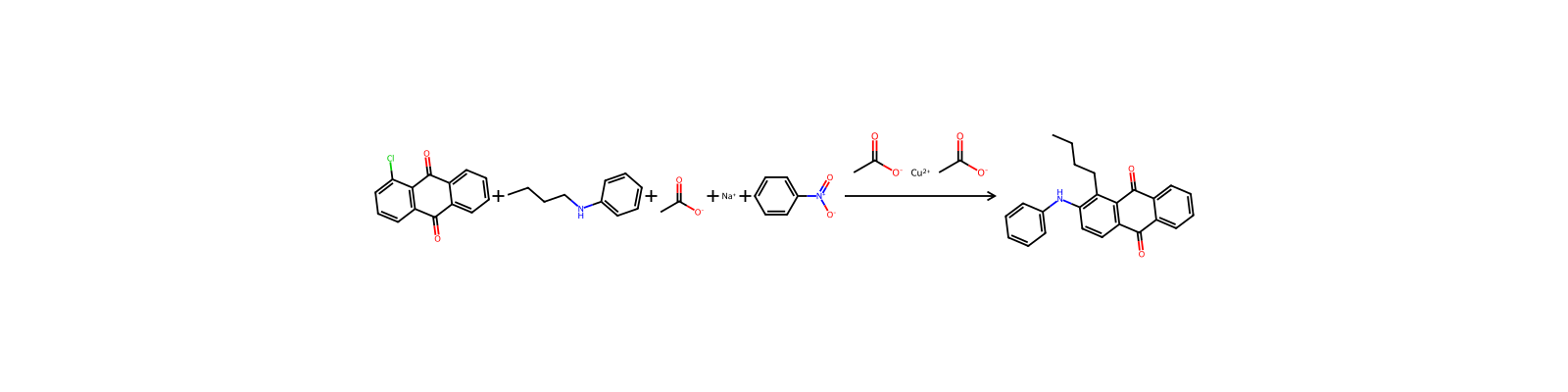
Cl[C:2]1[C:15]2[C:14](=[O:16])[C:13]3[C:8](=[CH:9][CH:10]=[CH:11][CH:12]=3)[C:7](=[O:17])[C:6]=2[CH:5]=[CH:4][CH:3]=1.C([NH:22][C:23]1[CH:28]=[CH:27][CH:26]=[CH:25][CH:24]=1)CCC.C([O-])(=O)C.[Na+].[N+]([C:37]1[CH:42]=CC=[CH:39][CH:38]=1)([O-])=O>C([O-])(=O)C.[Cu+2].C([O-])(=O)C>[CH2:42]([C:2]1[C:15]2[C:14](=[O:16])[C:13]3[C:8](=[CH:9][CH:10]=[CH:11][CH:12]=3)[C:7](=[O:17])[C:6]=2[CH:5]=[CH:4][C:3]=1[NH:22][C:23]1[CH:28]=[CH:27][CH:26]=[CH:25][CH:24]=1)[CH2:37][CH2:38][CH3:39]Participants
6
Reactant 4



Product 1

Reagents, catalysts & solvents 1

Procedure
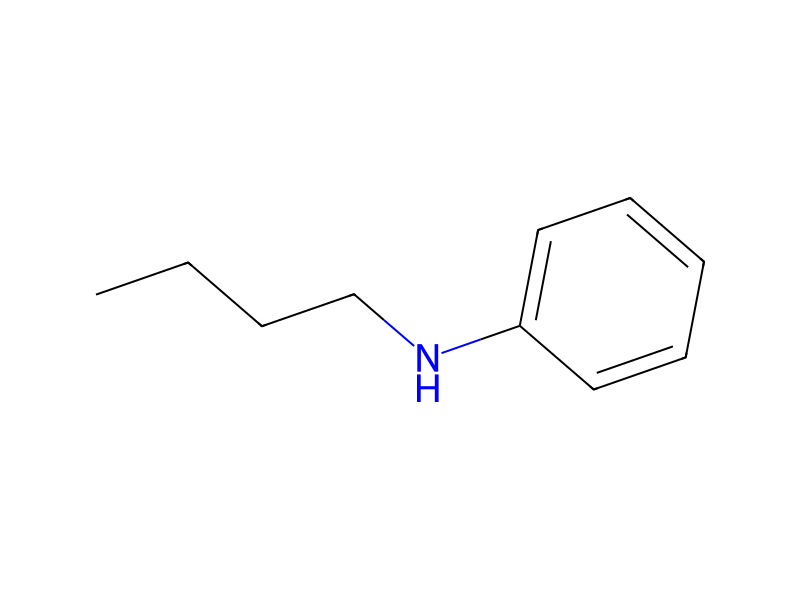
The pleochroic dye 1-butylphenylamino anthraquinone was prepared by dissolving 1-chloroanthraquinone in a 10-fold excess of 4-n butylaniline. Copper acetate and sodium acetate were added as in Example 70. Since the n-butylaniline is a solvent in this case no nitrobenzene was added. The dye, when tested as in Example 70, had an absorption maxima at 515 nm and an order parameter of 0.65.
Workup
- additionwas added
Sources & evidence
- ORD record
- ord-ca152b54d7c748e2af8679ae4be944b8
- Source dataset
- uspto-grants-1987_10
- Patent number
- US04702561
Linked notes
Loading…