Reaction equation

[C:1]([O-:4])(=[O:3])[CH3:2].[Ba+2:5].[C:6]([O-:9])(=[O:8])[CH3:7].[S:10]([O-:14])([O-:13])(=[O:12])=[O:11].[Na+:15].[Na+].Cl>O>[C:1]([O-:4])(=[O:3])[CH3:2].[Ba+2:5].[C:6]([O-:9])(=[O:8])[CH3:7].[S:10]([O-:14])([O-:13])(=[O:12])=[O:11].[Na+:15].[Na+:15].[S:10]([O-:14])([O-:13])(=[O:12])=[O:11].[Ba+2:5]Participants
7
Reactant 3


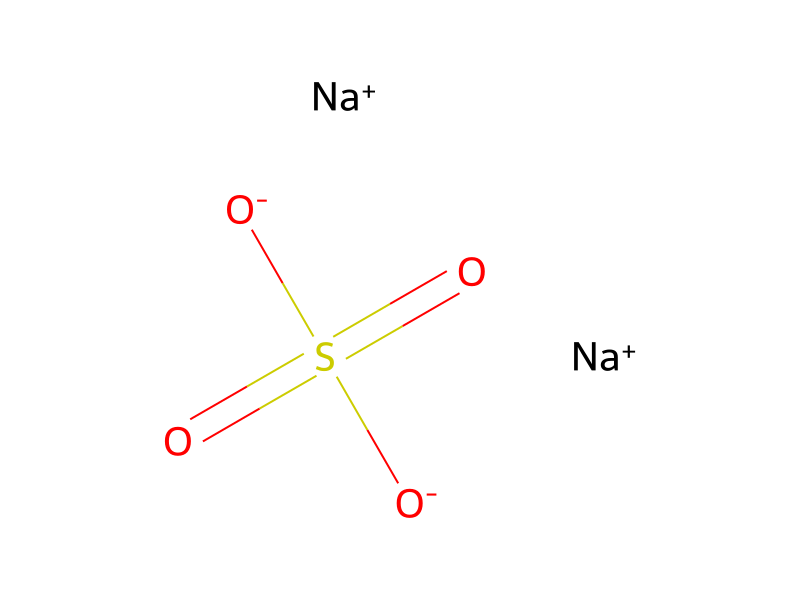
Product 3

Reagents, catalysts & solvents 1

Conditions
- Temperature
- 85 °C
Procedure
Aqueous solutions of barium acetate (0.02 mol/1) and sodium sulfate (0.02mol/1) were prepared by dissolving 11.043 gm of barium acetate (special reagent grade) and 2.926 gm of sodium sulfate (special reagent grade) into 2,000 gm of ion-exchanged water. The two solutions were heated at 85° C. and mixed together. The mixture was adjusted to pH 3.0 by an addition of 5.3 cc of concentrated hydrochloric acid, followed by the reaction in the same manner as in Example 1 to obtain 6.53 gm of barium sulfate powder.
Workup
- additionmixed together
- customfollowed by the reaction in the same manner as in Example 1
Sources & evidence
- ORD record
- ord-066364e169674af7827d486123c53a44
- Source dataset
- uspto-grants-1993_11
- Patent number
- US05262148
Linked notes
Loading…