Reaction equation

N1C=CC=CC=1.Cl[C:8]([O:10][CH2:11][Cl:12])=[O:9].[C:13]([O:17][CH2:18][CH2:19][CH2:20][CH2:21][OH:22])(=[O:16])[CH:14]=[CH2:15]>ClCCl>[C:8](=[O:9])([O:22][CH2:21][CH2:20][CH2:19][CH2:18][O:17][C:13](=[O:16])[CH:14]=[CH2:15])[O:10][CH2:11][Cl:12]Participants
Reactant 3


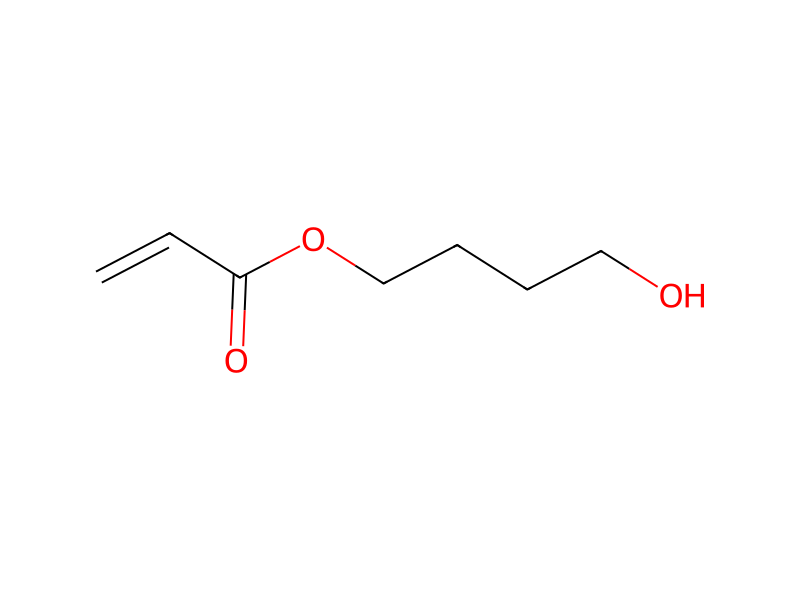
Product 1

Reagents, catalysts & solvents 1

Procedure
Pyridine (0.89 ml, 11.00 mmol) is added dropwise to a solution of chloromethyl chloroformate (0.98 ml, 11.00 mmol) and 4-hydroxybutyl acrylate (1.38 ml, 10.00 mmol) in dichloromethane (12 ml) at 3° C. under a dry N2 atmosphere. After 15 min. at 3° C. and 17 hours at 20° C. the reaction mixture is transferred to a separating funnel with the aid of dichloromethane (10 ml). The reaction mixture is washed with hydrochloric acid (1.00 M, 10 ml), saturated aqueous sodium hydrogen carbonate (10 ml) and water (2×10 ml). The organic phase is dried (MgSO4) and the solvent evaporated under reduced pressure to give 1.76 g (74%) of the title product. 1H NMR (60 MHz, CDCl3): δ 1.82 (4 H, m, CH2 --CH2), 4.27 (4 H, m, 2×CH2 --O), 5.77 (2 H, s, Cl--CH2 --O), 5.8-6.7 (3 H, m, CH=CH2).
Workup
- washThe reaction mixture is washed with hydrochloric acid (1.00 M, 10 ml), saturated aqueous sodium hydrogen carbonate (10 ml) and water (2×10 ml)
- dry with materialThe organic phase is dried (MgSO4)
- customthe solvent evaporated under reduced pressure
Sources & evidence
- ORD record
- ord-67a0952df54046a3b95ef10ea3b9243a
- Source dataset
- uspto-grants-1996_06
- Patent number
- US05529766
Linked notes
Loading…