HomeMCPWorkbenchSkills
HomeWorkbenchNotificationsMe
llms.txt · MCP GuidePrivacy Policy · Terms of Service · Supportv1.8.3
  1. Home
  2. /Reaction

Hydrochloric Acid → 3-tert-butyl 1,2-diethyl (1S,2R)-1-hydroxy-1,2,3-propanetricarboxylate

HRID 263687
Print

Reaction equation

HRID 263687 reaction equation
C([Li])CCC.C(NC(C)C)(C)C.[C:13]([O:23][CH2:24][CH3:25])(=[O:22])[C@H:14]([CH2:16][C:17]([O:19][CH2:20][CH3:21])=[O:18])[OH:15].Br[CH2:27][C:28]([O:30][C:31]([CH3:34])([CH3:33])[CH3:32])=[O:29].Cl>O1CCCC1.CN(C)P(=O)(N(C)C)N(C)C.CCCCCC>[OH:15][C@H:14]([C:13]([O:23][CH2:24][CH3:25])=[O:22])[C@H:16]([C:17]([O:19][CH2:20][CH3:21])=[O:18])[CH2:27][C:28]([O:30][C:31]([CH3:34])([CH3:33])[CH3:32])=[O:29]
ParticipantsConditionsProcedureWorkupSources & evidenceReaction notes

Participants

9

Reactant 5

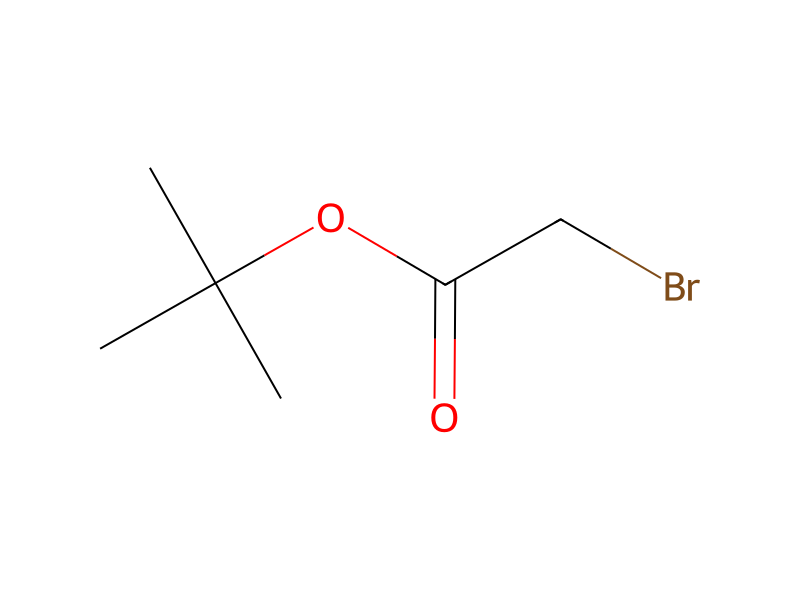
HCID 313Hydrochloric AcidHCID 7912DiisopropylamineHCID 79177tert-Butyl bromoacetateHCID 1715085Diethyl L-malateHCID 178418339Butyllithium

Product 1

HCID 867510353-tert-butyl 1,2-diethyl (1S,2R)-1-hydroxy-1,2,3-propanetricarboxylate
Yield 49.1%

Reagents, catalysts & solvents 3

HCID 8028TetrahydrofuranSolvent3×HCID 8058HexaneSolventHCID 12679HexamethylphosphoramideSolvent

Conditions

Temperature
-78 °C

Procedure

31 ml of a 1.69M hexane solution of n-butyl lithium was dissolved in 30 ml of tetrahydrofuran, and 7.1 ml of diisopropylamine was added under cooling with ice, followed by stirring at the same temperature for 30 minutes. Then, the mixture was cooled to -78° C. 20 ml of a tetrahydrofuran solution containing 4.94 g of diethyl (S)-malate was dropwise added at a temperature of not higher than -50° C., followed by stirring at -20° C. for 1.5 hours. The reaction solution was cooled to -78° C., and 20 ml of a tetrahydrofuran solution containing 5.58 g of tert-butyl bromoacetate and 4.66 g of hexamethylphosphoric triamide was dropwise added thereto at a temperature of not higher than -50° C., followed by stirring at room temperature for one hour. The reaction solution was poured into 150 ml of 0.5N hydrochloric acid and extracted with diethyl ether. Then, the organic layer was washed with a saturated sodium hydrogencarbonate aqueous solution and a saturated sodium chloride aqueous solution and then dried over anhydrous magnesium sulfate. The drying agent was filtered off, and then, the solvent was distilled off under reduced pressure. The residue was purified by silica gel column chromatography (hexane/ethyl acetate=5/1→4/1) to obtain 3.88 g of the above-identified compound as yellow oily substance.


Workup

  1. temperatureunder cooling with ice
  2. additionwas dropwise added at a temperature of not higher than -50° C.
  3. stirringby stirring at -20° C. for 1.5 hours
  4. temperatureThe reaction solution was cooled to -78° C.
  5. additionwas dropwise added
  6. customhigher than -50° C.
  7. stirringby stirring at room temperature for one hour
  8. extractionextracted with diethyl ether
  9. washThen, the organic layer was washed with a saturated sodium hydrogencarbonate aqueous solution
  10. dry with materiala saturated sodium chloride aqueous solution and then dried over anhydrous magnesium sulfate
  11. filtrationThe drying agent was filtered off
  12. distillationthe solvent was distilled off under reduced pressure
  13. customThe residue was purified by silica gel column chromatography (hexane/ethyl acetate=5/1→4/1)

Sources & evidence

ORD record
ord-003e7bad726047af82dfb73961dba0ea
Source dataset
uspto-grants-1997_07
DOI
10.6084/m9.figshare.5104873.v1
Patent number
US05643958

Reaction notes

On this pageParticipantsConditionsProcedureWorkupSources & evidenceReaction notes