HomeMCPWorkbenchSkills
HomeWorkbenchNotificationsMe
llms.txt · MCP GuidePrivacy Policy · Terms of Service · Supportv1.8.3
  1. Home
  2. /Reaction

Hydrochloric Acid → 4-Bromo-6-fluoro-2-methyl-2,3-dihydro-1H-inden-1-one

HRID 269463
Print

Reaction equation

HRID 269463 reaction equation
[CH3:1][CH:2]([C:8](OCC)=O)[C:3]([O:5]CC)=O.[Br:13][C:14]1[CH:19]=[C:18]([F:20])[CH:17]=[CH:16][C:15]=1CBr.[OH-].[K+].Cl.O=S(Cl)Cl.[Al+3].[Cl-].[Cl-].[Cl-]>C(O)C.O.ClCCl>[Br:13][C:14]1[CH:19]=[C:18]([F:20])[CH:17]=[C:16]2[C:15]=1[CH2:8][CH:2]([CH3:1])[C:3]2=[O:5]
ParticipantsProcedureWorkupSources & evidenceReaction notes

Participants

10

Reactant 6

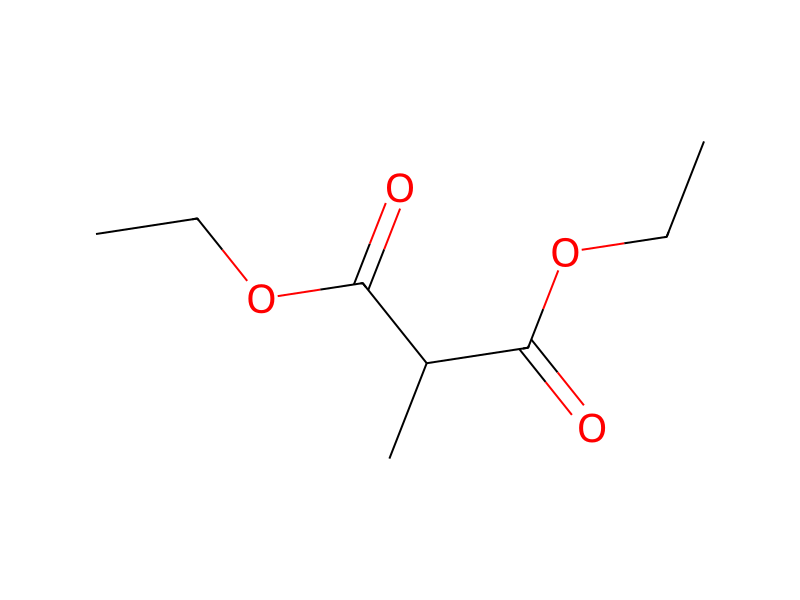
HCID 313Hydrochloric Acid2×HCID 11857Diethyl methylmalonateHCID 14797Potassium HydroxideHCID 24386Thionyl ChlorideHCID 6451240Aluminum(III) ChlorideHCID 107069772-Bromo-1-(bromomethyl)-4-fluorobenzene

Product 1

HCID 22172872
4-Bromo-6-fluoro-2-methyl-2,3-dihydro-1H-inden-1-one

Reagents, catalysts & solvents 3

HCID 702EthanolSolvent2×HCID 962WaterSolventHCID 6344DichloromethaneSolvent

Procedure

To a solution of sodium ethoxide in ethanol obtained from 5.95 g (0.26 mmol) of sodium and 200 ml of anhydrous ethanol, a solution of 45.1 g (0.26 mmol) of diethyl methylmalonate in 200 ml of ethanol was added dropwise, while vigorously stirring, over 15 min. Then, 64.3 g (0.24 mmol) of 2-bromo-1-(bromomethyl)-4-fluorobenzene in 50 ml of ethanol was added dropwise with such a rate, so the reaction mixture would be slowly refluxing. The resulting mixture was additionally refluxed for 4 h, then cooled to room temperature, and a solution of 51.8 g of potassium hydroxide in 150 ml of water was added. This mixture was refluxed for 3 h, and then ethanol was distilled off at atmospheric pressure. The solution obtained was cooled to ambient temperature and acidified by saturated hydrochloric acid to pH 1. The precipitate formed was filtered off, washed with 2×150 ml of cold water, and dried in air. The dibacic acid obtained was then dehcarboxylated by heating it at 160° C. for 2 h. To the viscous oil obtained, 60 ml of SOCl2 was added, and the resulting mixture was stirred for 24 h at room temperature. The excess of SOCl2 was distilled off, and the residue was dissolved in 200 ml of anhydrous dichloromethane. The solution obtained was added dropwise to a suspension of 37.7 g (0.28 mmol) of AlCl3 in 800 ml of dichloromethane for 1 h at 0° C. The reaction mixture was refluxed for 3 h, then cooled to room temperature, poured on 300 cm3 of ice, and finally acidified by saturated HCl to pH 3. The organic layer was separated, and the aqueous layer was washed with 3×200 ml of methyl-tert-butyl ether. The combined organic fractions were dried over K2CO3 and then evaporated to dryness. The title product was isolated using flash chromatography (d 50 mm, l 800 mm, eluent: hexanes-CH2Cl2, 2:1, vol.). Yield 47.3 g (81%).


Workup

  1. temperatureso the reaction mixture would be slowly refluxing
  2. temperatureThe resulting mixture was additionally refluxed for 4 h
  3. temperatureThis mixture was refluxed for 3 h
  4. distillationethanol was distilled off at atmospheric pressure
  5. customThe solution obtained
  6. temperaturewas cooled to ambient temperature
  7. customThe precipitate formed
  8. filtrationwas filtered off
  9. washwashed with 2×150 ml of cold water
  10. customdried in air
  11. customThe dibacic acid obtained
  12. temperatureby heating it at 160° C. for 2 h
  13. customTo the viscous oil obtained
  14. stirringthe resulting mixture was stirred for 24 h at room temperature
  15. distillationThe excess of SOCl2 was distilled off
  16. dissolutionthe residue was dissolved in 200 ml of anhydrous dichloromethane
  17. customThe solution obtained
  18. temperatureThe reaction mixture was refluxed for 3 h
  19. temperaturecooled to room temperature
  20. customThe organic layer was separated
  21. washthe aqueous layer was washed with 3×200 ml of methyl-tert-butyl ether
  22. dry with materialThe combined organic fractions were dried over K2CO3
  23. customevaporated to dryness

Sources & evidence

ORD record
ord-280f207c7cc046fbb0a11daf9fed5615
Source dataset
uspto-grants-2008_11
DOI
10.6084/m9.figshare.5104873.v1
Patent number
US07446216B2

Reaction notes

On this pageParticipantsProcedureWorkupSources & evidenceReaction notes