Reaction equation

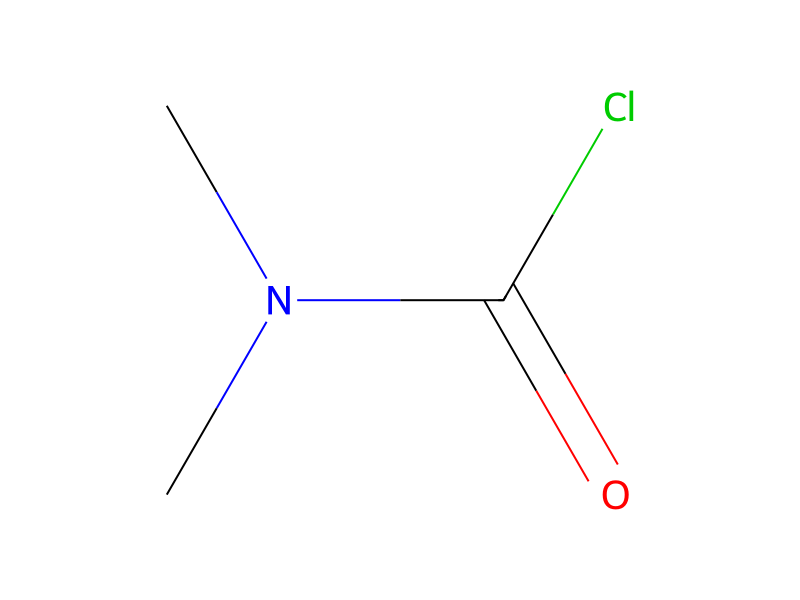
O1CCOCC1.[C:7]([C:9]1[N:10]=[CH:11][NH:12][C:13]=1[C:14]#[N:15])#[N:8].C(N(CC)CC)C.[CH3:23][N:24]([CH3:28])[C:25](Cl)=[O:26]>>[CH3:23][N:24]([CH3:28])[C:25]([N:10]1[C:9]([C:7]#[N:8])=[C:13]([C:14]#[N:15])[N:12]=[CH:11]1)=[O:26]Participants
5




Procedure
To 50 ml of dry 1,4-dioxane 6.0 g (0.05 mole) of 4,5-dicyanoimidazole, 5.0 g (0.05 mole) of triethylamine and 6.0 g (0.055 mole) of dimethylcarbamoyl chloride are added in succession at room temperature. This mixture is stirred and refluxed for 3 days, cooled to room temperature and evaporated to dryness. The residue is stirred in 50 ml of ethyl acetate and 50 ml water. The organic layer is separated, washed, dried and evaporated to give 8 g. (85%) of white product.
Workup
- temperaturerefluxed for 3 days
- customevaporated to dryness
- stirringThe residue is stirred in 50 ml of ethyl acetate
- customThe organic layer is separated
- washwashed
- customdried
- customevaporated
- customto give 8 g
Sources & evidence
- ORD record
- ord-ccbdcc529e104ca9a8cdaf4b5e1e4621
- Source dataset
- uspto-grants-1980_09
- Patent number
- US04220466
Linked notes
Loading…