Reaction equation
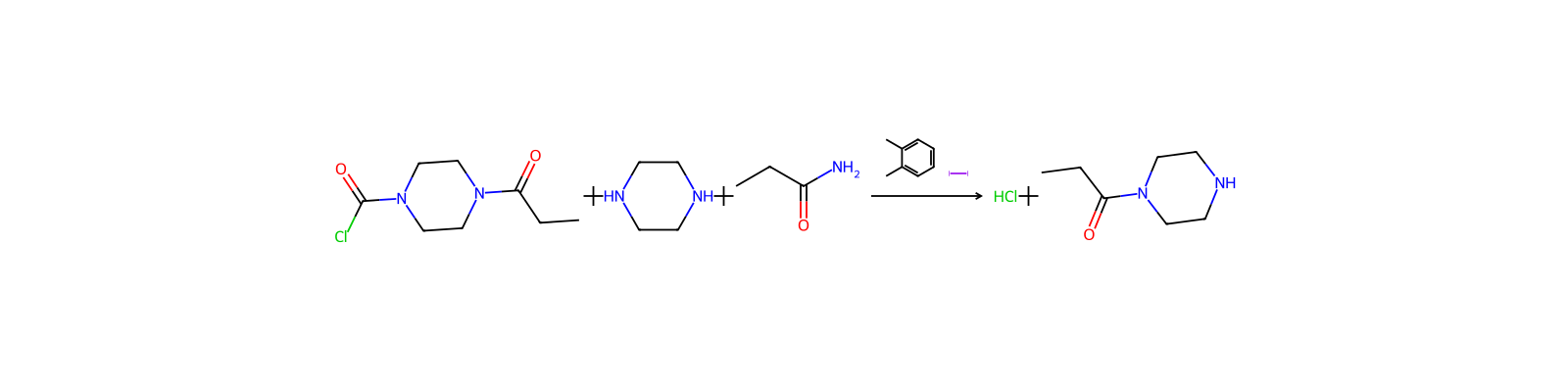
[Cl:1]C([N:4]1[CH2:9][CH2:8][N:7]([C:10](=[O:13])[CH2:11][CH3:12])[CH2:6][CH2:5]1)=O.N1CCNCC1.C(N)(=O)CC>C1(C)C(C)=CC=CC=1.II>[ClH:1].[C:10]([N:7]1[CH2:8][CH2:9][NH:4][CH2:5][CH2:6]1)(=[O:13])[CH2:11][CH3:12]Participants
6
Reactant 3

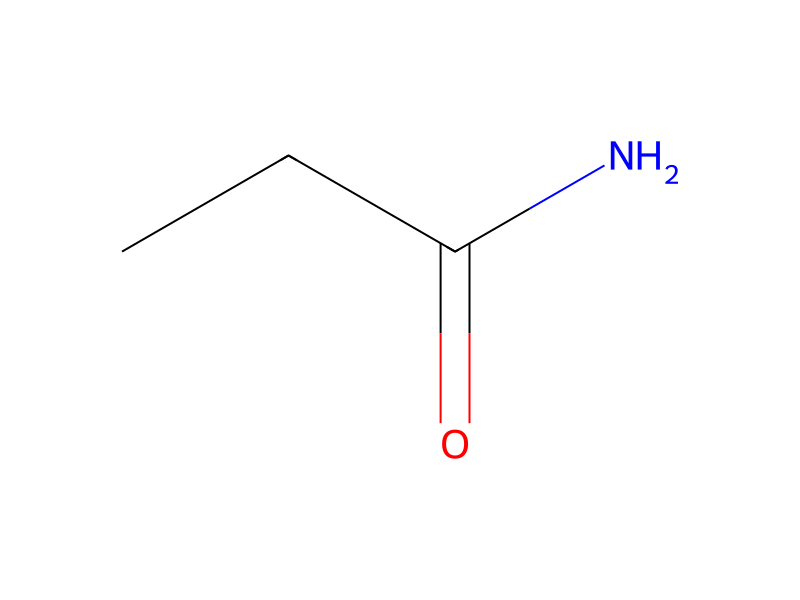

Product 1

Reagents, catalysts & solvents 2


Procedure
The 1-chlorocarbonyl-4-propionylpiperazine used as starting material can be prepared as follows. Anhydrous piperazine (120 g.) and propionamide (m.p. 80° C., 102 g.) in anhydrous xylene (100 cm3) are heated under reflux for 48 hours in the presence of iodine (0.9 g.) to give 1-propionylpiperazine hydrochloride (153.0 g.), m.p. 165° C. 1-Propionylpiperazine is liberated from its hydrochloride by the action of an excess of ammonia in diethyl ether. The ammonium chloride formed is separated by filtration and the 1-propionylpiperazine is isolated by evaporation of the ether.
Workup
- customcan be prepared
Sources & evidence
- ORD record
- ord-18f5dfb69f5b4bd8898f781342fac926
- Source dataset
- uspto-grants-1980_09
- Patent number
- US04220646
Linked notes
Loading…