HomeMCPWorkbenchSkills
HomeWorkbenchNotificationsMe
llms.txt · MCP GuidePrivacy Policy · Terms of Service · Supportv1.8.3
  1. Home
  2. /Reaction

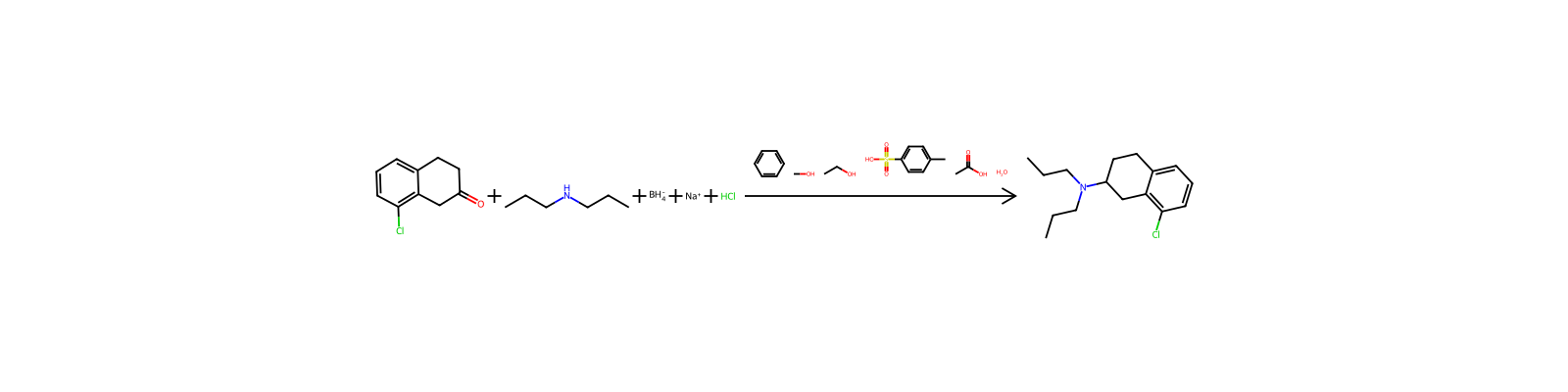
Hydrochloric Acid → 2-Di-n-propylamino-8-chloro-1,2,3,4-tetrahydronaphthalene

HRID 274792
Print

Reaction equation

HRID 274792 reaction equation
[Cl:1][C:2]1[CH:3]=[CH:4][CH:5]=[C:6]2[C:11]=1[CH2:10][C:9](=O)[CH2:8][CH2:7]2.[CH2:13]([NH:16][CH2:17][CH2:18][CH3:19])[CH2:14][CH3:15].[BH4-].[Na+].Cl>C1C=CC=CC=1.CO.C(O)C.C1(C)C=CC(S(O)(=O)=O)=CC=1.C(O)(=O)C.O>[CH2:13]([N:16]([CH2:17][CH2:18][CH3:19])[CH:9]1[CH2:8][CH2:7][C:6]2[C:11](=[C:2]([Cl:1])[CH:3]=[CH:4][CH:5]=2)[CH2:10]1)[CH2:14][CH3:15]
ParticipantsProcedureWorkupSources & evidenceReaction notes

Participants

11

Reactant 4

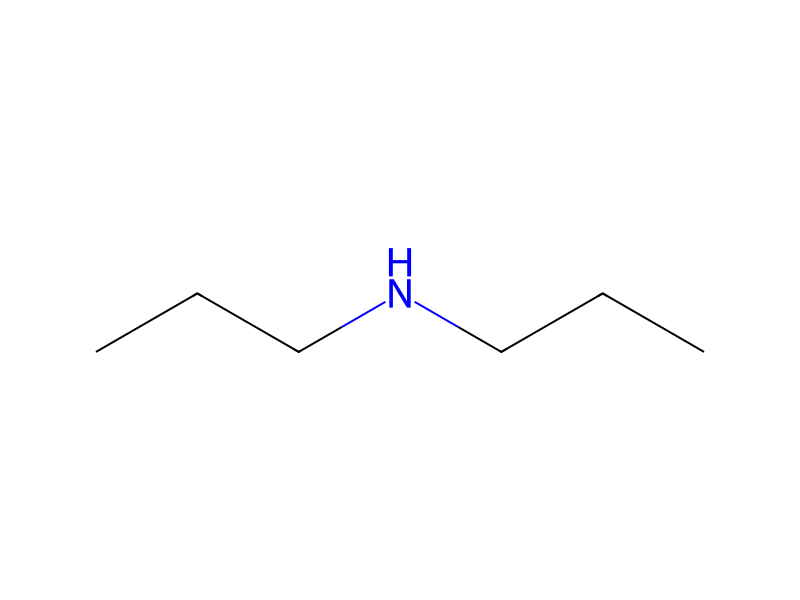
HCID 313Hydrochloric AcidHCID 8902DipropylamineHCID 4311764Sodium borohydrideHCID 46232698-Chloro-1,2,3,4-tetrahydronaphthalen-2-one

Product 1

HCID 152333872-Di-n-propylamino-8-chloro-1,2,3,4-tetrahydronaphthaleneYield 40%

Reagents, catalysts & solvents 6

HCID 6101
p-Toluenesulfonic acid
Catalyst
HCID 176Acetic AcidSolvent
HCID 241BenzeneSolvent
HCID 702EthanolSolvent
HCID 887MethanolSolvent
HCID 962WaterSolvent

Procedure

To a solution of 8-chloro-2-tetralone (3.0 gm, 16.6 mMol) in benzene (25 mL) were added dipropylamine (3.35 mL, 33.2 mMol) and p-toluenesulfonic acid (100 mg), and the reaction mixture was heated at reflux for 4 hours with constant water removal (Dean-Stark trap). The reaction mixture was then cooled to room temperature, and the volatiles were removed in vacuo to give a dark viscous residue. To a solution of this crude material in methanol (30 mL) were added acetic acid (3 mL) followed by the dropwise addition of sodium borohydride (1.5 gm) in ethanol (60 mL) with cooling. The reaction mixture was stirred for 18 hours at room temperature. To this was then added hydrochloric acid (6M, 20 mL) and the mixture stirred 4 hours at room temperature. The volatiles were then removed in vacuo and the residue triturated with water. The aqueous phase was extracted once with diethyl ether, and the organic phase was discarded. The remaining aqueous phase was made basic with concentrated ammonium hydroxide and was then extracted well with dichloromethane. The organic extracts were combined, washed with saturated aqueous sodium chloride, dried over sodium sulfate and concentrated in vacuo to give an orange liquid. Purification by chromatography on basic alumina (Activity I, dichloromethane) gave a colorless liquid (1.75 gm, 40%). The hydrochloride salt was formed and recrystallized (ethanol/diethyl ether) to give a colorless, crystalline-solid (m.p.=159°-160° C.).

Workup

  1. temperaturethe reaction mixture was heated
  2. customthe volatiles were removed in vacuo
  3. customto give a dark viscous residue
  4. temperaturewith cooling
  5. customThe volatiles were then removed in vacuo
  6. customthe residue triturated with water
  7. extractionThe aqueous phase was extracted once with diethyl ether
  8. extractionwas then extracted well with dichloromethane
  9. washwashed with saturated aqueous sodium chloride
  10. dry with materialdried over sodium sulfate
  11. concentrationconcentrated in vacuo
  12. customto give an orange liquid
  13. customPurification by chromatography on basic alumina (Activity I, dichloromethane)

Sources & evidence

ORD record
ord-4ec84fe24cf141c6911214a221bdc060
Source dataset
uspto-grants-1995_02
DOI
10.6084/m9.figshare.5104873.v1
Patent number
US05389687

Reaction notes

On this pageParticipantsProcedureWorkupSources & evidenceReaction notes