HomeMCPWorkbenchSkills
HomeWorkbenchNotificationsMe
llms.txt · MCP GuidePrivacy Policy · Terms of Service · Supportv1.8.0
  1. Home
  2. /Reaction

2-Aminothiazole → (E)-3-cycloheptyl-2-(4-methanesulfonyl-3-trifluoromethyl-phenyl)-N-thiazol-2-yl-acrylamide

HRID 276218
Notes
Print preview

Reaction equation

HRID 276218 reaction equation
C1(P(C2C=CC=CC=2)C2C=CC=CC=2)C=CC=CC=1.BrN1C(=O)CCC1=O.[CH:28]1(/[CH:35]=[C:36](\[C:40]2[CH:45]=[CH:44][C:43]([S:46]([CH3:49])(=[O:48])=[O:47])=[C:42]([C:50]([F:53])([F:52])[F:51])[CH:41]=2)/[C:37]([OH:39])=O)[CH2:34][CH2:33][CH2:32][CH2:31][CH2:30][CH2:29]1.[NH2:54][C:55]1[S:56][CH:57]=[CH:58][N:59]=1>C(Cl)Cl>[CH:28]1(/[CH:35]=[C:36](\[C:40]2[CH:45]=[CH:44][C:43]([S:46]([CH3:49])(=[O:48])=[O:47])=[C:42]([C:50]([F:53])([F:52])[F:51])[CH:41]=2)/[C:37]([NH:54][C:55]2[S:56][CH:57]=[CH:58][N:59]=2)=[O:39])[CH2:34][CH2:33][CH2:32][CH2:31][CH2:30][CH2:29]1
ParticipantsConditionsProcedureWorkupSources & evidenceReaction notes

Participants

6

Reactant 4

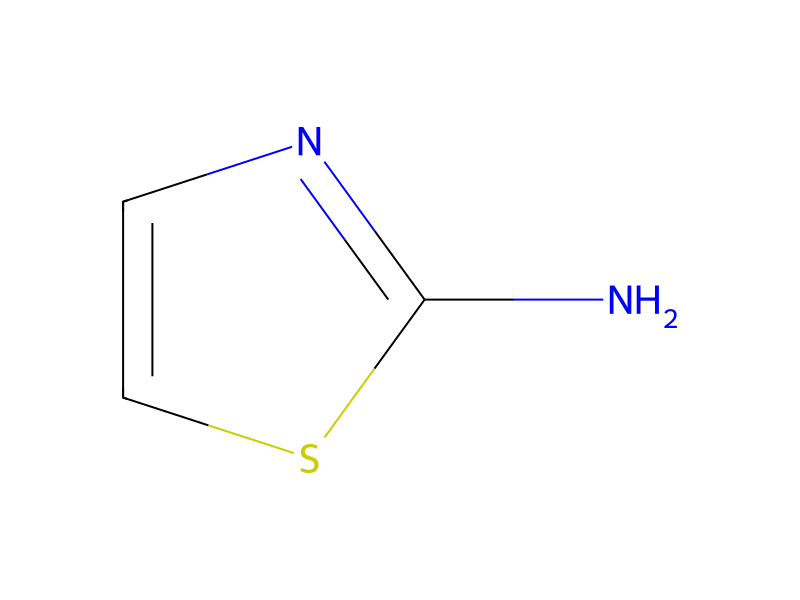
HCID 21552-AminothiazoleHCID 11776TriphenylphosphineHCID 67184N-bromobutanimideHCID 18316965(E)-3-cycloheptyl-2-(4-(methanesulfonyl)-3-(trifluoromethyl)-phenyl)-acrylic acid

Product 1

HCID 10162377(E)-3-cycloheptyl-2-(4-methanesulfonyl-3-trifluoromethyl-phenyl)-N-thiazol-2-yl-acrylamideYield 43.3%

Reagents, catalysts & solvents 1

HCID 6344DichloromethaneSolvent

Conditions

Temperature
0 °C

Procedure

A solution of triphenylphosphine (341 mg, 1.3 mmol) in methylene chloride (7 mL) was cooled to 0° C. and then treated with N-bromosuccinimide (231 mg, 1.3 mmol). The reaction mixture was stirred at 0° C. for 30 min and then treated with (E)-3-cycloheptyl-2-(4-(methanesulfonyl)-3-(trifluoromethyl)-phenyl)-acrylic acid (255 mg, 0.65 mmol). After 15 min at 0° C., the reaction mixture became clear. The clear solution was then allowed to warm to 25° C. where it was stirred for 1.5 h. The reaction mixture was then treated with 2-aminothiazole (193 mg, 1.95 mmol), and the resulting suspension was stirred for 2 d at 25° C. The reaction mixture was concentrated in vacuo to remove methylene chloride, and the residue was diluted with ethyl acetate (50 mL) and a 1N aqueous hydrochloric acid solution (50 mL). The two layers were separated, and the aqueous layer was extracted with ethyl acetate (1×30) mL). The combined organic extracts were successively washed with a 1N aqueous hydrochloric acid solution (1×50 mL), a saturated aqueous sodium bicarbonate solution (1×50 mL) and a saturated aqueous sodium chloride solution (1×50 mL). The organic layer was then dried over anhydrous magnesium sulfate, filtered, and concentrated in vacuo. Biotage chromatography (FLASH 40S, Silica, 4/1 to 2/1 hexanes/ethyl acetate) afforded the pure (E)-3-cycloheptyl-2-(4-methanesulfonyl-3-trifluoromethyl-phenyl)-N-thiazol-2-yl-acrylamide (133 mg, 43%) as an amorphous solid.

Workup

  1. waitAfter 15 min at 0° C.
  2. temperatureto warm to 25° C. where it
  3. stirringwas stirred for 1.5 h
  4. stirringthe resulting suspension was stirred for 2 d at 25° C
  5. concentrationThe reaction mixture was concentrated in vacuo
  6. customto remove methylene chloride
  7. additionthe residue was diluted with ethyl acetate (50 mL)
  8. customThe two layers were separated
  9. extractionthe aqueous layer was extracted with ethyl acetate (1×30) mL)
  10. washThe combined organic extracts were successively washed with a 1N aqueous hydrochloric acid solution (1×50 mL)
  11. dry with materialThe organic layer was then dried over anhydrous magnesium sulfate
  12. filtrationfiltered
  13. concentrationconcentrated in vacuo

Sources & evidence

ORD record
ord-89abd347b60b4dbfac268bfd93fdd4d7
Source dataset
uspto-grants-2002_03
DOI
10.6084/m9.figshare.5104873.v1
Patent number
US06353111B1

Reaction notes

Loading…

On this pageParticipantsConditionsProcedureWorkupSources & evidenceReaction notes

