HomeMCPWorkbenchSkills
HomeWorkbenchNotificationsMe
llms.txt · MCP GuidePrivacy Policy · Terms of Service · Supportv1.8.0
  1. Home
  2. /Reaction

Hydrochloric Acid → 2-(2-Methyl-4-nitrophenylimino)-3-isobutyl-4,4-dimethyl-1,3-thiazolidine

HRID 276281
Notes
Print preview

Reaction equation

HRID 276281 reaction equation
Cl.[CH2:2]([NH:6][C:7]([CH3:11])([CH3:10])[CH2:8][OH:9])[CH:3]([CH3:5])[CH3:4].O=S(Cl)Cl.[CH3:16][C:17]1[CH:22]=[C:21]([N+:23]([O-:25])=[O:24])[CH:20]=[CH:19][C:18]=1[N:26]=[C:27]=[S:28].CCN(CC)CC>C1(C)C=CC=CC=1.C(Cl)(Cl)Cl>[CH2:2]([NH:6][C:7]([CH3:11])([CH3:10])[CH2:8][OH:9])[CH:3]([CH3:5])[CH3:4].[CH3:16][C:17]1[CH:22]=[C:21]([N+:23]([O-:25])=[O:24])[CH:20]=[CH:19][C:18]=1[N:26]=[C:27]1[N:6]([CH2:2][CH:3]([CH3:5])[CH3:4])[C:7]([CH3:11])([CH3:10])[CH2:8][S:28]1
ParticipantsConditionsProcedureWorkupSources & evidenceReaction notes

Participants

9

Reactant 5

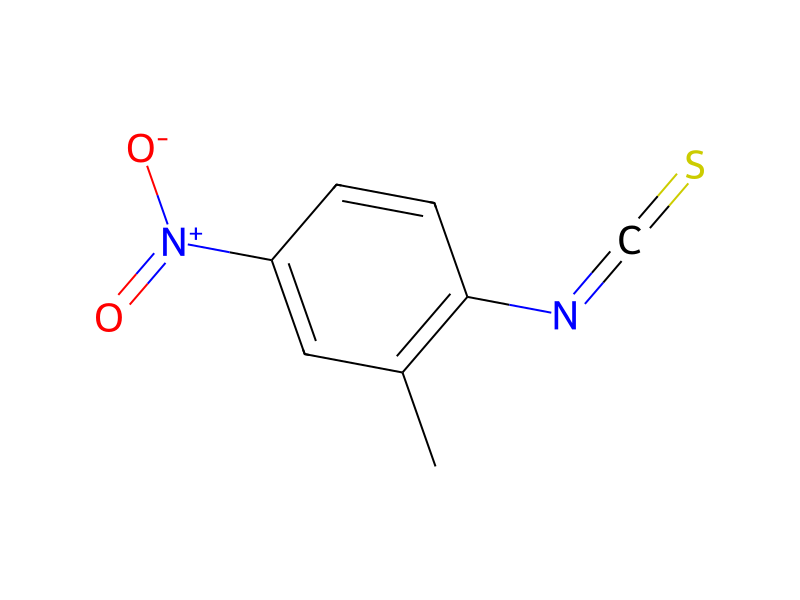
HCID 313Hydrochloric AcidHCID 8471TriethylamineHCID 24386Thionyl ChlorideHCID 1456212-Methyl-4-nitrophenyl isothiocyanateHCID 183159862-Methyl-2-[(2-methylpropyl)amino]propan-1-ol

Product 2

HCID 183159782-(2-Methyl-4-nitrophenylimino)-3-isobutyl-4,4-dimethyl-1,3-thiazolidine
Yield 63%
HCID 183159862-Methyl-2-[(2-methylpropyl)amino]propan-1-ol

Reagents, catalysts & solvents 2

HCID 1140TolueneSolventHCID 6212ChloroformSolvent

Conditions

Temperature
50 °C

Procedure

N-Isobutyl-1,1-dimethyl-2-hydroxyethanamine was prepared in a manner analogous to Method B4a. HCl was bubbled into a solution of N-isobutyl-1,1-dimethyl-2-hydroxyethanamine (1.45 g, 10 mmol) in toluene (20 mL) until saturation. SOCl2 (10 mmol) was added to the solution dropwise at room temp., stirred at room temp. for 1 h and at 50° C., for 1 h. The resulting mixture was concentrated under reduced pressure and the residue was dissolved in CHCl3 (20 mL). To the resulting solution was added 2-methyl-4-nitro-phenyl isothiocyanate (1.94 g, 10 mmol), then a solution of Et3N (10 mmol) in CHCl3 (10 mL) was added dropwise at room temp. The resulting mixture was heated at the reflux temp. for 3 h, then concentrated under reduced pressure. The residue was dissolved in EtOAc (100 mL) and the resulting solution was sequentially washed with a 10% aq. NaOH solution (50 mL) and a saturated NaCl solution (50 mL), dried (MgSO4) and concentrated under reduced pressure. The residue was purified by chromatography (9% EtOAc/pet. ether) and the resulting solids were recrystallized (pet. ether) to give 2-(2-methyl-4-nitrophenylimino)-3-isobutyl-4,4-dimethyl-1,3-thiazolidine (0.6 g, 63%): mp 97° C. When appropriate, the product was converted into the HCl salt by dissolving the free base (5 mmol) in Et2O (50 mL) and treating this solution with a 2N ethereal HCl solution until no more solid precipitated. The resulting slurry was filtered and the resulting solids were washed with Et2O (25 mL) followed by EtOAc (25 mL).


Workup

  1. concentrationThe resulting mixture was concentrated under reduced pressure
  2. dissolutionthe residue was dissolved in CHCl3 (20 mL)
  3. temperatureThe resulting mixture was heated at the reflux temp
  4. waitfor 3 h
  5. concentrationconcentrated under reduced pressure
  6. dissolutionThe residue was dissolved in EtOAc (100 mL)
  7. washthe resulting solution was sequentially washed with a 10% aq. NaOH solution (50 mL)
  8. dry with materiala saturated NaCl solution (50 mL), dried (MgSO4)
  9. concentrationconcentrated under reduced pressure
  10. customThe residue was purified by chromatography (9% EtOAc/pet. ether)
  11. customthe resulting solids were recrystallized (pet. ether)

Sources & evidence

ORD record
ord-d42728d8f814455eb1d574af58a59988
Source dataset
uspto-grants-2002_03
DOI
10.6084/m9.figshare.5104873.v1
Patent number
US06353006B1

Reaction notes

Loading…

On this pageParticipantsConditionsProcedureWorkupSources & evidenceReaction notes