HomeMCPWorkbenchSkills
HomeWorkbenchNotificationsMe
llms.txt · MCP GuidePrivacy Policy · Terms of Service · Supportv1.8.3
  1. Home
  2. /Reaction

Ammonia → furo(3,4-b)pyridin-5(7H)-one

HRID 280058
Print

Reaction equation

HRID 280058 reaction equation
[N:1]1[CH:10]=[CH:9][CH:8]=[C:7]2[C:2]=1[C:3]([O:5][C:6]2=[O:11])=O.N1C2C(=CC=CC=2)C=C1.[Cl-].[Ca+2].[Cl-].[Cl-].[Al+3].[Cl-].[Cl-].C(OC(=O)C)(=O)C.N>C(O)(=O)C.C(#N)C.[Cl-].[Zn+2].[Cl-].[Fe](Cl)Cl.[Co](Cl)Cl.[Cu](Cl)Cl>[C:6]1([C:7]2[C:2](=[N:1][CH:10]=[CH:9][CH:8]=2)[CH2:3][O:5]1)=[O:11]
ParticipantsProcedureWorkupSources & evidenceReaction notes

Participants

13

Reactant 6

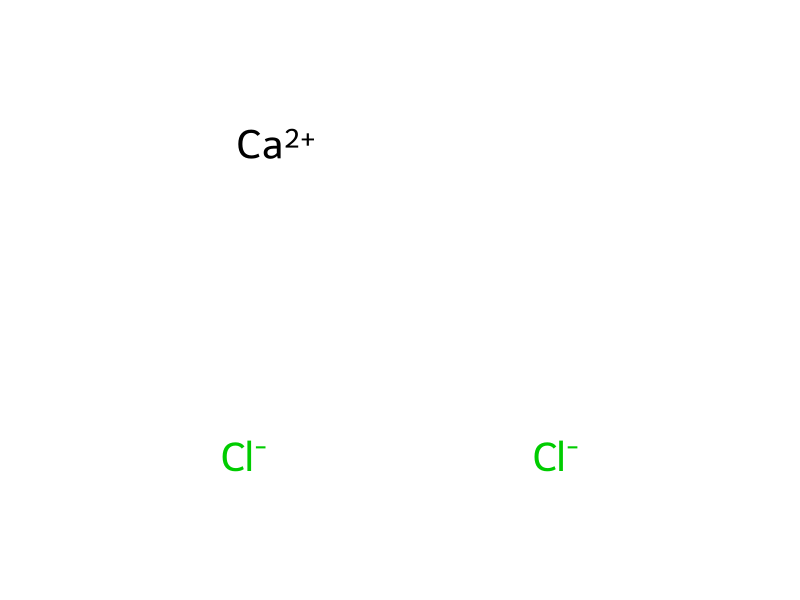
HCID 222AmmoniaHCID 798IndoleHCID 7918Acetic AnhydrideHCID 69688Furo[3,4-b]pyridine-5,7-dioneHCID 5284359Calcium ChlorideHCID 6451240Aluminum(III) Chloride

Product 1

HCID 819439
furo(3,4-b)pyridin-5(7H)-one

Reagents, catalysts & solvents 6

HCID 24014Cupric ChlorideCatalystHCID 24288Cobalt(II) chlorideCatalystHCID 24458Ferrous ChlorideCatalystHCID 3007855SinkkikloridiCatalystHCID 176Acetic AcidSolventHCID 6342AcetonitrileSolvent

Procedure

A particularly advantageous embodiment of the novel process comprises dissolving or suspending quinolinic anhydride in a saturated aliphatic C2 -C4 -monocarboxylic acid, in particular acetic acid, or also in acetonitrile, adding an indole compound of the formula (7a) and stirring the mixture at room temperature in the presence of an inorganic metal salt, in particular a metal halide, of a polyvalent metal or atomic weight 26 to 66, for example zinc chloride, calcium chloride, aluminium chloride, iron chloride, cobalt chloride or copper dichloride, preferably for 2 to 6 hours. The compound of the formula (5a) is then added and, after addition of acetic anhydride, the reaction mixture is heated at 30° to 60° C., preferably for 1 to 3 hours. The pH is then adjusted to 7.5 to 9 for example with an alkali metal hydroxide or aqueous ammonia. The precipitated 4-azaphthalide compound of the formula (1a) is isolated and, if necessary, recrystallised.

Workup

  1. dissolutionA particularly advantageous embodiment of the novel process comprises dissolving
  2. temperaturethe reaction mixture is heated at 30° to 60° C., preferably for 1 to 3 hours

Sources & evidence

ORD record
ord-d0e8178ae6be475bb5721a445bedd9ae
Source dataset
uspto-grants-1986_05
DOI
10.6084/m9.figshare.5104873.v1
Patent number
US04587539

Reaction notes

On this pageParticipantsProcedureWorkupSources & evidenceReaction notes