Reaction equation

[C@@H:1]1([N:9]2[CH:17]=[C:15]([CH3:16])[C:13](=[O:14])[NH:12][C:10]2=[O:11])[O:8][C@H:5]([CH2:6][OH:7])[C@@H:3](O)[CH2:2]1.C1(P(C2C=CC=CC=2)C2C=CC=CC=2)C=CC=CC=1>>[CH3:16][C:15]1[C:13](=[O:14])[N:12]=[C:10]2[N:9]([C@@H:1]3[O:8][C@H:5]([CH2:6][OH:7])[C@H:3]([O:11]2)[CH2:2]3)[CH:17]=1Participants
3
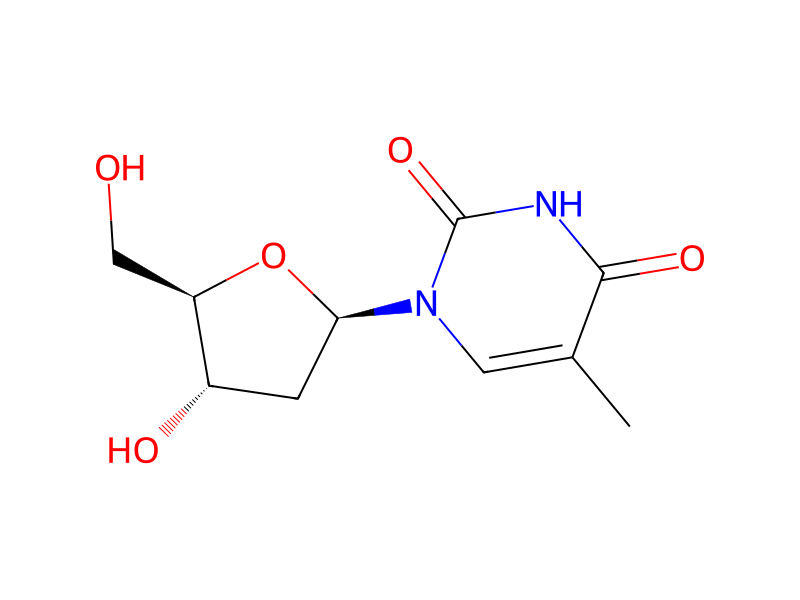


Procedure
There are a variety of known techniques for converting a nucleoside into an anhydronucleoside. For example, the anhydronucleoside can be prepared by mixing thymidine with triphenylphosphine and azeotropically drying with portions of acetonitrile (MeCN). The resulting mass is suspended in MeCN and then cooled. The mixture is rapidly stirred and diisopropylazodicarcobxylate in MeCN is added dropwise to the mixture. The resulting mixture is treated with water to form a suspension that is filtered to afford anhydrothymidine. (Grierson, J. R., Shields, A. F., Nuclear Medicine and Biology, 2000, 27 143-156; Balagopala, M. I., Ollapally, A. P., and Lee, H. J., Nucleosides-Nucleotides, 1996, 15(4) 899-906).
Workup
- dry with materialazeotropically drying with portions of acetonitrile (MeCN)
- temperaturecooled
- additionis added dropwise to the mixture
- additionThe resulting mixture is treated with water
- customto form a suspension that
- filtrationis filtered
Sources & evidence
- ORD record
- ord-a30fca9873514a169f7249087f944381
- Source dataset
- uspto-grants-2008_09
- Patent number
- US07419653B2
Linked notes
Loading…