HomeMCPWorkbenchSkills
HomeWorkbenchNotificationsMe
llms.txt · MCP GuidePrivacy Policy · Terms of Service · Supportv1.8.0
  1. Home
  2. /Reaction

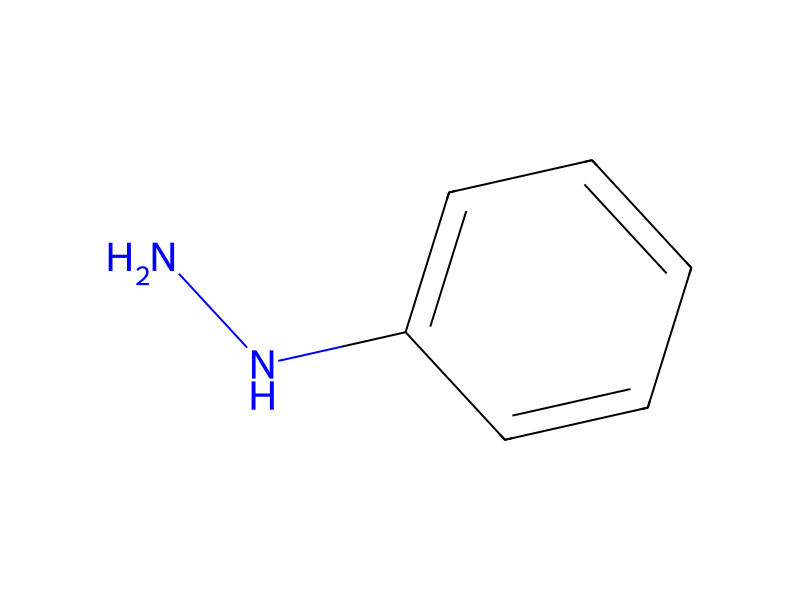
Phenylhydrazine → HCID 178518862, compound

HRID 30401
Notes
Print preview

Reaction equation

HRID 30401 reaction equation
N1C2=NC=CC=C2C=N1.[C:10](Cl)(=[O:17])[C:11]1[CH:16]=[CH:15][CH:14]=[N:13][CH:12]=1.ClC1N=CC=CC=1C(Cl)=O.NN.[C:31]1([NH:37][NH2:38])[CH:36]=[CH:35][CH:34]=[CH:33][CH:32]=1>C(Cl)Cl.C(N(CC)CC)C>[C:31]1([N:37]2[C:12]3=[N:13][CH:14]=[CH:15][CH:16]=[C:11]3[C:10]([OH:17])=[N:38]2)[CH:36]=[CH:35][CH:34]=[CH:33][CH:32]=1
ParticipantsProcedureSources & evidenceReaction notes

Participants

8

Reactant 5

HCID 7516PhenylhydrazineHCID 9321HydrazineHCID 82604Nicotinoyl chlorideHCID 27558501H-pyrazolo(3,4-b)pyridineHCID 27745412-Chloronicotinoyl chloride

Product 1

HCID 178518862HCID 178518862, compound

Reagents, catalysts & solvents 2

HCID 6344DichloromethaneSolvent
HCID 8471TriethylamineSolvent

Procedure

Scheme 4 depicts the synthesis of the 1H-pyrazolo[3,4-b]pyridine q. A nicotinoylchloride k (e.g., 2-chloronicotinoyl chloride) is reacted with a hydrazine m (e.g., phenylhydrazine) and a base such as triethylamine in a solvent such as anhydrous methylene chloride to give o (e.g., 1-phenyl-1H-pyrazolo[3,4-b]pyridin-3-ol). The compound o is then cyclized by heating at 175° C. to provide p. p is reacted as in the transformation of d to g in Scheme 1 to provide q.

Sources & evidence

ORD record
ord-92e1e1747f1e438698152e155671ed1e
Source dataset
uspto-grants-2008_09
DOI
10.6084/m9.figshare.5104873.v1
Patent number
US07423054B2

Reaction notes

Loading…

On this pageParticipantsProcedureSources & evidenceReaction notes