Reaction equation

[C:1]([NH2:5])(=[O:4])[CH:2]=[CH2:3].[Cl-:6].[C:7]([O:11][CH2:12][CH3:13])(=[O:10])[CH:8]=[CH2:9].C(N(CC(O)=O)CC(O)=O)CN(CC(O)=O)CC(O)=O.Cl.Cl.N(C(C1NCCN=1)(C)C)=NC(C1NCCN=1)(C)C>O>[C:1]([NH2:5])(=[O:4])[CH:2]=[CH2:3].[CH3:7][Cl:6].[C:7]([O:11][CH2:12][CH3:13])(=[O:10])[CH:8]=[CH2:9]Participants





Procedure
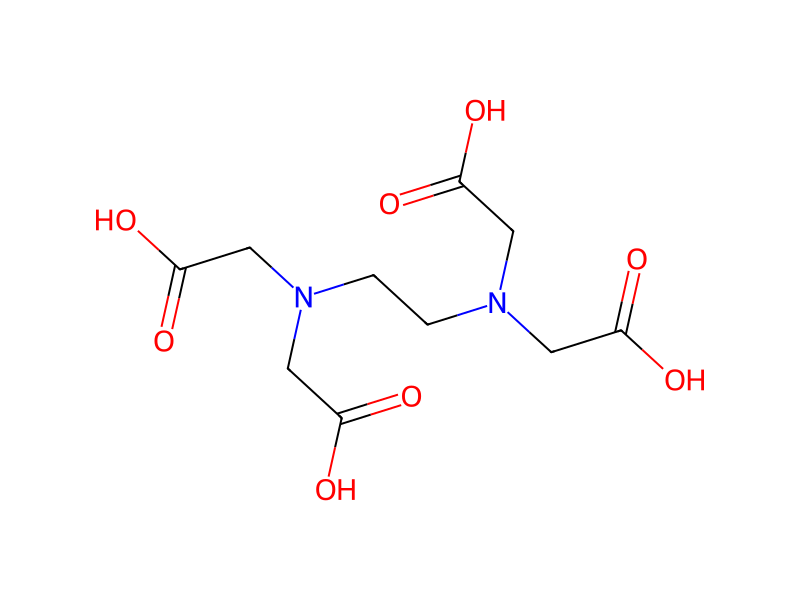
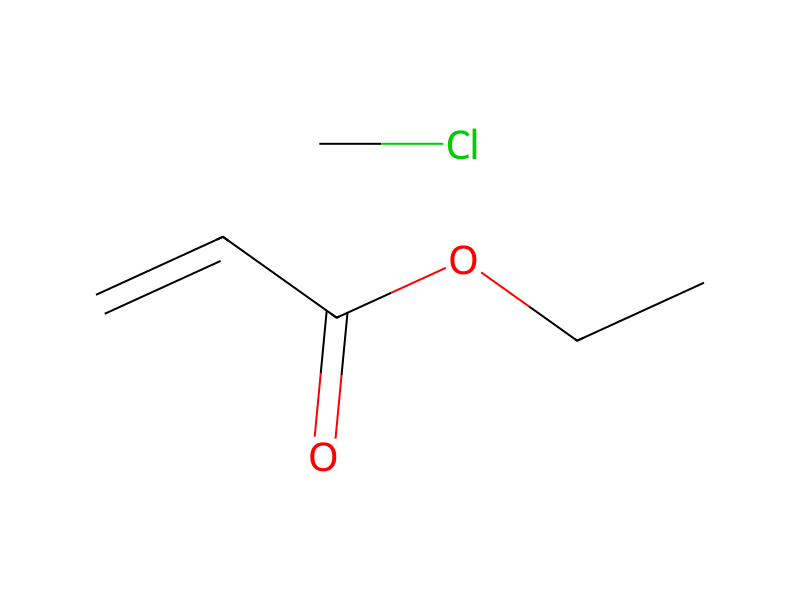
A 10% solution of poly(AMD/DMAEA.MeCl/EA) was prepared as follows: 13.87 parts of 53.58% aqueous acrylamide (AMD), 25.31 parts of a 80% aqueous solution of ethacryloxyethyltrimethylammonium chloride (DMAEA.MeCl), 2.33 parts of ethyl acrylate (EA), 0.3 part EDTA, 258.16 parts of deionized water and 0.030 parts of VA-044 were added to a suitable glass vessel. The solution was sparged with nitrogen gas and stirred for about one hour at ambient temperature. The nitrogen sparge was changed to a nitrogen purge, and polymerization was initiated thermally by raising the temperature of the solution to 44° C. Stirring and heating were continued for about 21 hours to give a clear, viscous solution of poly(AMD/DMAEA.MeCl/EA) having a standard viscosity of about 2.0 centipoise.
Workup
- customThe solution was sparged with nitrogen gas
- customThe nitrogen sparge
- custompurge
- custompolymerization
- temperatureby raising the temperature of the solution to 44° C
- stirringStirring
- temperatureheating
- waitwere continued for about 21 hours
Sources & evidence
- ORD record
- ord-889d3fb76dc4464094f72ea8e4bc1474
- Source dataset
- uspto-grants-1998_03
- Patent number
- US05733462
Linked notes
Loading…