HomeMCPWorkbenchSkills
HomeWorkbenchNotificationsMe
llms.txt · MCP GuidePrivacy Policy · Terms of Service · Supportv1.8.3
  1. Home
  2. /Reaction

2,4-Dichloropyridine → N-(4-chloro-2-pyridinyl)-4,5-dimethyl-1,3-oxazol-2-amine

HRID 312
Print

Reaction equation

HRID 312 reaction equation
Cc1nc(N)oc1C.Clc1ccnc(Cl)c1>C1COCCO1.CC1(C)c2cccc(P(c3ccccc3)c3ccccc3)c2Oc2c(P(c3ccccc3)c3ccccc3)cccc21.O=C(/C=C/c1ccccc1)/C=C/c1ccccc1.O=C(/C=C/c1ccccc1)/C=C/c1ccccc1.O=C(/C=C/c1ccccc1)/C=C/c1ccccc1.O=C([O-])[O-].[Cs+].[Cs+].[Pd].[Pd]>Cc1nc(Nc2cc(Cl)ccn2)oc1C
ParticipantsConditionsProcedureSources & evidenceReaction notes

Participants

7

Reactant 2

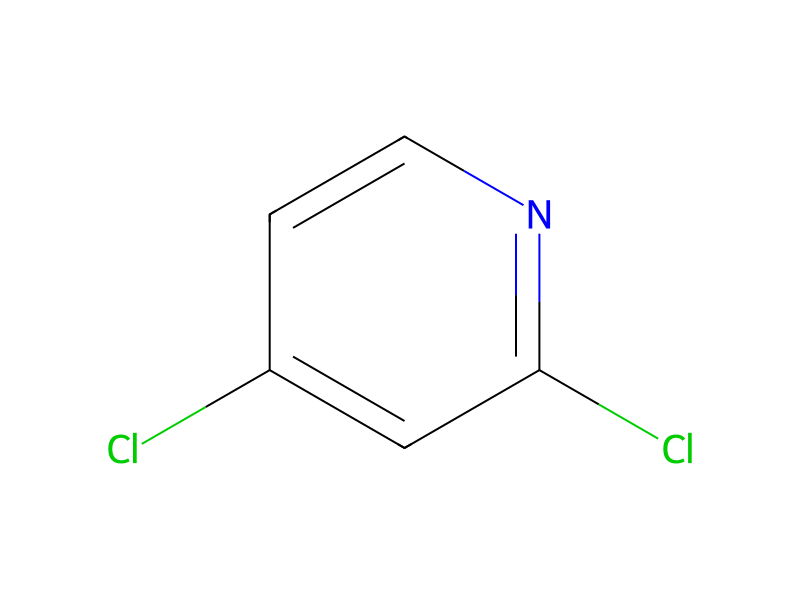
HCID 335152,4-DichloropyridineHCID 5358704,5-Dimethyloxazol-2-amine

Product 1

HCID 101584494N-(4-chloro-2-pyridinyl)-4,5-dimethyl-1,3-oxazol-2-amineYield 15.2%

Reagents, catalysts & solvents 4

HCID 10796Cesium carbonateReagentHCID 6360441,1'-(9,9-Dimethyl-9H-xanthene-4,5-diyl)bis(1,1-diphenylphosphine)
Catalyst
HCID 9811564Bis(dibenzylideneacetone)palladiumCatalyst
HCID 312751,4-DioxaneSolvent

Conditions

Temperature
140 °C

Procedure

Objective: Repeat of experiment in an attempt to improve isolated yield using different normal phase eluent system (isolation was problematic for ). Pd2(dba)3 (22.89 mg, 0.025 mmol), 9,9-dimethyl-4,5-bis(diphenylphosphino)xanthene (43.4 mg, 0.075 mmol), 2,4-dichloropyridine (148 mg, 1.00 mmol), cesium carbonate (652 mg, 2.00 mmol) and 4,5-dimethyloxazol-2-amine (112 mg, 1.00 mmol) were added to an oven dried microwave vial, the vial was capped and placed under an inert atmosphere, dioxane (4 mL) was added and the resulting mixture was heated to 140 °C for 1 h by microwave irradiation under a nitrogen atmosphere. The crude product was purified by flash silica chromatography, elution gradient 0 to 3% methanolic ammmonia (7 M) in DCM. Pure fractions were evaporated to dryness to afford P1 as a brown solid. The product was further purified by crystallisation from hot DCM/MeOH to afford N-(4-chloropyridin-2-yl)-4,5-dimethyloxazol-2-amine (34.0 mg, 15.20 %) as a beige solid. Conclusion: A relatively low yield of the desired product was isolated here, it may be possible to increase the above yield at higher temperature or by using excess amine as electron rich oxazoles are prone to decomposition.

Sources & evidence

ORD record
ord-b88a57a3139142d0b67529e7ea94eb7c
Source dataset
750 AstraZeneca ELN dataset
Original link
View source

Reaction notes

On this pageParticipantsConditionsProcedureSources & evidenceReaction notes



