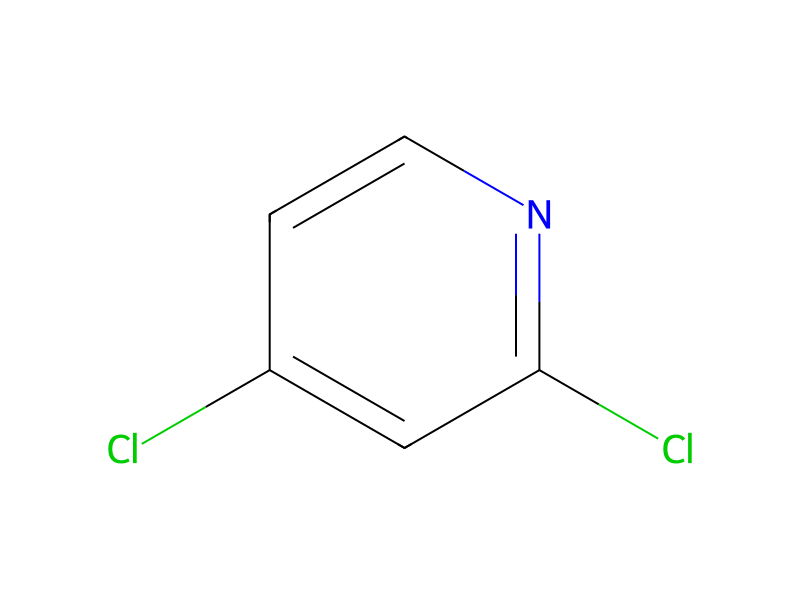
Objective: To find out which substrates are efficient coupling partners, is there a robust link between how electron poor the substrate is and yield i.e. more electron poor aminooxazoles produce greater yields. Pd2(dba)3 (22.89 mg, 0.025 mmol), 9,9-dimethyl-4,5-bis(diphenylphosphino)xanthene (43.4 mg, 0.075 mmol), 2,4-dichloropyridine (148 mg, 1.00 mmol), cesium carbonate (652 mg, 2.00 mmol) and 4,5-dimethyloxazol-2-amine (112 mg, 1.00 mmol) were added to an oven dried microwave vial, the vial was capped and placed under an inert atmosphere, dioxane (4 mL) was added and the resulting mixture was heated to 140 °C for 1 h by microwave irradiation under a nitrogen atmosphere. The crude product was purified by flash silica chromatography, elution gradient 0 to 30% EtOAc in heptane. Pure fractions were evaporated to dryness to afford N-(4-chloropyridin-2-yl)-4,5-dimethyloxazol-2-amine (34.0 mg, 15.20 %) as a pale yellow solid. Conclusion: The dimethyl substituted 2-aminooxazole (relatively electron rich) produces more coupled product than the unsubstituted 2-aminooxazole. Of the 2-aminooxazoles tested thus far the 4- and 5-ester substituted aminooxazoles are the most efficient coupling partners. Note: A run at T= 160 °C may be beneficial, an increase in yield was seen for the ester substituted 2-aminooxazole under these more forcing conditions.