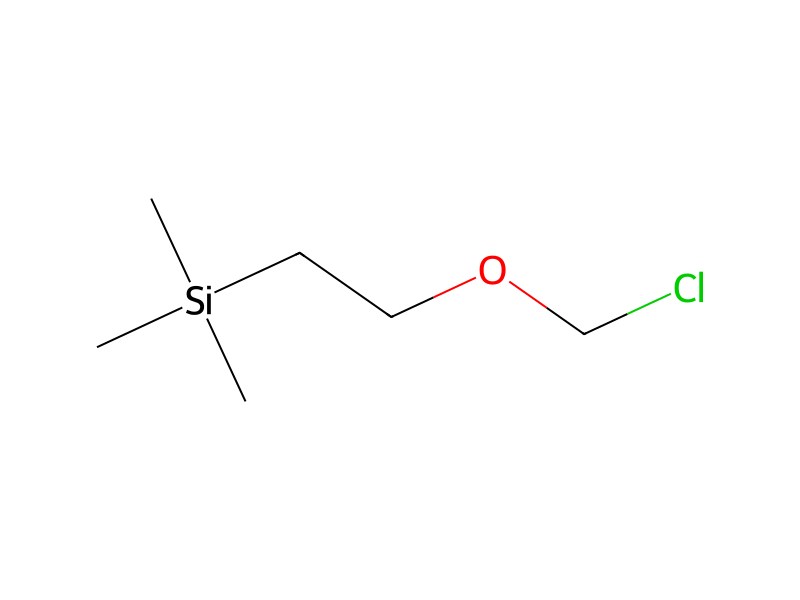
[H-].[Na+].[OH:3][C:4]1[CH:13]=[C:12]([O:14][CH2:15][C:16]2[CH:20]=[CH:19][S:18][CH:17]=2)[CH:11]=[CH:10][C:5]=1[C:6]([O:8][CH3:9])=[O:7].[CH3:21][Si:22]([CH3:29])([CH3:28])[CH2:23][CH2:24][O:25][CH2:26]Cl>CN(C)C=O>[S:18]1[CH:19]=[CH:20][C:16]([CH2:15][O:14][C:12]2[CH:11]=[CH:10][C:5]([C:6]([O:8][CH3:9])=[O:7])=[C:4]([O:3][CH2:26][O:25][CH2:24][CH2:23][Si:22]([CH3:29])([CH3:28])[CH3:21])[CH:13]=2)=[CH:17]1A stirred suspension of sodium hydride (1.53 g; 60% w/v dispersion in mineral oil; 38.3 mmol) in dimethylformamide (100 mL) is treated, portionwise, with methyl 2-hydroxy-4-(3-thienylmethoxy)benzoate (8.44 g) and stirred for 40 minutes. The mixture is treated with 2-(trimethyl-silyl)ethoxymethyl chloride (6.39 g), in one portion, and stirred at ambient temperature for three hours. It is then evaporated to dryness and the resulting residue is partitioned between water (100 mL) and ethyl acetate (100 mL). The organic layer is washed with brine (150 mL), dried over magnesium sulphate, filtered and concentrated in vacuo, to give methyl 4-(3-thienylmethoxy)-2-(2-trimethylsilylethoxy)methoxybenzoate, in the form of a yellow oil.