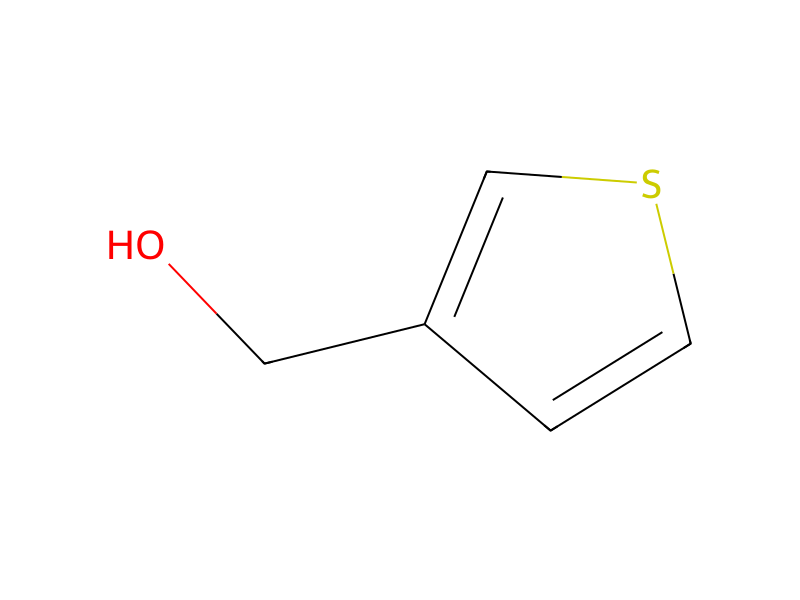
A solution of triphenylphosphine (20 g) in tetrahydrofuran (300 mL) cooled at 0° C. is treated dropwise during 5 minutes with diisopropyl azodicarboxylate (15 mL) and stirred for 15 minutes at 0° C. It is then treated, dropwise, with a solution of 2-fluoro-4-hydroxybenzonitrile (7 g) and 3-thienylmethanol (7 g) in tetrahydrofuran (200 mL) during 2 hours, and stirring is continued at ambient temperature for 18 hours. The mixture is concentrated in vacuo and the residue is dissolved in ethyl acetate (500 mL). This solution is washed with water (200 mL) and aqueous sodium hydroxide solution (1 N), dried over magnesium sulphate and concentrated in vacuo, to give an oil, which is passed through a pad of silica gel (thickness 5 cm) with the aid of dichloromethane. The resulting filtrate is concentrated in vacuo, to give an oil which crystallizes on standing. Recrystallization from isopropyl ether gives 2-fluoro-4-(3-thienyl-methoxy)benzonitrile (6 g), in the form of a white solid, m.p. 63-65° C.