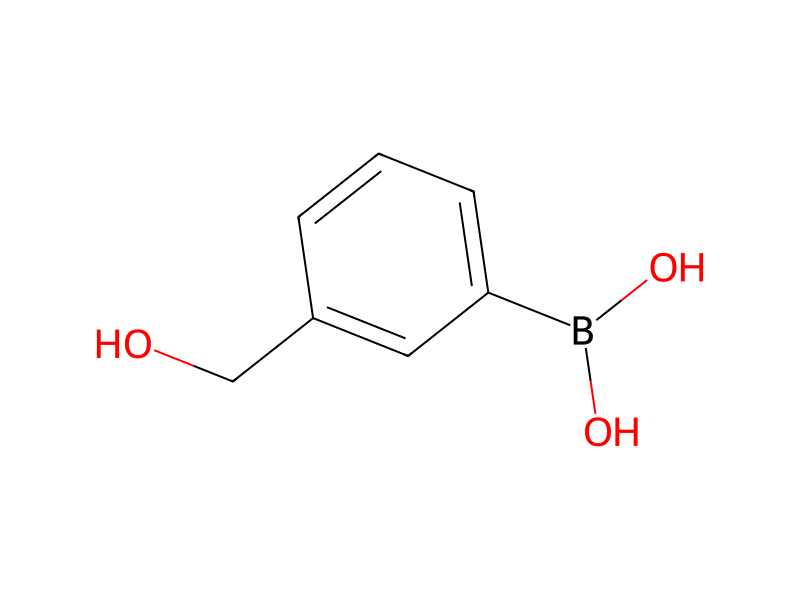
[Br:1][C:2]1[CH:3]=[N:4][C:5](I)=[N:6][CH:7]=1.[OH:9][CH2:10][C:11]1[CH:12]=[C:13](B(O)O)[CH:14]=[CH:15][CH:16]=1.O.O.O.P([O-])([O-])([O-])=O.[K+].[K+].[K+].COC(C)(C)C>O1CCOCC1.O.C1C=CC([P]([Pd]([P](C2C=CC=CC=2)(C2C=CC=CC=2)C2C=CC=CC=2)([P](C2C=CC=CC=2)(C2C=CC=CC=2)C2C=CC=CC=2)[P](C2C=CC=CC=2)(C2C=CC=CC=2)C2C=CC=CC=2)(C2C=CC=CC=2)C2C=CC=CC=2)=CC=1>[Br:1][C:2]1[CH:3]=[N:4][C:5]([C:15]2[CH:16]=[C:11]([CH2:10][OH:9])[CH:12]=[CH:13][CH:14]=2)=[N:6][CH:7]=1750 mg (0.65 mmol) of tetrakis(triphenylphosphine)palladium are added to a solution, kept under nitrogen, of 6.11 g (21.5 mmol) of 5-bromo-2-iodo-pyrimidine, 3.91 g (25.7 mmol) of 3-(hydroxymethyl)benzeneboronic acid and 9.11 g (42.9 mmol) of tripotassium phosphate trihydrate in 120 ml of dioxane and 14 ml of water, and the mixture is stirred at 90° C. for 18 hours. The reaction mixture is cooled to room temperature, tert-butyl methyl ether and water are added, and the mixture is filtered through kieselguhr. The organic phase of the filtrate is separated off, dried over sodium sulfate and evaporated. The residue is chromatographed on a silica-gel column with dichloromethane/methanol as eluent; product: 2.49 g;