HomeMCPWorkbenchSkills
HomeWorkbenchNotificationsMe
llms.txt · MCP GuidePrivacy Policy · Terms of Service · Supportv1.8.3
  1. Home
  2. /Reaction

Cesium carbonate → 6-Chloro-2-methyl-4-(5-(oxetan-3-yl)-4,5,6,7-tetrahydropyrazolo[1,5-a]pyrazin-2-yl amino)pyridazin-3(2H)-one

HRID 337307
Print

Reaction equation

HRID 337307 reaction equation
[O:1]1[CH2:4][CH:3]([N:5]2[CH2:10][CH2:9][N:8]3[N:11]=[C:12]([NH2:14])[CH:13]=[C:7]3[CH2:6]2)[CH2:2]1.Br[C:16]1[C:17](=[O:24])[N:18]([CH3:23])[N:19]=[C:20]([Cl:22])[CH:21]=1.C(=O)([O-])[O-].[Cs+].[Cs+].C1(P(C2C=CC=CC=2)C2C3OC4C(=CC=CC=4P(C4C=CC=CC=4)C4C=CC=CC=4)C(C)(C)C=3C=CC=2)C=CC=CC=1>ClCCl.O.C1C=CC(/C=C/C(/C=C/C2C=CC=CC=2)=O)=CC=1.C1C=CC(/C=C/C(/C=C/C2C=CC=CC=2)=O)=CC=1.[Pd].O1CCOCC1>[Cl:22][C:20]1[CH:21]=[C:16]([NH:14][C:12]2[CH:13]=[C:7]3[CH2:6][N:5]([CH:3]4[CH2:4][O:1][CH2:2]4)[CH2:10][CH2:9][N:8]3[N:11]=2)[C:17](=[O:24])[N:18]([CH3:23])[N:19]=1


ParticipantsConditionsProcedureWorkupSources & evidenceReaction notes

Participants

9

Reactant 4

HCID 10796Cesium carbonateHCID 6360441,1'-(9,9-Dimethyl-9H-xanthene-4,5-diyl)bis(1,1-diphenylphosphine)HCID 592164744-Bromo-6-chloro-2-methyl-2,3-dihydropyridazin-3-oneHCID 667430935-(Oxetan-3-yl)-4,5,6,7-tetrahydropyrazolo[1,5-a]pyrazin-2-amine

Product 1

HCID 66742266
6-Chloro-2-methyl-4-(5-(oxetan-3-yl)-4,5,6,7-tetrahydropyrazolo[1,5-a]pyrazin-2-yl amino)pyridazin-3(2H)-one
Yield 69.5%

Reagents, catalysts & solvents 4

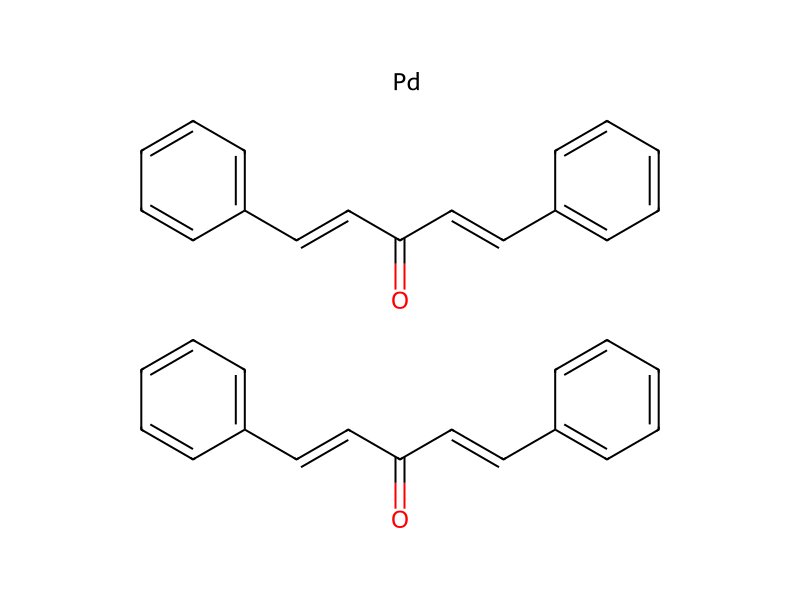
HCID 6505921(1E,4E)-1,5-diphenylpenta-1,4-dien-3-one; palladiumCatalystHCID 962WaterSolventHCID 6344DichloromethaneSolventHCID 312751,4-DioxaneSolvent

Conditions

Temperature
90 °C

Procedure

In a 250 mL round-bottomed flask, 5-(oxetan-3-yl)-4,5,6,7-tetrahydropyrazolo[1,5-a]pyrazin-2-amine (555 mg, 2.86 mmol, Eq: 1.00), 4-bromo-6-chloro-2-methylpyridazin-3(2H)-one (638 mg, 2.86 mmol, Eq: 1.00) cesium carbonate (3.26 g, 10.0 mmol, Eq: 3.50) and 4,5-bis(diphenylphosphino)-9,9-dimethylxanthene (248 mg, 429 μmol, Eq: 0.15) were combined with dioxane (40 ml) and the reaction mixture was vacuum flushed 3× with argon. Bis(dibenzylideneacetone)palladium (123 mg, 214 μmol, Eq: 0.075) was added and the reaction was heated at 90° C. for 18 hr. After cooling to room temperature it was diluted with 50 mL dichloromethane and water. The aqueous layer was back-extracted with DCM (2×25 mL).The combined organic layers were dried over MgSO4 and concentrated in vacuo to near dryness. The resulting solid was collected by filtration and washed with ethyl ether. A second crop of solid that formed in the filtrate and washes was collected by filtration and washed with ethyl ether. The combined solids were dried under vacuum to afford the desired product (669 mg) as a solid. (M+H)+=337 m/e. 1H NMR (400 MHz, CHLOROFORM-d) δ ppm 3.01 (t, J=5.18 Hz, 2 H) 3.73 (s, 2 H) 3.81 (s, 3 H) 3.92 (t, J=6.44 Hz, 1 H) 4.26 (t, J=5.43 Hz, 2 H) 4.79 (d, J=6.57 Hz, 4 H) 5.77 (s, 1 H) 7.60 (s, 1 H) 7.88 (s, 1 H).

Workup

  1. customflushed 3× with argon
  2. temperatureAfter cooling to room temperature it
  3. extractionThe aqueous layer was back-extracted with DCM (2×25 mL).The combined organic layers
  4. dry with materialwere dried over MgSO4
  5. concentrationconcentrated in vacuo
  6. filtrationThe resulting solid was collected by filtration
  7. washwashed with ethyl ether
  8. customA second crop of solid that formed in the filtrate
  9. filtrationwashes was collected by filtration
  10. washwashed with ethyl ether
  11. customThe combined solids were dried under vacuum

Sources & evidence

ORD record
ord-d6e378a18c2c4f8a97db14c619710dc3
Source dataset
uspto-grants-2014_11
DOI
10.6084/m9.figshare.5104873.v1
Patent number
US08889682B2

Reaction notes

On this pageParticipantsConditionsProcedureWorkupSources & evidenceReaction notes