Reaction equation
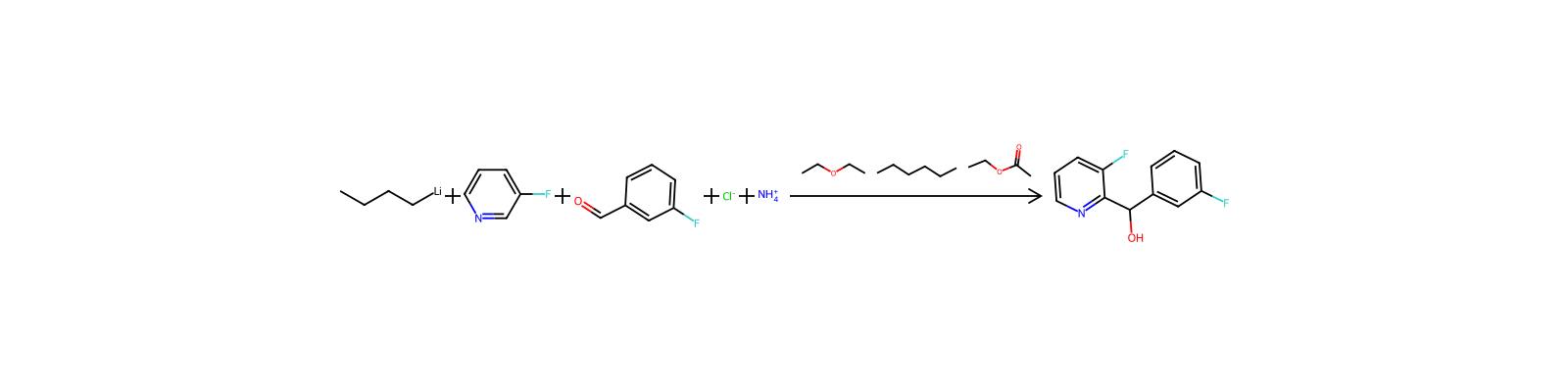
C([Li])CCC.[F:6][C:7]1[CH:8]=[N:9][CH:10]=[CH:11][CH:12]=1.[F:13][C:14]1[CH:15]=[C:16]([CH:19]=[CH:20][CH:21]=1)[CH:17]=[O:18].[Cl-].[NH4+]>C(OCC)C.CCCCCC.C(OCC)(=O)C>[F:13][C:14]1[CH:15]=[C:16]([CH:17]([C:8]2[C:7]([F:6])=[CH:12][CH:11]=[CH:10][N:9]=2)[OH:18])[CH:19]=[CH:20][CH:21]=1Participants
Reactant 4



Product 1

Reagents, catalysts & solvents 3



Conditions
- Temperature
- -20 °C
Procedure
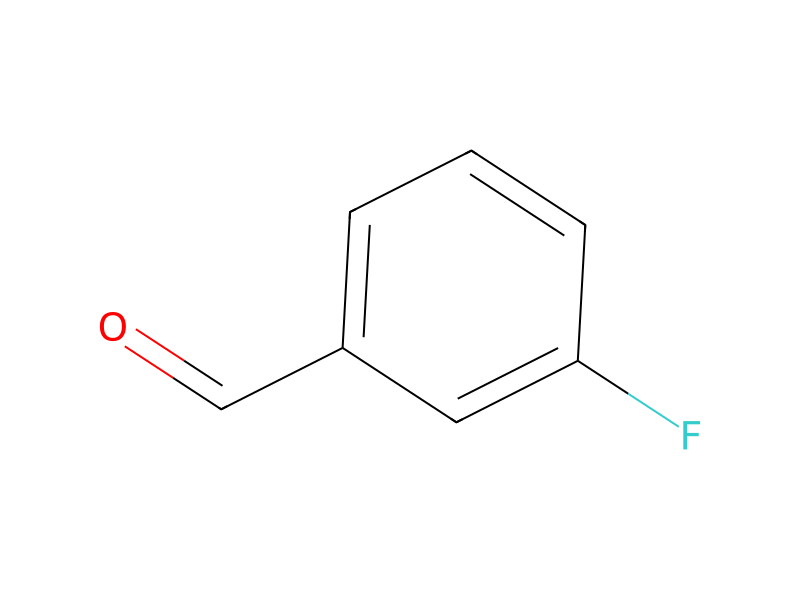
Under nitrogen atmosphere, a solution of 9.75 g of diazabicyclo[2.2.0]octane in 150 mL of dehydrated diethyl ether was cooled to −40° C., added with 56 mL of 1.56 M n-butyllithium in hexane, and stirred at −20° C. for 1 hour. The solution was cooled to-60° C., added dropwise with 6.9 mL of 3-fluoropyridine, stirred at −60° C. for 1 hour, and added with 9.2 mL of 3-fluorobenzaldehyde. After stirring for 1 hour, aqueous ammonium chloride and ethyl acetate were successively added, and the mixture was recovered to room temperature. The organic layer was extracted, washed with water, and then dried over anhydrous magnesium sulfate. The solvent was evaporated, and the resulting crude product was purified and separated by silica gel column chromatography (ethyl acetate:hexane=1:4), to give 12.6 g of the title compound as colorless needle crystals.
Workup
- temperatureThe solution was cooled to-60° C.
- stirringstirred at −60° C. for 1 hour
- stirringAfter stirring for 1 hour
- customthe mixture was recovered to room temperature
- extractionThe organic layer was extracted
- washwashed with water
- dry with materialdried over anhydrous magnesium sulfate
- customThe solvent was evaporated
- customthe resulting crude product was purified
- customseparated by silica gel column chromatography (ethyl acetate:hexane=1:4)
Sources & evidence
- ORD record
- ord-301457584e034ef78be9b798feba0750
- Source dataset
- uspto-grants-2008_09
- Patent number
- US07429609B2
Linked notes
Loading…