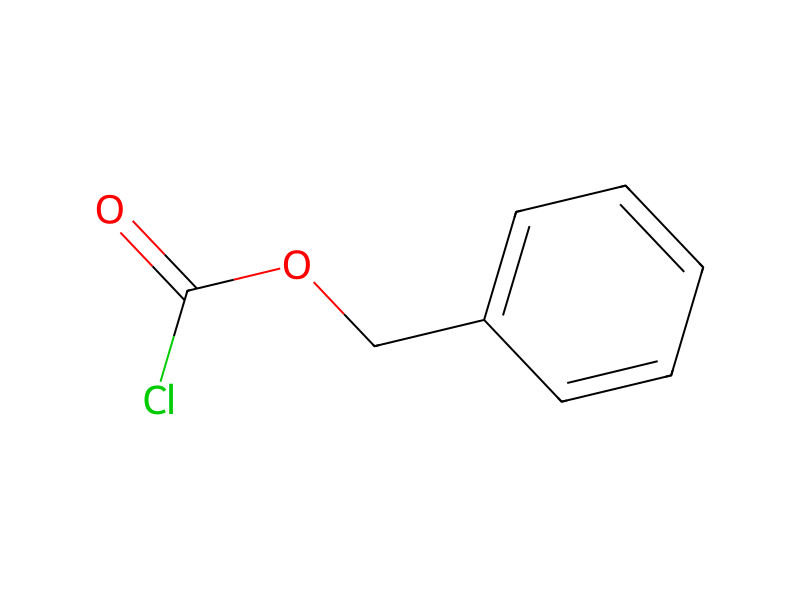
trans-4-Hydroxyproline (27.5 g, 209.7 mmol) 7 was dissolved into 200 mL of 50% MeOH in water. This was then chilled on ice bath to 0° C. To this mixture was added 85.9 mL of benzyl chloroformate (0.252 mmol; 1.2 eq; 50% vol. in toluene) dropwise. Pellets of NaOH were added to maintain the pH at approximately 9-10 (monitored by litmus paper). The mixture was then allowed to warm to room temperature (22° C.). The mixture was allowed to stir over night at room temperature and the pH closely monitored and maintained at pH=10 by addition of NaOH pellets. The mixture was then diluted by addition of 200 mL water and then extracted with 3×200 mL toluene (to remove remaining benzyl chloroformate). The aqueous layer was then salted with NaCl until saturated and the pH was adjusted to approximately 2 by addition of HCl conc. This was then extracted with 4×200 mL of ethyl acetate. The ethyl acetate washes were then combined and concentrated via rotovap, leaving an oil residue. Dichloromethane (50 mL) was added 4 times to remaining oil and then removed by vacuum. Hexanes (50 mL) was then added to the oil and again removed by vacuum, leaving a sticky foam N-Cbz-4-hydroxyproline crude (quantitative yield) which was then used without any further purification. This residue can also be recrystallized in 10:1, hexanes:CH2Cl2. 1H and 13C NMR spectra were in agreement with 1H and 13C NMR spectra previously reported [Robinson. et al 1998].