Reaction equation
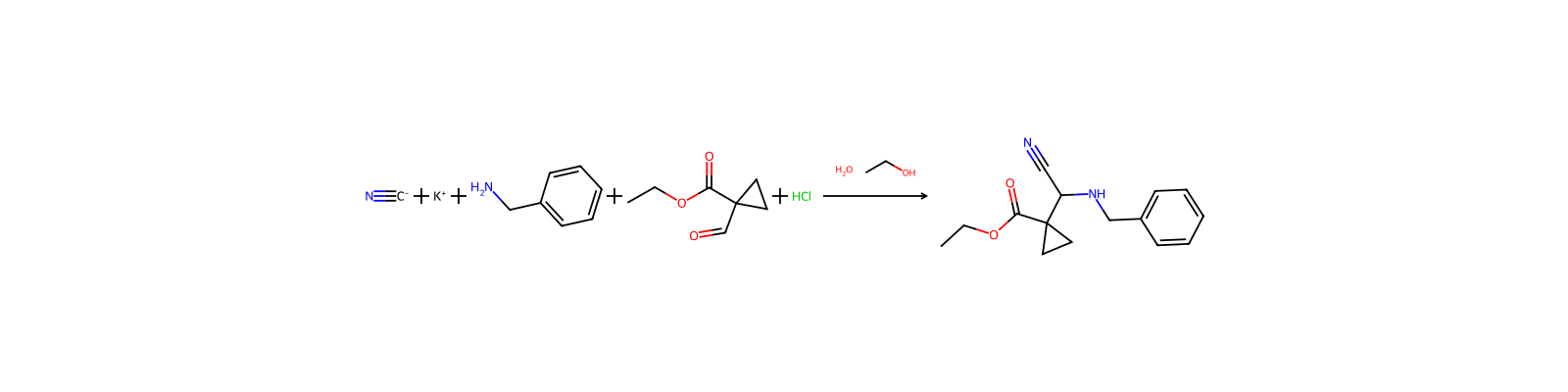
[C-:1]#[N:2].[K+].[CH2:4]([NH2:11])[C:5]1[CH:10]=[CH:9][CH:8]=[CH:7][CH:6]=1.[CH:12]([C:14]1([C:17]([O:19][CH2:20][CH3:21])=[O:18])[CH2:16][CH2:15]1)=O.Cl>O.C(O)C>[CH2:4]([NH:11][CH:12]([C:14]1([C:17]([O:19][CH2:20][CH3:21])=[O:18])[CH2:16][CH2:15]1)[C:1]#[N:2])[C:5]1[CH:10]=[CH:9][CH:8]=[CH:7][CH:6]=1Participants






Conditions
- Temperature
- 50 °C
Procedure
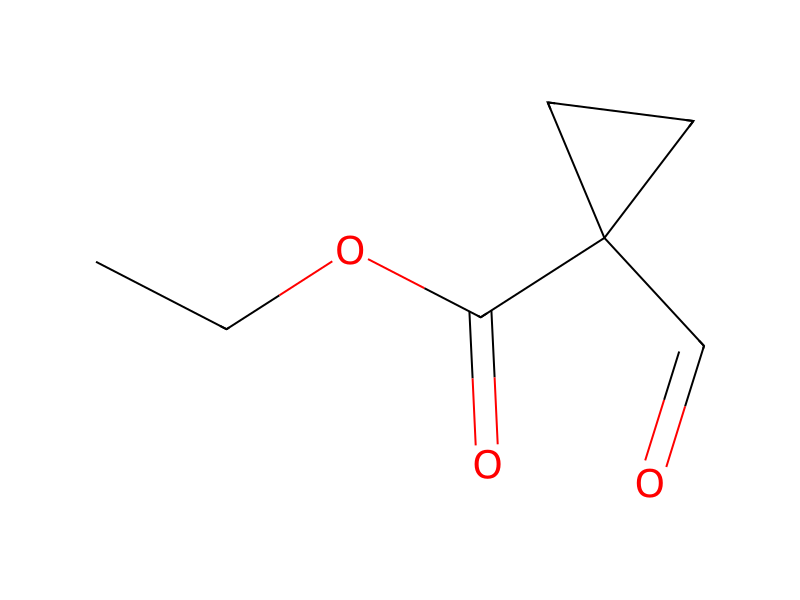
An eggplant type flask was charged with 131 mg of potassium cyanide and 539 mg of benzylamine, and the contents were dispersed in 1 ml of water. Thereto was added dropwise 146 mg of ethyl 1-formylcyclopropane-1-carboxylate dissolved in 2 ml of ethanol at room temperature, followed by dropwise addition of 0.2 ml of concentrated hydrochloric acid. The reaction solution was stirred for 2.5 hours at 50° C. After confirming completion of the reaction, the reaction solution was mixed with ice water and extracted with ethyl acetate. Next, the resulting organic layer was washed with saturated brine, dried over anhydrous sodium sulfate and, after removing insoluble matter by filtration, concentrated under a reduced pressure. Thereafter, the resulting residue was subjected to a silica gel column chromatography (hexane:ethyl acetate=5:1) to obtain 231 mg (87%) of the title compound in the form of colorless oil.
Workup
- customcompletion of the reaction
- extractionextracted with ethyl acetate
- washNext, the resulting organic layer was washed with saturated brine
- dry with materialdried over anhydrous sodium sulfate
- customafter removing insoluble matter
- filtrationby filtration
- concentrationconcentrated under a reduced pressure
Sources & evidence
- ORD record
- ord-d89e0989ae9549d7814e916ed2e809d7
- Source dataset
- uspto-grants-1999_01
- Patent number
- US05856518
Linked notes
Loading…