HomeMCPWorkbenchSkills
HomeWorkbenchNotificationsMe
llms.txt · MCP GuidePrivacy Policy · Terms of Service · Supportv1.8.0
  1. Home
  2. /Reaction

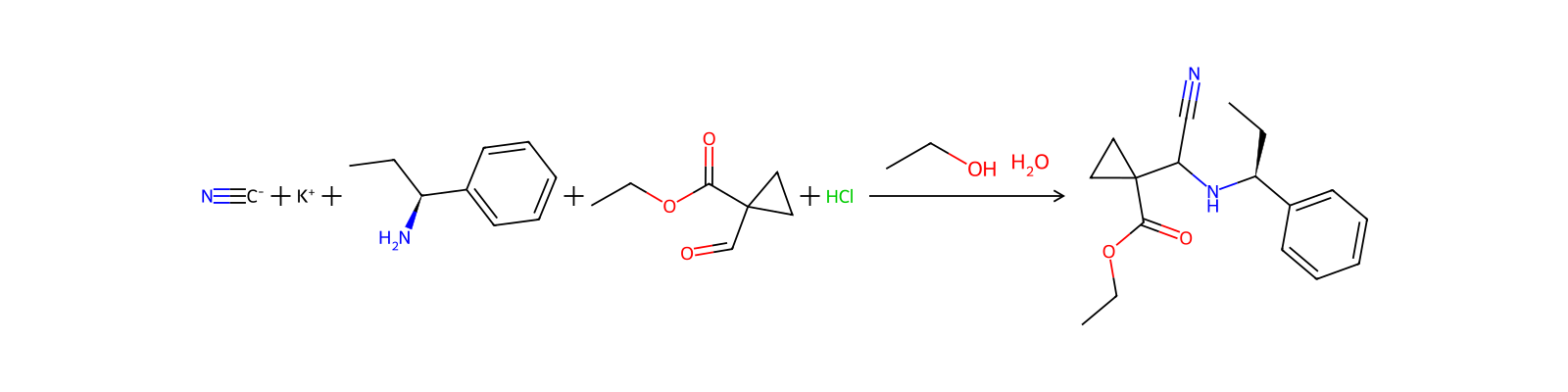
Hydrochloric Acid → 1-[(RS)-1-Cyano-[(S)-1-phenylpropylamino]methyl]-1-ethoxycarbonylcyclopropane

HRID 342047
Notes
Print preview

Reaction equation

HRID 342047 reaction equation
[C-:1]#[N:2].[K+].[C:4]1([C@@H:10]([NH2:13])[CH2:11][CH3:12])[CH:9]=[CH:8][CH:7]=[CH:6][CH:5]=1.[CH:14]([C:16]1([C:19]([O:21][CH2:22][CH3:23])=[O:20])[CH2:18][CH2:17]1)=O.Cl>C(O)C.O>[C:1]([CH:14]([NH:13][C@H:10]([C:4]1[CH:9]=[CH:8][CH:7]=[CH:6][CH:5]=1)[CH2:11][CH3:12])[C:16]1([C:19]([O:21][CH2:22][CH3:23])=[O:20])[CH2:18][CH2:17]1)#[N:2]
ParticipantsProcedureWorkupSources & evidenceReaction notes

Participants

7

Reactant 4

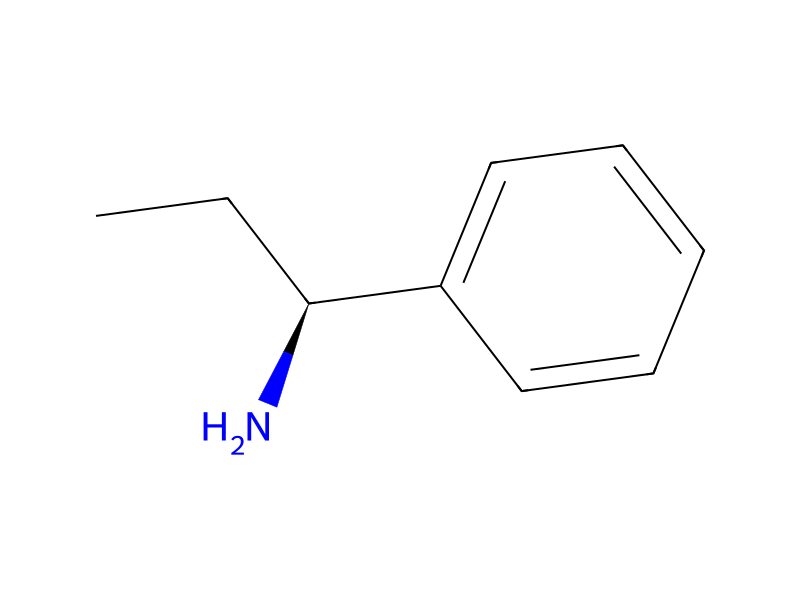
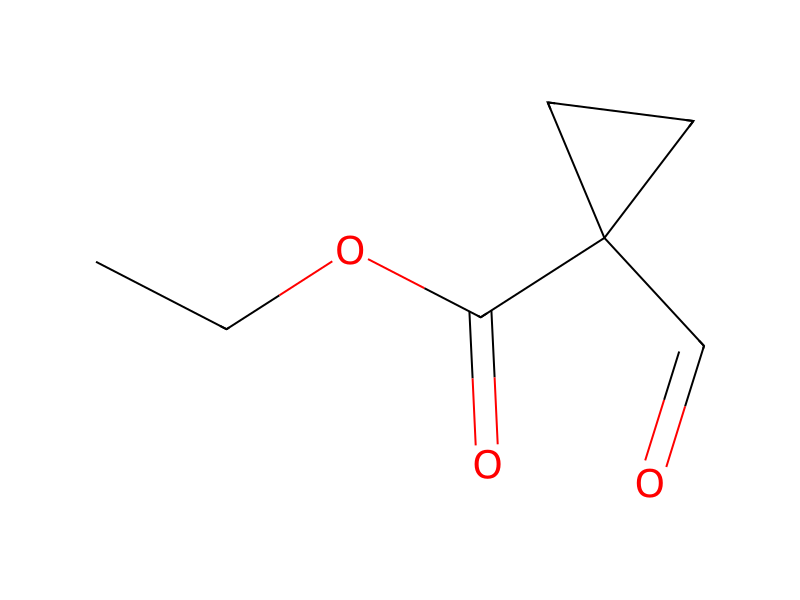
HCID 313Hydrochloric AcidHCID 9032Potassium CyanideHCID 6993773(1S)-1-phenylpropan-1-amineHCID 9964122Ethyl 1-formylcyclopropanecarboxylate

Product 1

HCID 702112091-[(RS)-1-Cyano-[(S)-1-phenylpropylamino]methyl]-1-ethoxycarbonylcyclopropaneYield 59.1%

Reagents, catalysts & solvents 2

HCID 702
Ethanol
Solvent
HCID 962WaterSolvent

Procedure

An eggplant type flask was charged with 136 mg of potassium cyanide, 501 mg of (S)-1-phenylpropylamine and 1 ml of water. After adding 152 mg of ethyl 1-formylcyclopropane-1-carboxylate dissolved in 2 ml of ethanol, dropwise at room temperature, the resulting mixture was further mixed with 0.2 ml of concentrated hydrochloric acid, and stirred for 1 hour at the same temperature and then for 2 hours at 50° C. After confirming completion of the reaction, the reaction solution was mixed with ice water and extracted with ethyl acetate. Next, the resulting organic layer was washed with water and saturated brine, and dried over anhydrous magnesium sulfate and, after removing insoluble matter by filtration, the solvent was evaporated under a reduced pressure. Thereafter, the resulting residue was subjected to a silica gel column chromatography (hexane:ethyl acetate=10:1) to obtain 181 mg (59%) of a diastereomer mixture in the form of colorless oil. Formation ratio of the two diastereomers was calculated under the following analytical conditions.

Workup

  1. waitfor 2 hours at 50° C
  2. customcompletion of the reaction
  3. extractionextracted with ethyl acetate
  4. washNext, the resulting organic layer was washed with water and saturated brine
  5. dry with materialdried over anhydrous magnesium sulfate
  6. customafter removing insoluble matter
  7. filtrationby filtration
  8. customthe solvent was evaporated under a reduced pressure

Sources & evidence

ORD record
ord-d5a95cc5e12c49ebb314619c0387ebd4
Source dataset
uspto-grants-1999_01
DOI
10.6084/m9.figshare.5104873.v1
Patent number
US05856518

Reaction notes

Loading…

On this pageParticipantsProcedureWorkupSources & evidenceReaction notes