Reaction equation

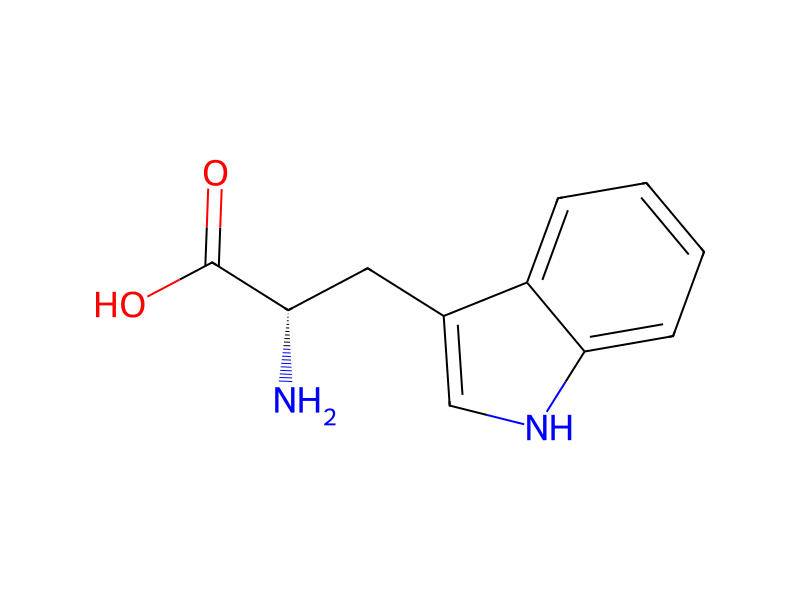
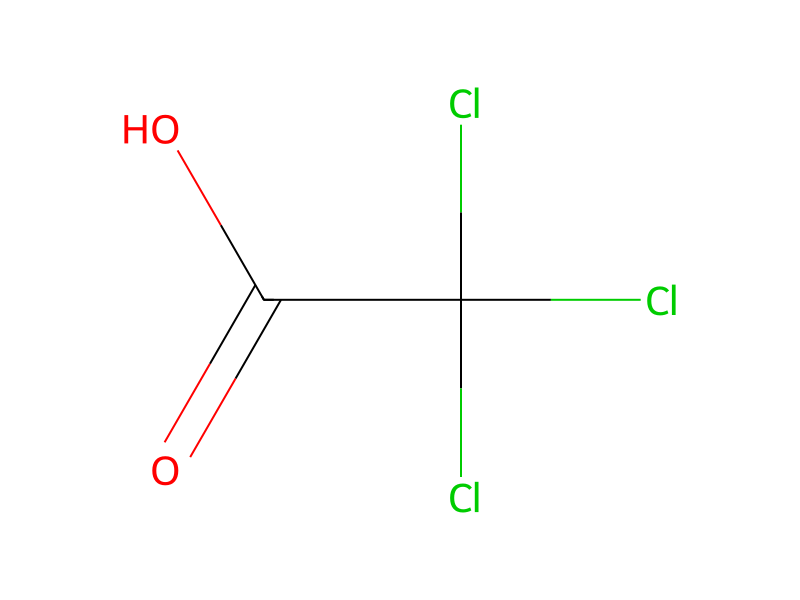
N[C@H](C(O)=O)C[C:4]1[C:12]2[C:7](=[CH:8][CH:9]=[CH:10][CH:11]=2)[NH:6][CH:5]=1.CC1C(O)=C(C=O)C(COP(O)(O)=O)=CN=1.OP([O-])([O-])=O.[K+].[K+].OP([O-])(O)=O.[K+].ClC(Cl)(Cl)C(O)=O>>[NH:6]1[C:7]2[C:12](=[CH:11][CH:10]=[CH:9][CH:8]=2)[CH:4]=[CH:5]1Participants
5



Procedure
Measured in accordance with the method of Yamada et al. as follows. In 4.0ml of a reaction mixture containing 10 micromoles of L-tryptophan, 0.4 micromole of pyridoxalphosphate (PLP)), 200 micromoles of K2HPO4 -KH2PO4 (pH 8.0), the enzyme is incubated at 65° C. for 10 minutes. Then, 1.0 ml of a 30% aqueous solution of trichloroacetic acid (TCA) is added to stop the reaction. Indole formed in the reaction system is quantitatively determined by the method of E. McEvoy-Bowe [The ANALYST, vol. 88, pages 893-894 (1963)]. The activity is expressed in units in which 1 U is the amount in micromoles of indole formed during 1 minute.
Workup
- customthe reaction
Sources & evidence
- ORD record
- ord-206ec9e44fcb496288f80b4c23c1714c
- Source dataset
- uspto-grants-1988_08
- Patent number
- US04761374
Linked notes
Loading…