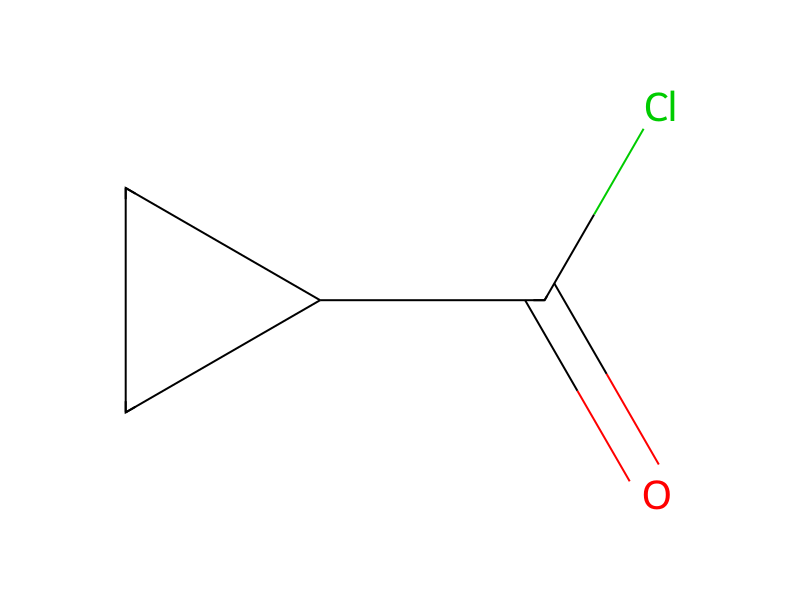
A mixture of 2,2-dimethyl-1,3-dioxan-4,6-dione (20.0 g) and pyridine (22,0 g) in dichloromethane (200 ml) was stirred and cooled to 0° C. in an ice bath. A solution of cyclopropylcarbonyl chloride (16.0 g) in dichloromethane (50 ml) was added dropwise with stirring in an atmosphere of nitrogen whilst maintaining the temperature below 3° C. by external cooling. The mixture was stirred at 0° C. for 1 hour and at ambient temperature for 2 hours. The resultant orange suspension was washed with hydrochloric acid (2M, 2×50 ml), water (2×50 ml), dried (anhydrous sodium sulphate) and filtered. The filtrate was evaporated to dryness. The residue was dissolved in ether (150 ml) and the solution was treated with decolourizing charcoal and filtered. The filtrate was evaporated to dryness to give 5-cyclopropylcarbonyl-2,2-dimethyl-1,3-dioxan4,6-dione (24.2 g) as a yellow solid mp 44°-46° C.