HomeMCPWorkbenchSkills
HomeWorkbenchNotificationsMe
llms.txt · MCP GuidePrivacy Policy · Terms of Service · Supportv1.8.0
  1. Home
  2. /Reaction

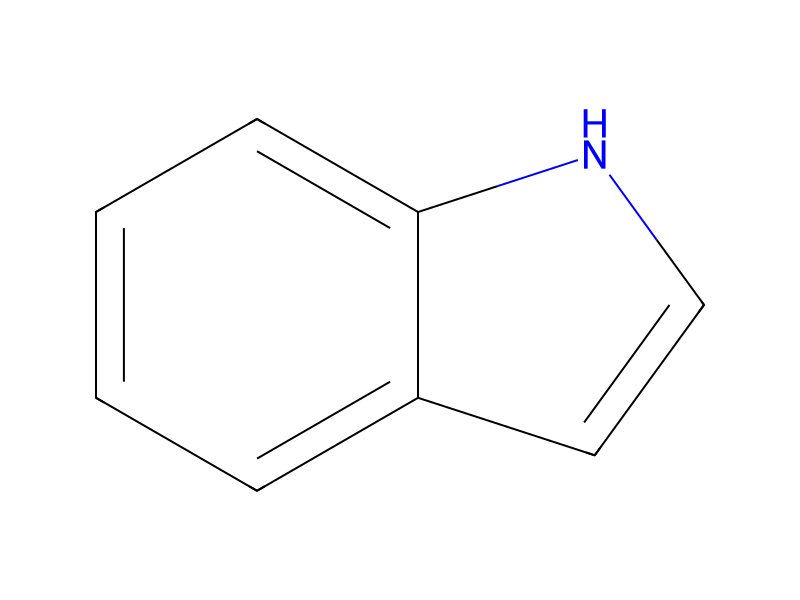
Indole → 3-Chloroacetylindole

HRID 344020
Notes
Print preview

Reaction equation

HRID 344020 reaction equation
[NH:1]1[C:9]2[C:4](=[CH:5][CH:6]=[CH:7][CH:8]=2)[CH:3]=[CH:2]1.N1C=CC=CC=1.[Cl:16][CH2:17][C:18](Cl)=[O:19]>C1(C)C=CC=CC=1.C(OCC)(=O)C>[Cl:16][CH2:17][C:18]([C:3]1[C:4]2[C:9](=[CH:8][CH:7]=[CH:6][CH:5]=2)[NH:1][CH:2]=1)=[O:19]
ParticipantsConditionsProcedureWorkupSources & evidenceReaction notes

Participants

6

Reactant 3

HCID 798IndoleHCID 1049PyridineHCID 6577Chloroacetyl chloride

Product 1

HCID 1529613-Chloroacetylindole

Reagents, catalysts & solvents 2

HCID 1140TolueneSolvent2×HCID 8857Ethyl AcetateSolvent

Conditions

Temperature
55 °C

Procedure

According to the method of J. Bergman et al. Tet. 29, 971-976 (1973), combine indole (11.7 g, 100 mmol), pyridine (8.1 mL, 100 mmol), and toluene (250 mL). Heat to 55° C. Add dropwise a solution of chloroacetyl chloride (8 mL, 100 mmol) in toluene (10 mL). After 2 hours, cool to ambient temperature. Dilute the reaction mixture with ethyl acetate and extract with water. Dry the organic layer over MgSO4, filter and evaporate in vacuo to give a residue. Recrystallize the residue from ethanol to give the title compound.

Workup

  1. temperaturecool to ambient temperature
  2. extractionextract with water
  3. dry with materialDry the organic layer over MgSO4
  4. filtrationfilter
  5. customevaporate in vacuo
  6. customto give a residue
  7. customRecrystallize the residue from ethanol

Sources & evidence

ORD record
ord-180896ac5dfb49e08bdfc25733e7fbeb
Source dataset
uspto-grants-1999_01
DOI
10.6084/m9.figshare.5104873.v1
Patent number
US05864045

Reaction notes

Loading…

On this pageParticipantsConditionsProcedureWorkupSources & evidenceReaction notes