Reaction equation

Cl[CH2:2][C:3]1[O:4][C:5]2[CH:11]=[CH:10][C:9]([N+:12]([O-:14])=[O:13])=[CH:8][C:6]=2[N:7]=1.[CH3:15][NH:16][CH2:17][CH2:18][C:19]1[CH:24]=[CH:23][C:22]([N+:25]([O-:27])=[O:26])=[CH:21][CH:20]=1.C(=O)([O-])[O-].[K+].[K+].[I-].[Na+]>C(#N)C>[CH3:15][N:16]([CH2:17][CH2:18][C:19]1[CH:24]=[CH:23][C:22]([N+:25]([O-:27])=[O:26])=[CH:21][CH:20]=1)[CH2:2][C:3]1[O:4][C:5]2[CH:11]=[CH:10][C:9]([N+:12]([O-:14])=[O:13])=[CH:8][C:6]=2[N:7]=1Participants



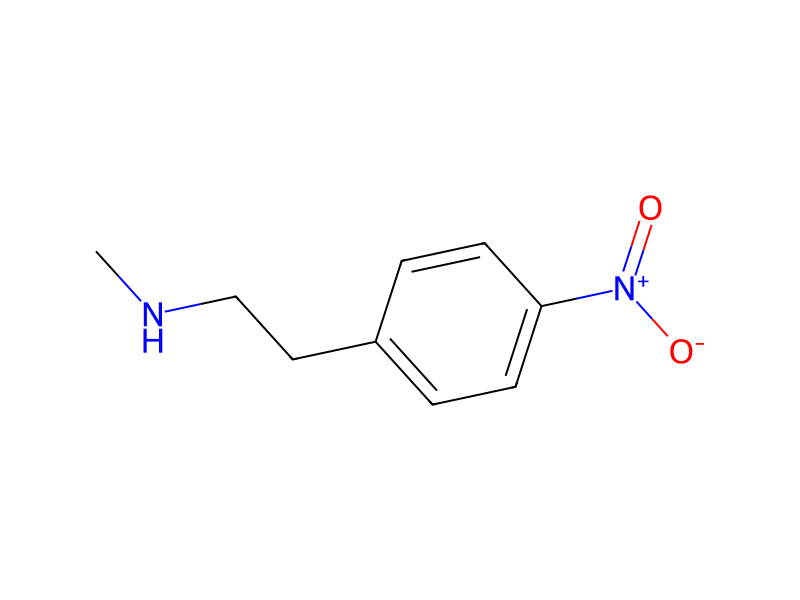


Procedure
2-Chloromethyl-5-nitrobenzoxazole (2.85 g, 13.4 mmole), N-methyl-4-nitrophenethylamine (J.O.C., [1956], 21, 45) (2.2 g, 12.2 mmole), potassium carbonate (1.85 g, 13.4 mmole) and sodium iodide (2.0 g, 13.4 mmole) were heated under reflux in acetonitrile (50 ml) for 3 days. The solvent was then evaporated, the residue diluted with water, and extracted three times with methylene chloride. The combined organic extracts were washed with water, dried (MgSO4), filtered and evaporated to dryness. The resultant oil was diluted with ether and the supernatant decanted and evaporated to dryness to give an orange solid, which was recrystallised from isopropanol to give the title compound, yield 0.80 g. 'H-N.m.r. (CDC13): δ=8.6 (d, 1H); 8.3 (dd, 1H); 8.1 (d, 2H); 7.6 (d, 1H); 7.35 (d, 2H); 3.95 (s, 2H); 2.95 (q, 2H); 2.85 (q, 2H); 2.5 (s, 3H) p.p.m.
Workup
- customThe solvent was then evaporated
- additionthe residue diluted with water
- extractionextracted three times with methylene chloride
- washThe combined organic extracts were washed with water
- dry with materialdried (MgSO4)
- filtrationfiltered
- customevaporated to dryness
- additionThe resultant oil was diluted with ether
- customthe supernatant decanted
- customevaporated to dryness
- customto give an orange solid, which
- customwas recrystallised from isopropanol
Sources & evidence
- ORD record
- ord-16a4d8d778994655bd85a543ff7226e3
- Source dataset
- uspto-grants-1991_10
- Patent number
- US05055473
Linked notes
Loading…