Reaction equation

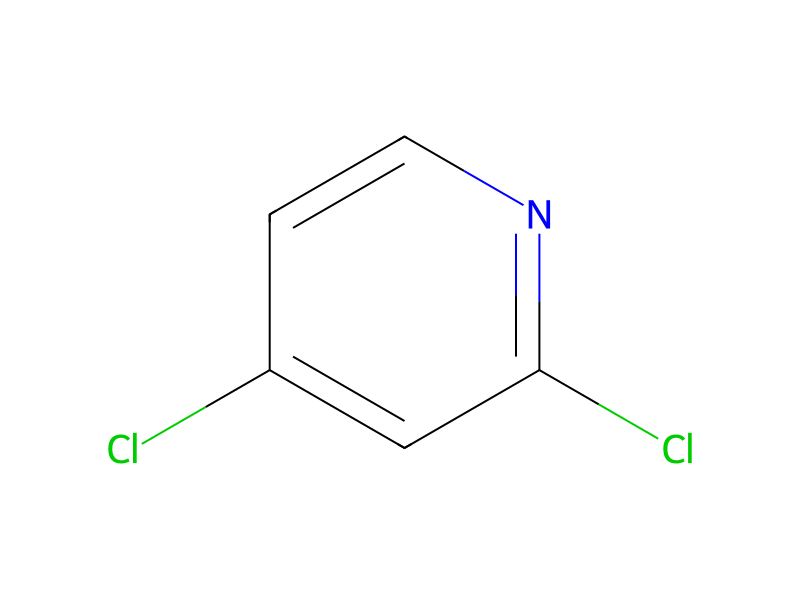
CCOC(=O)c1cnc(N)o1.Clc1ccnc(Cl)c1>C1COCCO1.CC1(C)c2cccc(P(c3ccccc3)c3ccccc3)c2Oc2c(P(c3ccccc3)c3ccccc3)cccc21.O=C(/C=C/c1ccccc1)/C=C/c1ccccc1.O=C(/C=C/c1ccccc1)/C=C/c1ccccc1.O=C(/C=C/c1ccccc1)/C=C/c1ccccc1.O=C([O-])[O-].[Cs+].[Cs+].[Pd].[Pd]>CCOC(=O)c1cnc(Nc2cc(Cl)ccn2)o1Participants
Reactant 2

Product 1

Reagents, catalysts & solvents 4




Conditions
- Temperature
- 160 °C
Procedure
Objective: To make the coupled product on a larger scale for hydrolysis/decarboxylation Pd2(dba)3 (80 mg, 0.09 mmol), 9,9-dimethyl-4,5-bis(diphenylphosphino)xanthene (152 mg, 0.26 mmol), 2,4-dichloropyridine (0.378 mL, 3.50 mmol), cesium carbonate (2279 mg, 6.99 mmol) and ethyl 2-aminooxazole-5-carboxylate (546 mg, 3.50 mmol) were added to an oven dried microwave vial and the vial was capped and placed under an inert atmosphere, dioxane (18 mL) was added and the resulting mixture was heated to 160 °C for 1 h by microwave irradiation under a nitrogen atmosphere. The crude product was purified by flash silica chromatography, elution gradient 0 to 3% MeOH (7 N ammonia) in DCM. Pure fractions were evaporated to dryness to afford ethyl 2-(4-chloropyridin-2-ylamino)oxazole-5-carboxylate (892 mg, 95 %) as a brown solid. Analysis of the product after chromatography showed that it was ~ 75% pure by proton NMR and LCMS, therefore the actual yield of the desired product is closer to 70%. Note: the reaction was carried out twice on the above scale.
Sources & evidence
- ORD record
- ord-5d8d88656735435b992c60c9f2e9cc2e
- Source dataset
- 750 AstraZeneca ELN dataset
- Original link
- View source
Linked notes
Loading…