Reaction equation

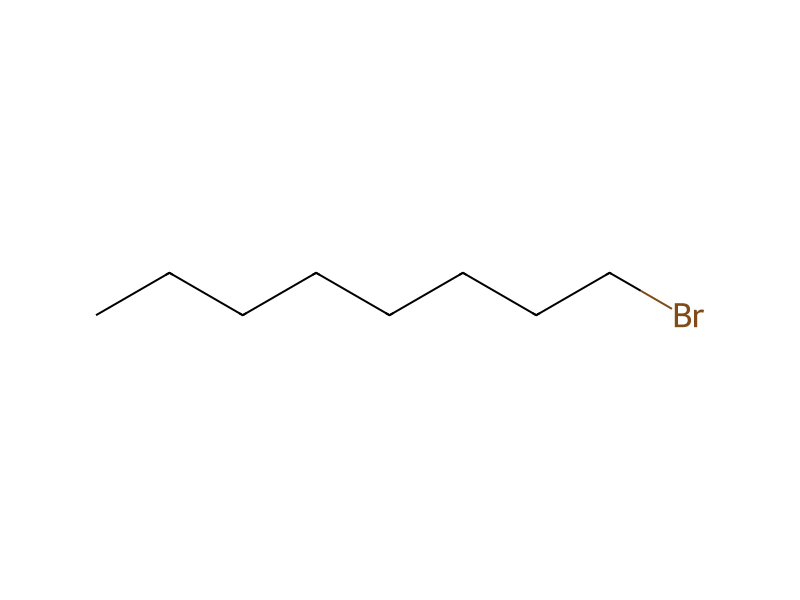
[OH:1][CH2:2][C:3]1([CH3:7])[CH2:6][O:5][CH2:4]1.[Na].Br[CH2:10][CH2:11][CH2:12][CH2:13][CH2:14][CH2:15][CH2:16][CH3:17]>O1CCOCC1>[CH2:10]([O:1][CH2:2][C:3]1([CH3:7])[CH2:6][O:5][CH2:4]1)[CH2:11][CH2:12][CH2:13][CH2:14][CH2:15][CH2:16][CH3:17]Participants
Reactant 3


Product 1

Reagents, catalysts & solvents 1

Procedure
Into a 5 liter, three-neck flask, fitted with a stirrer, reflux condenser, and nitrogen inlet tube, were placed 245 g (2.4 mole) of 3-hydroxymethyl-3-methyloxetane and 3000 ml of p-dioxane. To this solution 47 g (2 mole) of solid sodium metal was added, and the pot temperature was raised to reflux. Heat was maintained until all of the sodium had dissolved. 400 g (2 mole) of 1-bromooctane was added, and the reflux was resumed for 3 days. The mixture was cooled to room temperature, and the solid sodium bromide was filtered off using celite. The solvent was removed by evaporation and the product was distilled at 80° C. and 0.3-mm pressure. Redistillation from calcium hydride gave 231 g of polymerizable monomer, representing a 58 percent yield.
Workup
- customInto a 5 liter, three-neck flask, fitted with a stirrer
- temperaturereflux condenser, and nitrogen inlet tube
- temperaturethe pot temperature was raised
- temperatureto reflux
- temperatureHeat
- dissolutionhad dissolved
- filtrationthe solid sodium bromide was filtered off
- customThe solvent was removed by evaporation
- distillationthe product was distilled at 80° C.
- distillationRedistillation from calcium hydride
Sources & evidence
- ORD record
- ord-101502ab77eb40c4a13d0614e6644675
- Source dataset
- uspto-grants-1988_08
- Patent number
- US04764586
Linked notes
Loading…