Reaction equation

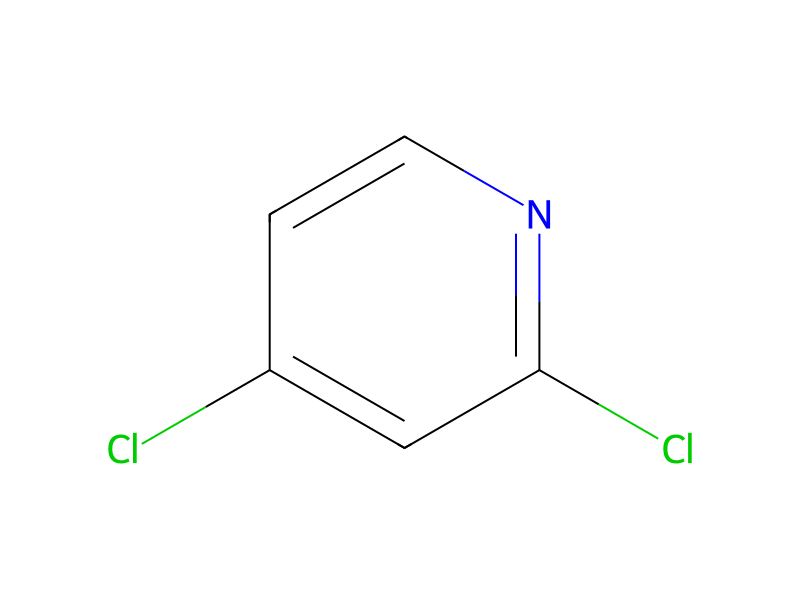
CCOC(=O)c1cnc(N)o1.Clc1ccnc(Cl)c1>C1COCCO1.CC1(C)c2cccc(P(c3ccccc3)c3ccccc3)c2Oc2c(P(c3ccccc3)c3ccccc3)cccc21.O=C(/C=C/c1ccccc1)/C=C/c1ccccc1.O=C(/C=C/c1ccccc1)/C=C/c1ccccc1.O=C(/C=C/c1ccccc1)/C=C/c1ccccc1.O=C([O-])[O-].[Cs+].[Cs+].[Pd].[Pd]>CCOC(=O)c1cnc(Nc2cc(Cl)ccn2)o1Participants
Reactant 2

Product 1

Reagents, catalysts & solvents 4




Conditions
- Temperature
- 140 °C
Procedure
Objective: To find out if the regioisomeric ester is also a reaction substrate in this C-N bond forming reaction Pd2(dba)3 (22.89 mg, 0.025 mmol), 9,9-dimethyl-4,5-bis(diphenylphosphino)xanthene (43.4 mg, 0.075 mmol), 2,4-dichloropyridine (148 mg, 1.00 mmol), cesium carbonate (651 mg, 2.00 mmol),ethyl 2-aminooxazole-5-carboxylate (156 mg, 1.00 mmol) were added to an oven dried microwave vial, the vial was capped and placed under an inert atmosphere, dioxane (4 mL) was added and the resulting mixture was heated at 140 °C for 1 h by microwave irradiation under a nitrogen atmosphere. The crude product was purified by flash silica chromatography, elution gradient 0 to 30% EtOAc in heptane. Pure fractions were evaporated to dryness to afford ethyl 2-(4-chloropyridin-2-ylamino)oxazole-5-carboxylate (135 mg, 50.5 %) as a white solid. Conclusion: The desired product was isolated in > 50% isolated yield. The electron withdrawing ester group again has a positive effect on this reaction. More work needs to be carried out to probe the origin of this effect. NOESY confirmed expected regioisomer was formed (see sample details).
Sources & evidence
- ORD record
- ord-e464c7497c0f42409f807567be2bf47a
- Source dataset
- 750 AstraZeneca ELN dataset
- Original link
- View source
Linked notes
Loading…