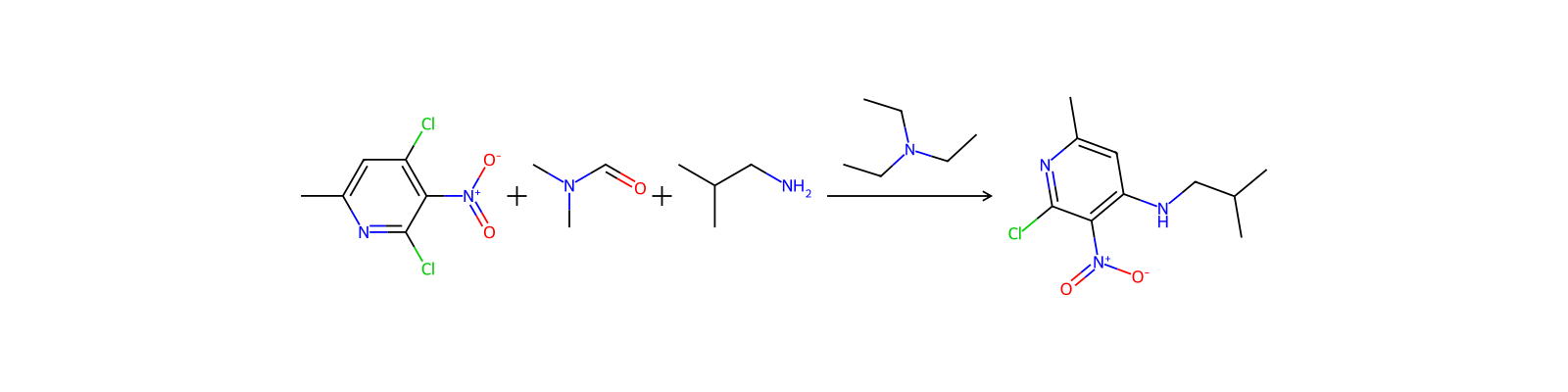
2,4-Dichloro-6-methyl-3-nitropyridine (28.75 g) and anhydrous dimethylformamide (300 ml) were combined and cooled to 0° C. Triethylamine (19.4 ml) and then 2-methylpropylamine (13.8 ml) were added to the resulting mixture. The reaction was not complete as determined by HPLC and TLC after 16 hours. An additional 1.38 ml of 2-methylpropylamino was added to the reaction mixture, and after another hour the reaction was complete. The dimethylformamide was removed from the resulting reaction mixture under reduced pressure, and the resulting dark yellow oil was dissolved in ethyl acetate. The ethyl acetate solution was washed with water (3×), dried with magnesium sulfate, and the solvent was removed under reduced pressure. The resulting yellow oil was dissolved in hexane and cooled to below 0° C. overnight. A yellow solid formed. The yellow solid was washed with cold (<0° C.) hexane and filtered. The remaining crystals (22.02 g) were found to be pure by NMR analysis and used in the next step.