Reaction equation

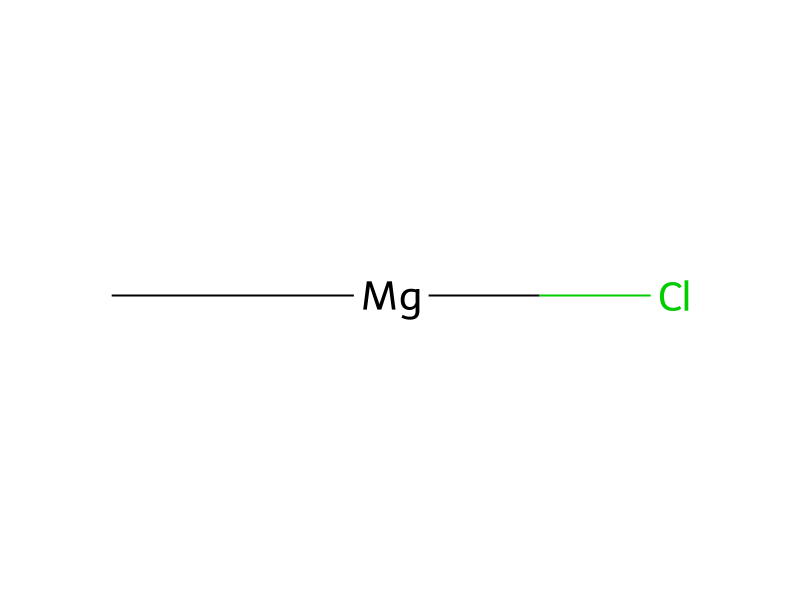
[N:1]1[CH:6]=[CH:5][CH:4]=[C:3]([CH3:7])[C:2]=1[CH3:8].Cl[C:10]([O:12][CH2:13][CH3:14])=[O:11].[CH3:15][Mg]Cl>[Cu]I.O1CCCC1>[CH3:8][C:2]1[N:1]([C:10]([O:12][CH2:13][CH3:14])=[O:11])[CH:6]=[CH:5][CH:4]([CH3:15])[C:3]=1[CH3:7]Participants
Reactant 3


Product 1

Reagents, catalysts & solvents 2


Procedure
A solution of 6.75 g of 2,3-lutidine and 475 mg of copper(I) iodide in 150 ml of abs. tetrahydrofuran is cooled to -20° and treated under argon with 3.4 ml of ethyl chloroformate. The reaction mixture is heated to 30° and treated dropwise within 10 minutes with 14 ml of methylmagnesium chloride (3 molar, in tetrahydrofuran). The ethyl 2,3,4-trimethyl-l (4H)-pyridinecarboxylate obtained as the intermediate can be isolated as follows: The reaction mixture is cooled to -10° and treated with 38 ml of aqueous (20%) ammonium chloride solution, whereupon 100 ml of ether are added and the organic solution is washed several times with a 20% ammonium chloride/ammonia (1:1) solution, 2N hydrochloric acid and 10% sodium carbonate solution. The organic solution is dried and concentrated, and the residue is purified on a silica gel column, the medium pressure flash chromatography method (solvent: n-hexane/ether [20:1]) being used and the pressure being produced with nitrogen gas.
Workup
- temperatureThe reaction mixture is heated to 30°
Sources & evidence
- ORD record
- ord-bc2024f6a43d4c4ea3d71242dd15c4d3
- Source dataset
- uspto-grants-1988_08
- Patent number
- US04766133
Linked notes
Loading…