HomeMCPWorkbenchSkills
HomeWorkbenchNotificationsMe
llms.txt · MCP GuidePrivacy Policy · Terms of Service · Supportv1.8.3
  1. Home
  2. /Reaction

Hydrochloric Acid → 1-(1,4-Benzodioxan-2-ylcarbonyl)piperazine hydrochloride

HRID 354839
Print

Reaction equation

HRID 354839 reaction equation
[NH:1]1[CH2:6][CH2:5][NH:4][CH2:3][CH2:2]1.C([O-])(=O)C.[Na+].Cl.[O:13]1[C:18]2[CH:19]=[CH:20][CH:21]=[CH:22][C:17]=2[O:16][CH2:15][CH:14]1[C:23]([Cl:25])=[O:24].[OH-].[Na+]>O.CC(C)=O>[ClH:25].[O:13]1[C:18]2[CH:19]=[CH:20][CH:21]=[CH:22][C:17]=2[O:16][CH2:15][CH:14]1[C:23]([N:1]1[CH2:6][CH2:5][NH:4][CH2:3][CH2:2]1)=[O:24]
ParticipantsProcedureWorkupSources & evidenceReaction notes

Participants

8

Reactant 5

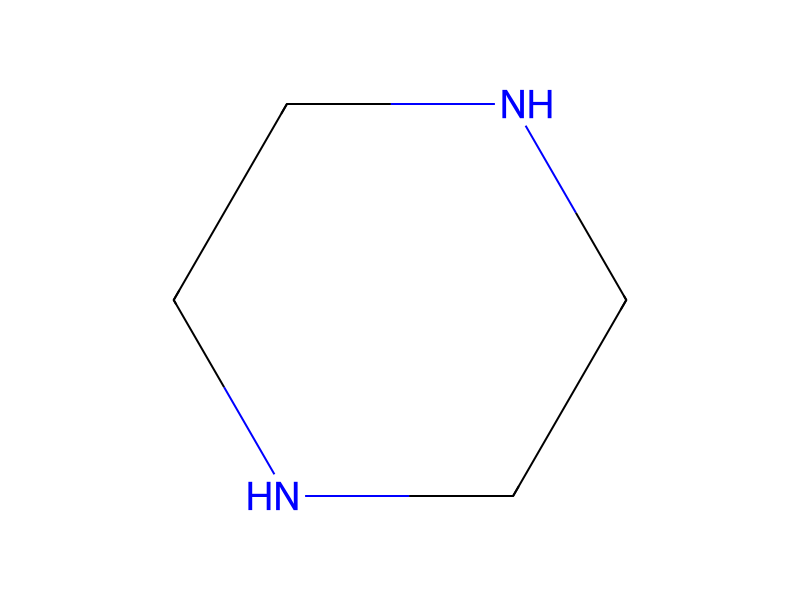
HCID 313Hydrochloric AcidHCID 4837PiperazineHCID 14798Sodium Hydroxide3×HCID 517045Sodium AcetateHCID 27354472,3-Dihydro-1,4-benzodioxin-2-carbonyl chloride

Product 1

HCID 28224341-(1,4-Benzodioxan-2-ylcarbonyl)piperazine hydrochloride
Yield 12.3%

Reagents, catalysts & solvents 2

HCID 180AcetoneSolventHCID 962WaterSolvent2×

Procedure

A suspension of piperazine (11.88 g.) and sodium acetate (20.30 g.) in a mixture of water (70 ml.) and acetone (95 ml.) was stirred at 10°-15° C., then concentrated hydrochloric acid was added (about 35 ml.) until the pH of the solution reached 1.5. 1,4-Benzodioxan-2-carbonyl chloride (31.0 g.) and sodium hydroxide (5 N, about 45 ml.) were then added portionwise while maintaining the temperature at 10°-15° C., the sodium hydroxide maintaining the pH at 1.7-2.2. After the addition was complete, the pH was adjusted to 2.0 by the addition of sodium hydroxide, the suspension was stirred for a further 30 minutes. Water was then added until a homogeneous solution resulted, the acetone removed in vacuo, and the aqueous phase was basified to pH 8-9 with sodium hydroxide (5 N), re-extracted with chloroform (3×200 ml.) and the extracts washed with water, dried (MgSO4) and evaporated in vacuo. The oily residue was dissolved in ethyl acetate, treated with ethereal hydrogen chloride, evaporated in vacuo and the solid residue triturated with ether, followed by recrystallization from methanol to give N-(1,4-benzodioxan-2-carbonyl)-piperazine hydrochloride (4.85 g.), M.P. 265°-267° C.


Workup

  1. temperaturewhile maintaining the temperature at 10°-15° C.
  2. additionAfter the addition
  3. stirringthe suspension was stirred for a further 30 minutes
  4. customresulted
  5. customthe acetone removed in vacuo
  6. extractionre-extracted with chloroform (3×200 ml.)
  7. washthe extracts washed with water
  8. dry with materialdried (MgSO4)
  9. customevaporated in vacuo
  10. dissolutionThe oily residue was dissolved in ethyl acetate
  11. additiontreated with ethereal hydrogen chloride
  12. customevaporated in vacuo
  13. customthe solid residue triturated with ether
  14. customfollowed by recrystallization from methanol

Sources & evidence

ORD record
ord-ad716962594649ddb4f9fab4437c3eb8
Source dataset
uspto-grants-1983_03
DOI
10.6084/m9.figshare.5104873.v1
Patent number
US04377581

Reaction notes

On this pageParticipantsProcedureWorkupSources & evidenceReaction notes