Reaction equation

O=[C:2]1[C:8]2[CH:9]=[CH:10][CH:11]=[CH:12][C:7]=2[N:6]([C:13]([NH2:15])=[O:14])[C:5]2[CH:16]=[CH:17][CH:18]=[CH:19][C:4]=2[CH2:3]1.[C:20]1([NH:26][NH2:27])[CH:25]=[CH:24][CH:23]=[CH:22][CH:21]=1.C([O-])(=O)C.[Na+].C(O)C>O.Cl>[C:20]1([NH:26][N:27]=[C:2]2[C:8]3[CH:9]=[CH:10][CH:11]=[CH:12][C:7]=3[N:6]([C:13]([NH2:15])=[O:14])[C:5]3[CH:16]=[CH:17][CH:18]=[CH:19][C:4]=3[CH2:3]2)[CH:25]=[CH:24][CH:23]=[CH:22][CH:21]=1Participants
7
Reactant 4

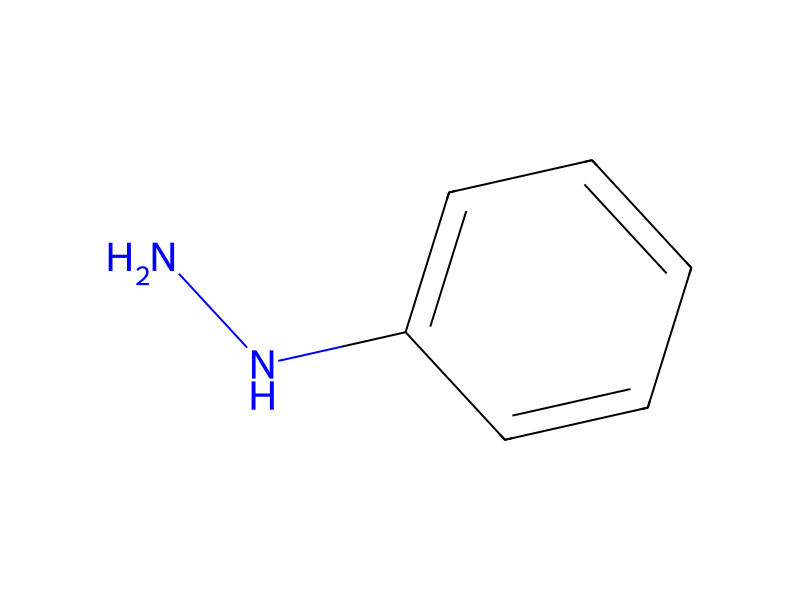


Product 1

Reagents, catalysts & solvents 2


Conditions
- Temperature
- 60 °C
Procedure
A mixture of 0.2 g (0.8 mmol) of 10,11-dihydro-10-oxo-5H-dibenz[b,f]azepine-5-carboxamide, 0.5 g (4.6 mmol) of phenylhydrazine and 0.5 g (6 mmol) of sodium acetate in a mixture of 5 mL of water, 5 mL of ethanol and 3 drops of concentrated hydrochloric acid was heated at 60° C. for thirty minutes and then allowed to cool to room temperature. The precipitate was then filtered and washed with cold water and dilute ethanol to give the desired product as yellow crystals of m.p. 220° to 220.8° C.
Workup
- temperatureto cool to room temperature
- filtrationThe precipitate was then filtered
- washwashed with cold water and dilute ethanol
Sources & evidence
- ORD record
- ord-855a5c958cf4417daab61cf5df6532a4
- Source dataset
- uspto-grants-1999_02
- Patent number
- US05866566
Linked notes
Loading…