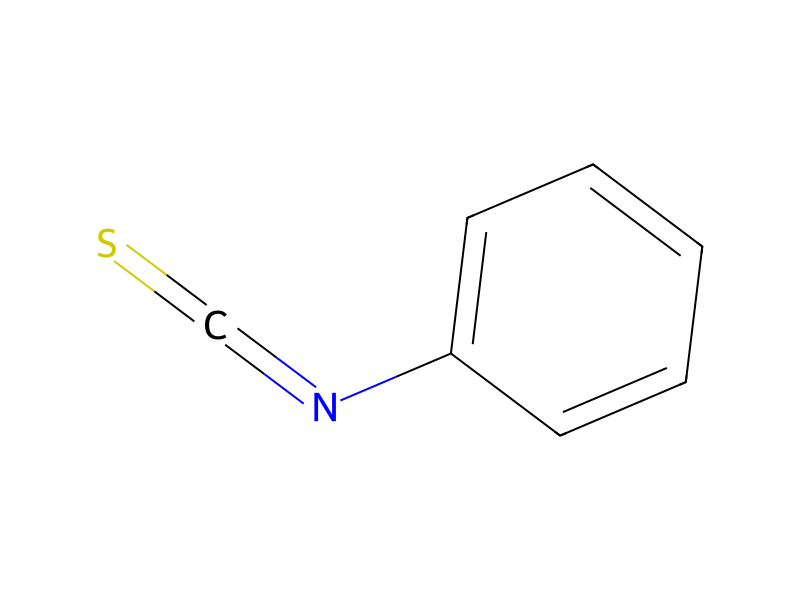
Phenyl Isothiocyanate → 1-Piperazinecarbothioamide, 4-(4-amino-6,7-dimethoxy-2-quinazolinyl)-N-phenyl-
HRID 364888
Reaction equation

[N:1]1([C:7]2[N:16]=[C:15]([NH2:17])[C:14]3[C:9](=[CH:10][C:11]([O:20][CH3:21])=[C:12]([O:18][CH3:19])[CH:13]=3)[N:8]=2)[CH2:6][CH2:5][NH:4][CH2:3][CH2:2]1.[C:22]1([N:28]=[C:29]=[S:30])[CH:27]=[CH:26][CH:25]=[CH:24][CH:23]=1>O1CCOCC1>[C:22]1([NH:28][C:29]([N:4]2[CH2:5][CH2:6][N:1]([C:7]3[N:16]=[C:15]([NH2:17])[C:14]4[C:9](=[CH:10][C:11]([O:20][CH3:21])=[C:12]([O:18][CH3:19])[CH:13]=4)[N:8]=3)[CH2:2][CH2:3]2)=[S:30])[CH:27]=[CH:26][CH:25]=[CH:24][CH:23]=1Participants
4



Procedure
In 20 ml of dioxane, there was dissolved 0.87 g. (3 mmole) of 2-piperazino-4-amino-6,7-dimethoxyquinazoline. To the resultant solution was added dropwise a solution of 0.41 g. (3 mmole) of phenylisothiocyanate dissolved in 10 ml of dioxane at room temperature. The mixture was further stirred overnight. After evaporation of the solvent, the residue was chromatographed on silica gel and eluted with 20% dioxane-chloroform to obtain 0.89 g. of the desired product.