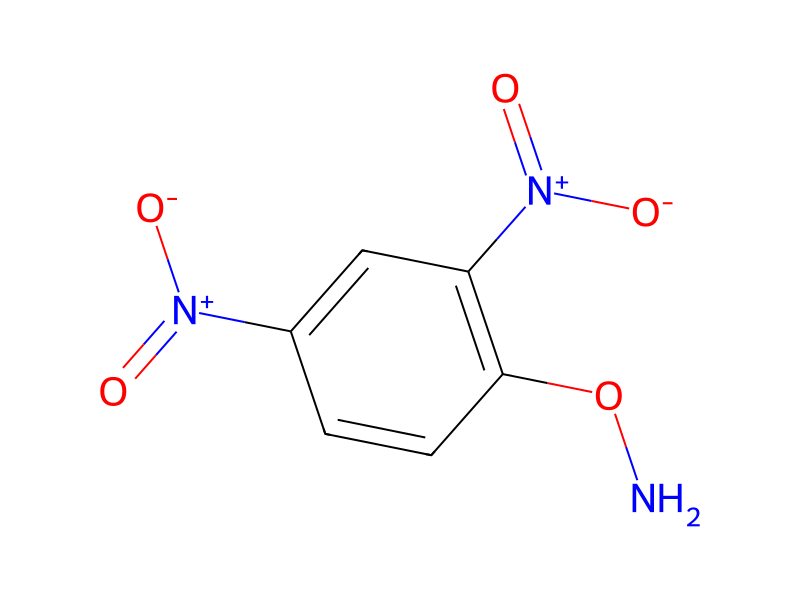
C[N:2](C)C=O.[Cl:6][C:7]1[C:12]2[CH:13]=[C:14]([CH2:16][CH3:17])[O:15][C:11]=2[C:10]([N:18]2[C:23](=[O:24])[CH:22]=[C:21]([C:25]([F:28])([F:27])[F:26])[NH:20][C:19]2=[O:29])=[C:9]([F:30])[CH:8]=1.[N+](C1C=C([N+]([O-])=O)C=CC=1ON)([O-])=O.C(=O)([O-])[O-].[K+].[K+]>O>[Cl:6][C:7]1[C:12]2[CH:13]=[C:14]([CH2:16][CH3:17])[O:15][C:11]=2[C:10]([N:18]2[C:23](=[O:24])[CH:22]=[C:21]([C:25]([F:28])([F:26])[F:27])[N:20]([NH2:2])[C:19]2=[O:29])=[C:9]([F:30])[CH:8]=180 ml of N,N-dimethylformamide was added to 3.4 g (9.0 mmol) of 3-(4-chloro-2-ethyl-6-fluorobenzofuran-7-yl)-6-trifluoromethyluracil, 2.7 g (14 mmol) of 2,4-dinitrophenoxyamine and 5.0 g (36 mmol) of potassium carbonate, followed by stirring at 60 to 70° C. for 1 hour. After completion of the reaction, the reaction solution was poured into water and extracted with ethyl acetate. The organic layer was washed sequentially with water and a saturated sodium chloride aqueous solution and then dried over anhydrous magnesium sulfate. The solvent was distilled off under reduced pressure. Then, the obtained residue was purified by silica gel column chromatography to obtain 2.0 g (yield: 58%) of the desired product as white crystals. Melting point: 145-147° C.
Loading…