HomeMCPWorkbenchSkills
HomeWorkbenchNotificationsMe
llms.txt · MCP GuidePrivacy Policy · Terms of Service · Supportv1.8.1
  1. Home
  2. /Reaction

Pseudoephedrine → N-(2-hydroxy-1-methyl-2-phenylethyl)-N-methyl benzeneacetamide

HRID 376019
Print

Reaction equation

HRID 376019 reaction equation
[CH3:1][C@H:2]([NH:11][CH3:12])[C@@H:3]([OH:10])[C:4]1[CH:9]=[CH:8][CH:7]=[CH:6][CH:5]=1.C(N(CC)CC)C.[C:20]1([CH2:26][C:27](Cl)=[O:28])[CH:25]=[CH:24][CH:23]=[CH:22][CH:21]=1>O1CCCC1>[OH:10][CH:3]([C:4]1[CH:9]=[CH:8][CH:7]=[CH:6][CH:5]=1)[CH:2]([N:11]([CH3:12])[C:27](=[O:28])[CH2:26][C:20]1[CH:25]=[CH:24][CH:23]=[CH:22][CH:21]=1)[CH3:1]
ParticipantsConditionsProcedureWorkupSources & evidenceReaction notes

Participants

5

Reactant 3

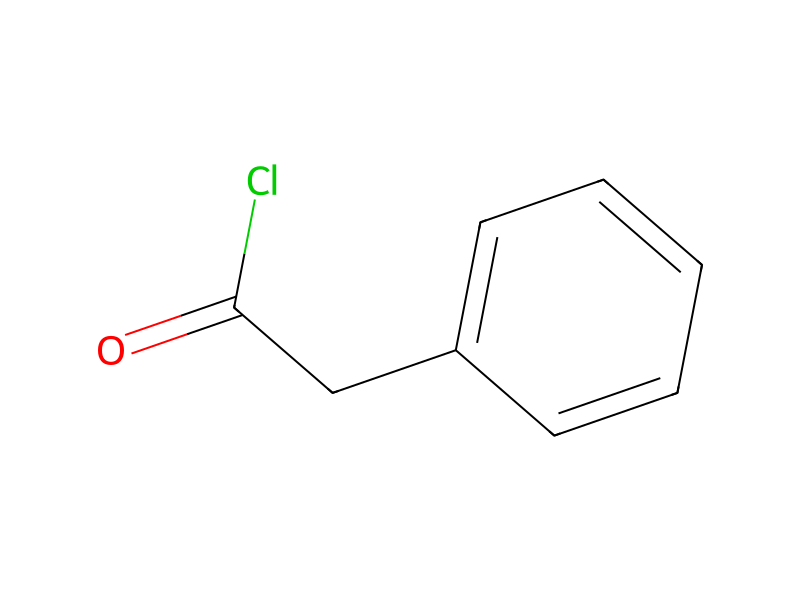
HCID 7028PseudoephedrineHCID 7679Phenylacetyl chlorideHCID 8471Triethylamine

Product 1

HCID 54856748N-(2-hydroxy-1-methyl-2-phenylethyl)-N-methyl benzeneacetamideYield 75%

Reagents, catalysts & solvents 1

HCID 8028TetrahydrofuranSolvent2×

Conditions

Temperature
0 °C

Procedure

A dry 1 L round-bottomed flask equipped with a magnetic stirrer was charged (+)-pseudoephedrine (13.92 g, 84.26 mmol, 1.0 equiv), triethylamine (13.39 mL, 96.06 mmol, 1.14 mmol), and tetrahydrofuran (340 mL). The solution was cooled to 0° C. and phenylacetyl chloride (14.33 g, 92.69 mmol, 1.1 equiv) was added via cannula over a 20 minute interval as a solution in tetrahydrofuran (90 mL). After 30 minutes, the reaction was quenched with saturated sodium bicarbonate. The amide was extracted from brine (1 L) with ethyl acetate (400 mL, 130 mL, 130 mL), and the organic extracts were dried over sodium sulfate. After removal of the solvent under reduced pressure, a solid was obtained. The solid was recrystallized from 2:1:1 ether/dichloromethane/hexanes (500 mL), affording the phenylacetamide (17.90 g, 75% yield) as a white powder: mp 145°-146° C.; 1H NMR (300 MHz, C6D6) δ6.9-7.5 (m, 10H), 4.55 (br, 1H), 4.48 (t, 1H, J=7.1 Hz), 4.11 (m, 1H), 3.95 (m, 1H), 3.83 (m, 1H), 3.78 (s, 2H), 3.31 (d, 2H, J=1.3 Hz), 2.76 (s, 3H), 2.12 (s, 3H), 0.95 (d, 3H, J=7.0 Hz), 0.42 (d, 3H, J=6.7 Hz); 13C NMR (75.5 MHz, CDCl3) δ173.1, 172.2, 142.2, 141.4, 135.5, 134.5, 128.7, 128.64, 128.58, 128.3, 128.1, 127.5, 126.73, 126.68, 126.6, 126.3, 76.2, 75.3, 58.6, 41.8, 41.4, 33.3, 27.0, 15.0, 14.3; FTIR (neat film) cm-1 3393 (br, m), 1618 (s), 1494 (m), 1453 (m), 1402 (m); HRMS (FAB) Calcd for C18H22NO2 (MH+): 284. 1652. Found: 284.1646.

Workup

  1. customA dry 1 L round-bottomed flask equipped with a magnetic stirrer
  2. customthe reaction was quenched with saturated sodium bicarbonate
  3. extractionThe amide was extracted from brine (1 L) with ethyl acetate (400 mL, 130 mL, 130 mL)
  4. dry with materialthe organic extracts were dried over sodium sulfate
  5. customAfter removal of the solvent under reduced pressure
  6. customa solid was obtained
  7. customThe solid was recrystallized from 2:1:1 ether/dichloromethane/hexanes (500 mL)

Sources & evidence

ORD record
ord-febc5d645da04ac8b53a1c2e92ce0655
Source dataset
uspto-grants-1996_01
DOI
10.6084/m9.figshare.5104873.v1
Patent number
US05488131

Reaction notes

On this pageParticipantsConditionsProcedureWorkupSources & evidenceReaction notes