HomeMCPWorkbenchSkills
HomeWorkbenchNotificationsMe
llms.txt · MCP GuidePrivacy Policy · Terms of Service · Supportv1.8.3
  1. Home
  2. /Reaction

Methylhydroquinone → Durohydroquinone

HRID 380777
Print

Reaction equation

HRID 380777 reaction equation
[CH3:1]C1C=C(O)C=CC=1O.CC1C(C)=C(C=CC=1O)O.[CH3:20][C:21]1[C:22]([OH:30])=[C:23]([CH3:29])[C:24]([CH3:28])=[C:25]([CH:27]=1)[OH:26]>[Fe].CO>[CH3:20][C:21]1[C:22]([OH:30])=[C:23]([CH3:29])[C:24]([CH3:28])=[C:25]([OH:26])[C:27]=1[CH3:1]
ParticipantsProcedureWorkupSources & evidenceReaction notes

Participants

6

Reactant 3

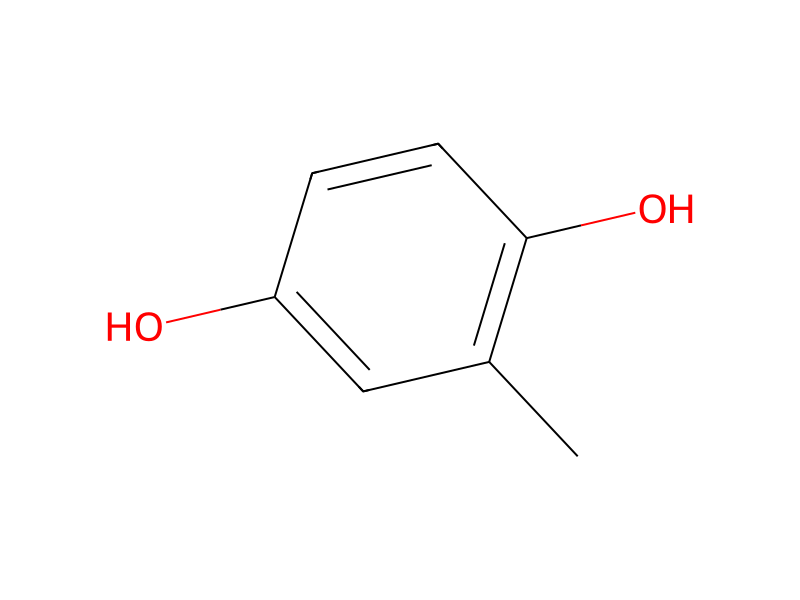
HCID 7253Methylhydroquinone2×HCID 12785TrimethylhydroquinoneHCID 691002,3-Dimethylhydroquinone

Product 1

HCID 136346Durohydroquinone

Reagents, catalysts & solvents 2

HCID 23925IronCatalystHCID 887MethanolSolvent

Procedure

Into an autoclave (inner volume: 9 ml, made of SUS 316, equipped with a manometer) were charged 0.104 g of methylhydroquinone, 3.4078 g of methanol and 8.3 mg of iron powders (manufactured by Wako Pure Chemical Ind., Ltd.). The reaction was started by elevating the temperature up to 350° C. with sand bath. The pressure during the reaction was 20 MPa. After 2 hours, the autoclave was quickly cooled and the reaction solution was taken out from the autoclave when the temperature was cooled back to the room temperature. The measurement according to the process described above revealed that the conversion of methylhydroquinone was 16% by mole, the selectivity of dimethylhydroquinone was 82% by mole and the selectivity of trimethylhydroquinone was 3% by mole. No tetramethylhydroquinone was produced.

Workup

  1. customequipped with a manometer)
  2. customup to 350° C.
  3. temperaturethe autoclave was quickly cooled

Sources & evidence

ORD record
ord-af2687bb1220432cb1ed01fbda9f5006
Source dataset
uspto-grants-2001_10
DOI
10.6084/m9.figshare.5104873.v1
Patent number
US06303801B1

Reaction notes

On this pageParticipantsProcedureWorkupSources & evidenceReaction notes
