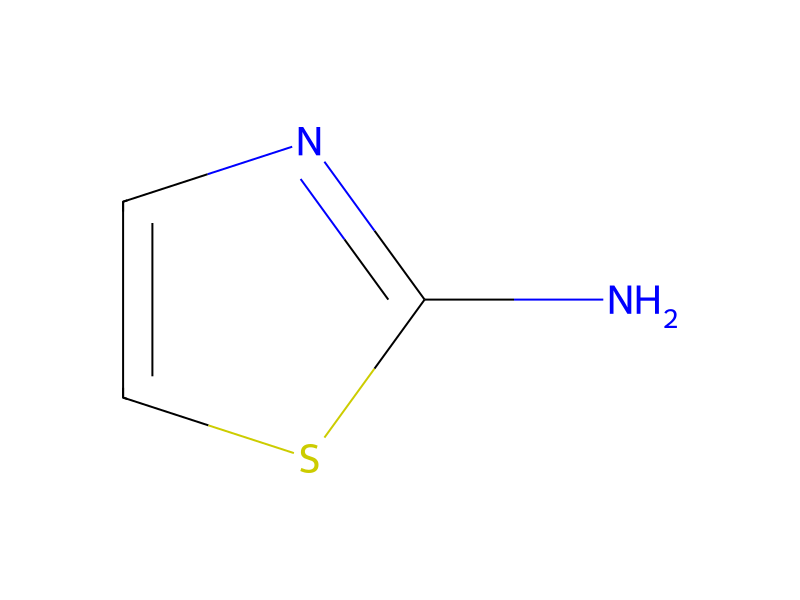
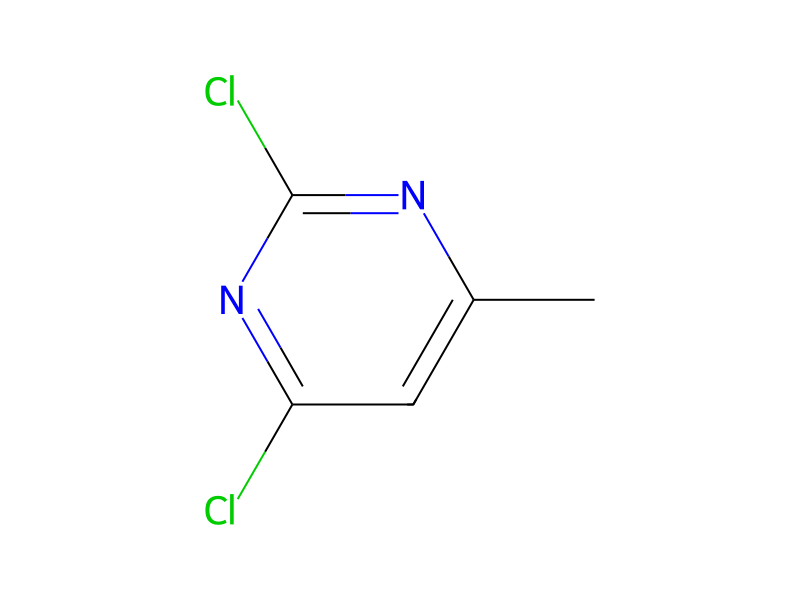
[Cl:1][C:2]1[N:7]=[C:6](Cl)[CH:5]=[C:4]([CH3:9])[N:3]=1.[S:10]1[CH:14]=[CH:13][N:12]=[C:11]1[NH2:15].C1(P(C2C=CC=CC=2)C2C3OC4C(=CC=CC=4P(C4C=CC=CC=4)C4C=CC=CC=4)C(C)(C)C=3C=CC=2)C=CC=CC=1.[O-]P([O-])([O-])=O.[K+].[K+].[K+]>O1CCOCC1.C1C=CC(/C=C/C(/C=C/C2C=CC=CC=2)=O)=CC=1.C1C=CC(/C=C/C(/C=C/C2C=CC=CC=2)=O)=CC=1.C1C=CC(/C=C/C(/C=C/C2C=CC=CC=2)=O)=CC=1.C(Cl)(Cl)Cl.[Pd].[Pd]>[Cl:1][C:2]1[N:7]=[C:6]([NH:15][C:11]2[S:10][CH:14]=[CH:13][N:12]=2)[CH:5]=[C:4]([CH3:9])[N:3]=1To the mixture of 2,4-dichloro-6-methylpyrimidine (507.7 mg), 1,3-thiazol-2-amine (345.0 mg), 4,5-bis(diphenylphosphino)-9,9-dimethylxanthene (289.1 mg) and K3PO4 (936.3 mg) in dioxane (20 ml) was added Pd2(dba)3 CHCl3 (255.9 mg). And the suspension was stirred at 85° C. overnight. The mixture was cooled to room temperature. The insoluble material was filtered off and washed with EtOAc. The filtrate was poured into saturated aqueous solution of NaHCO3 and extracted with EtOAc. The extract was washed with brine, dried over Na2SO4 and concentrated. The residue was purified with silica gel column chromatography (eluent: CHCl3/MeOH=98/2˜90/10) to give 2-chloro-6-methyl-N-(1,3-thiazol-2-yl)pyrimidin-4-amine as an orange solid.