HomeMCPWorkbenchSkills
HomeWorkbenchNotificationsMe
llms.txt · MCP GuidePrivacy Policy · Terms of Service · Supportv1.8.0
  1. Home
  2. /Reaction

Sodium Carbonate → 5-(2-Amino-[1,2,4]triazolo[1,5-a]pyridin-6-yl)-N-tert-butylpyridine-3-sulfonamide

HRID 384744
Notes
Print preview

Reaction equation

HRID 384744 reaction equation
Br[C:2]1[CH:3]=[C:4]([S:8]([NH:11][C:12]([CH3:15])([CH3:14])[CH3:13])(=[O:10])=[O:9])[CH:5]=[N:6][CH:7]=1.B1(B2OC(C)(C)C(C)(C)O2)OC(C)(C)C(C)(C)O1.C([O-])(=O)C.[K+].Br[C:40]1[CH:41]=[CH:42][C:43]2[N:44]([N:46]=[C:47]([NH2:49])[N:48]=2)[CH:45]=1.C([O-])([O-])=O.[Na+].[Na+]>C(Cl)Cl.CCO.O1CCOCC1>[C:12]([NH:11][S:8]([C:4]1[CH:5]=[N:6][CH:7]=[C:2]([C:40]2[CH:41]=[CH:42][C:43]3[N:44]([N:46]=[C:47]([NH2:49])[N:48]=3)[CH:45]=2)[CH:3]=1)(=[O:10])=[O:9])([CH3:15])([CH3:14])[CH3:13]
ParticipantsConditionsProcedureWorkupSources & evidenceReaction notes

Participants

9

Reactant 5

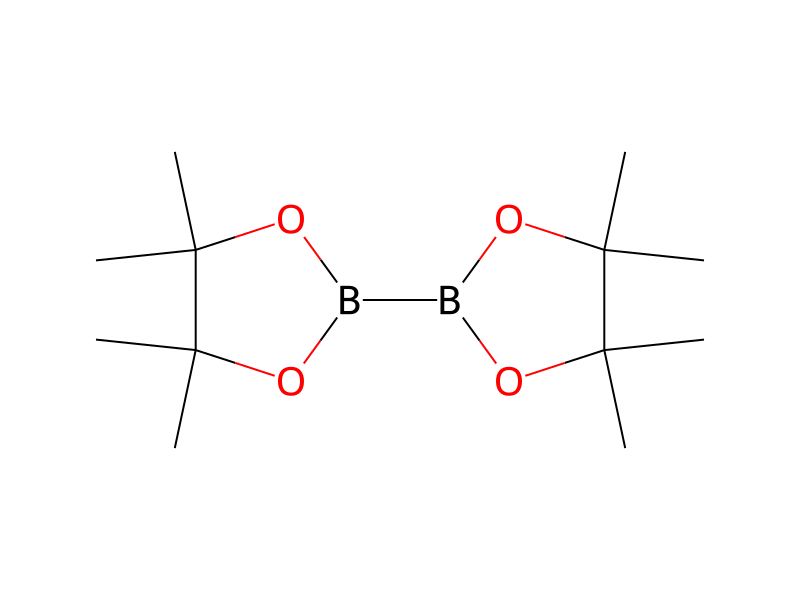
HCID 10340Sodium CarbonateHCID 517044Potassium AcetateHCID 2733548Bis(pinacolato)diboraneHCID 252159406-Bromo-[1,2,4]triazolo[1,5-a]pyridin-2-amineHCID 617949515-Bromo-N-tert-butylpyridine-3-sulfonamide

Product 1

HCID 42623223
5-(2-Amino-[1,2,4]triazolo[1,5-a]pyridin-6-yl)-N-tert-butylpyridine-3-sulfonamide
Yield 184.5%

Reagents, catalysts & solvents 3

HCID 702EthanolSolventHCID 6344DichloromethaneSolvent2×HCID 312751,4-DioxaneSolvent

Conditions

Temperature
120 °C

Procedure

5-bromo-N-tert-butylpyridine-3-sulfonamide (375 mg, 0.986 mmol), bis(pinacolato) diboron (276 mg, 1.085 mmol), potassium acetate (290 mg, 2.96 mmol), [1,1′bis(diphenylphosphino)ferrocene]dichloro-palladium (II) complex with CH2Cl2 (40 mg, 0.049 mmol) and dioxane (3 ml) were heated to 120° C. for 60 minutes in the microwave. After this time aryl bromide (A) (147 mg, 0.69 mmol), Na2CO3 (2M aqueous solution, 2 mL), EtOH (0.4 ml) and a further portion of [1,1′bis(diphenylphosphino)ferrocene]dichloro-palladium (II) complex with CH2Cl2 was added and reaction mixture heated further for 60 minutes at 120° C. in the microwave. After this time the solvents were removed in vacuo and the brown residue redissolved in 2M HCl (30 mL), the aqueous phase was washed with ethyl acetate (3×20 mL) and then neutralized with concentrated NaOH to pH 7.0. The aqueous phase was then extracted with ethyl acetate (3×20 mL), the organic extracts were combined, dried over sodium sulfate, filtered and the solvent removed in vacuo to afford the desired product as a brown solid (441 mg, 54%).


Workup

  1. customreaction mixture
  2. customAfter this time the solvents were removed in vacuo
  3. dissolutionthe brown residue redissolved in 2M HCl (30 mL)
  4. washthe aqueous phase was washed with ethyl acetate (3×20 mL)
  5. extractionThe aqueous phase was then extracted with ethyl acetate (3×20 mL)
  6. dry with materialdried over sodium sulfate
  7. filtrationfiltered
  8. customthe solvent removed in vacuo

Sources & evidence

ORD record
ord-9d0d2cf4a8984810b5cc3dab931eaac6
Source dataset
uspto-grants-2013_02
DOI
10.6084/m9.figshare.5104873.v1
Patent number
US08367830B2

Reaction notes

Loading…

On this pageParticipantsConditionsProcedureWorkupSources & evidenceReaction notes