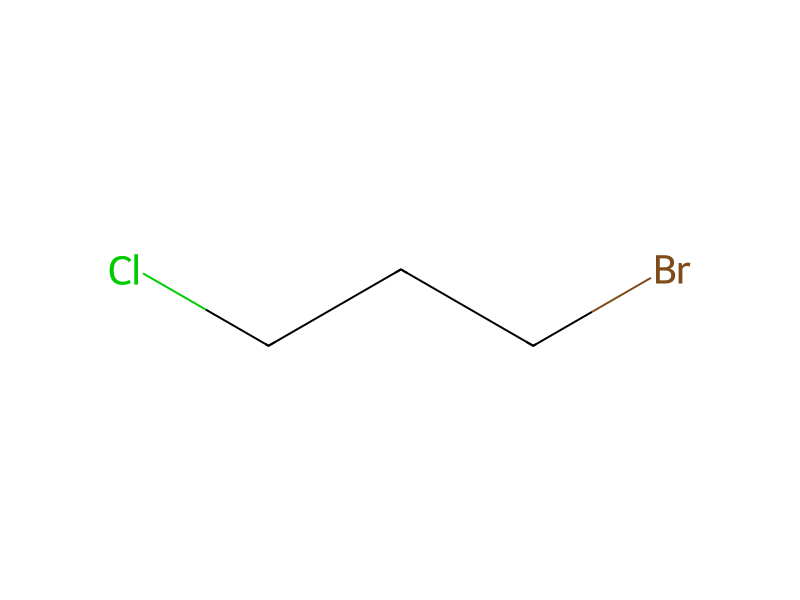
In a 100 mL volume glass flask equipped with a stirrer, a thermometer and a reflux condenser were placed 10.2 g (54.9 mmol) of methyl 3-hydroxy-4-methoxybenzoate (purity: 98 wt. %), 11.5 g (71.4 mmol) of 3-bromo-1-chloropropane (purity: 98 wt. %), 8.5 g (60.4 mmol) of potassium carbonate (purity: 98 wt. %), and 30 mL of acetone. The resulting mixture was refluxed under stirring at 80-85° C. for 8 hours in an argon gas atmosphere. After the reaction was complete, the reaction mixture was filtered. To the concentrate was added n-heptane, to precipitate a crystalline product. The crystalline product was collected and dried under reduced pressure, to give 13.7 g (isolated yield: 95.8%, purity: 99% in terms of area percentage by high performance liquid chromatography) of methyl 3-(3-chloropropoxy)-4-methoxybenzoate as a white crystalline product.