Reaction equation

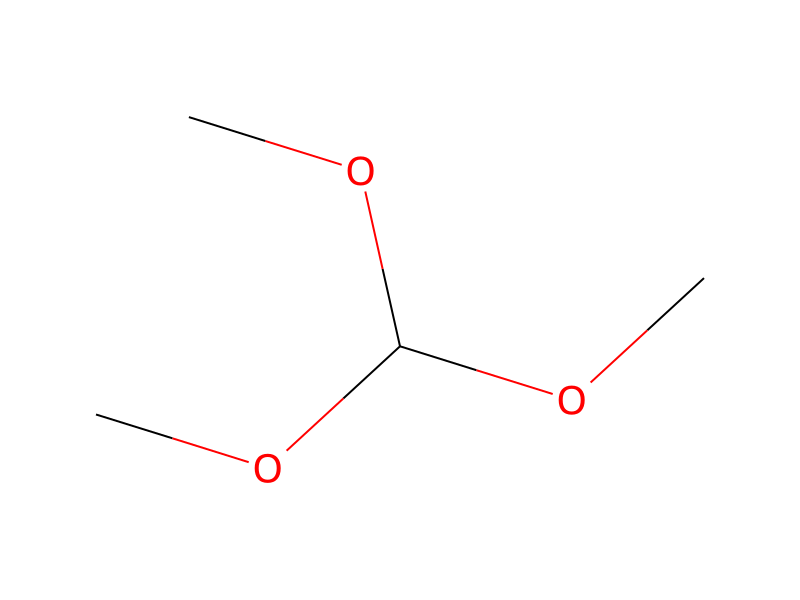
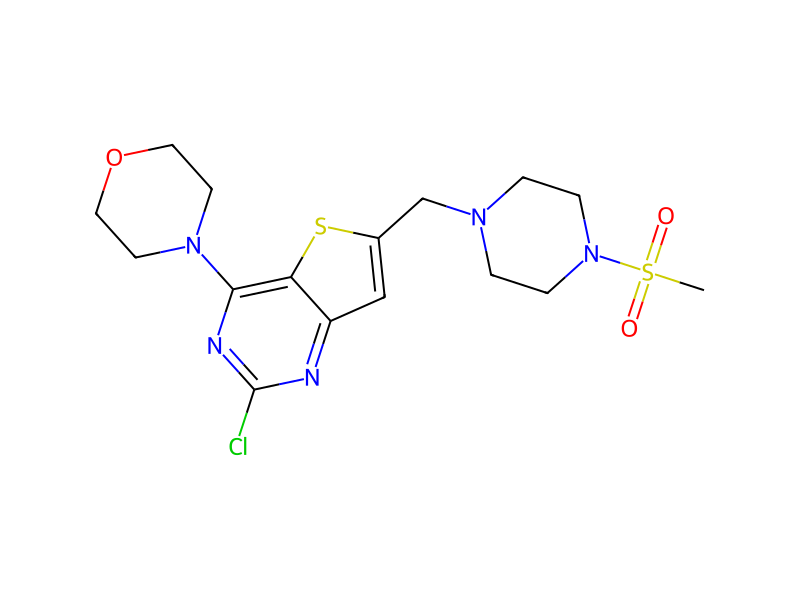
[Cl:1][C:2]1[N:3]=[C:4]([N:13]2[CH2:18][CH2:17][O:16][CH2:15][CH2:14]2)[C:5]2[S:10][C:9]([CH:11]=O)=[CH:8][C:6]=2[N:7]=1.[CH3:19][S:20]([N:23]1[CH2:28][CH2:27][NH:26][CH2:25][CH2:24]1)(=[O:22])=[O:21].COC(OC)OC.C(O[BH-](OC(=O)C)OC(=O)C)(=O)C.[Na+]>ClCCCl>[Cl:1][C:2]1[N:3]=[C:4]([N:13]2[CH2:18][CH2:17][O:16][CH2:15][CH2:14]2)[C:5]2[S:10][C:9]([CH2:11][N:26]3[CH2:27][CH2:28][N:23]([S:20]([CH3:19])(=[O:22])=[O:21])[CH2:24][CH2:25]3)=[CH:8][C:6]=2[N:7]=1Participants
Reactant 4


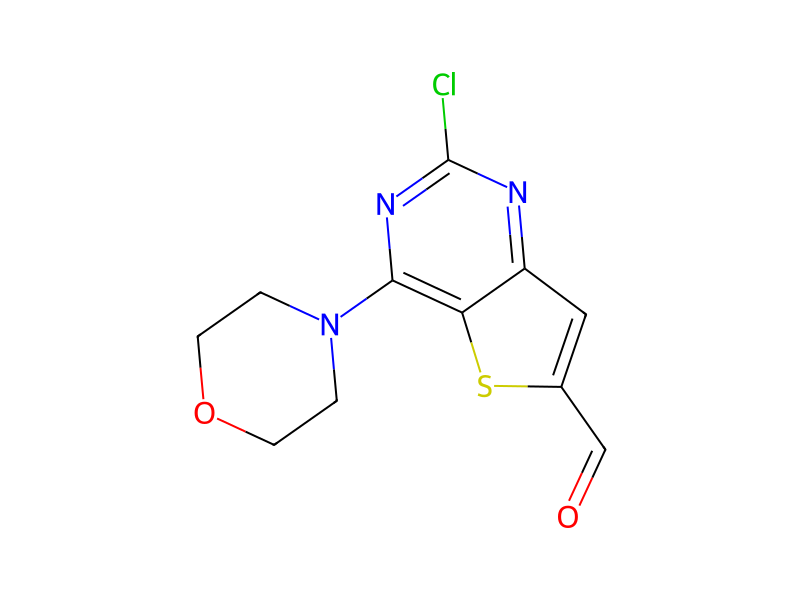
Product 1
Reagents, catalysts & solvents 1

Procedure
For example, N—BOC-piperazine and methanesulfonyl chloride were reacted together in dichloromethane and triethylamine to yield 4-methanesulfonyl-piperazine-1-carboxylic acid tert-butyl ester. Cleavage of the BOC protecting group using HCl (2M) in dichloromethane yielded 1-methanesulfonyl-piperazine. HCl salt. A mixture of 2-chloro-4-morpholin-4-yl-thieno[3,2-d]pyrimidine-6-carbaldehyde 10 (1.00 g), 1-methanesulfonyl-piperazine (750 mg) and trimethylorthoformate (3.80 mL) was stirred in 1,2-dichloroethane (30 mL) for 6 hrs at room temperature. To this was added sodium triacetoxyborohydride (900 mg) and the reaction mixture was stirred for 24 hours at room temperature. The mixture was then quenched with brine, extracted with dichloromethane, dried (MgSO4) and the solvent removed in vacuo. The residue was triturated with hot ethyl acetate to yield 2-chloro-6-((4-methylsulfonylpiperazin-1-yl)methyl)-4-morpholinothieno[3,2-d]pyrimidine as a white solid (1.01 g).
Workup
- customThe mixture was then quenched with brine
- extractionextracted with dichloromethane
- dry with materialdried (MgSO4)
- customthe solvent removed in vacuo
- customThe residue was triturated with hot ethyl acetate
Sources & evidence
- ORD record
- ord-cc3a76b9b17447ed934da51c900724f9
- Source dataset
- uspto-grants-2013_02
- Patent number
- US08383620B2
Linked notes
Loading…