Reaction equation
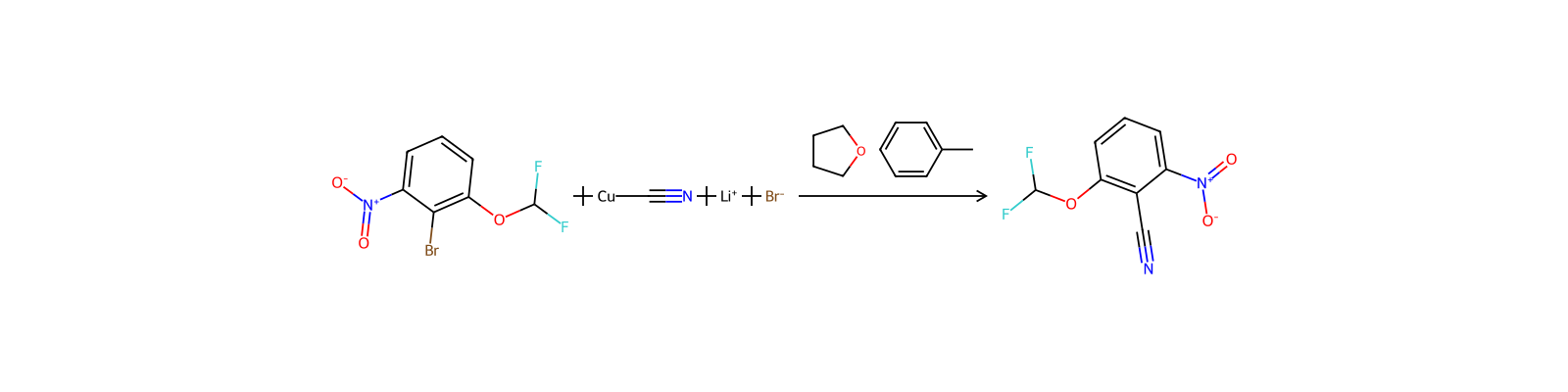
Br[C:2]1[C:7]([N+:8]([O-:10])=[O:9])=[CH:6][CH:5]=[CH:4][C:3]=1[O:11][CH:12]([F:14])[F:13].[C:15]([Cu])#[N:16].[Li+].[Br-]>O1CCCC1.C1(C)C=CC=CC=1>[F:13][CH:12]([F:14])[O:11][C:3]1[CH:4]=[CH:5][CH:6]=[C:7]([N+:8]([O-:10])=[O:9])[C:2]=1[C:15]#[N:16]Participants
6




Conditions
- Temperature
- 200 °C
Procedure
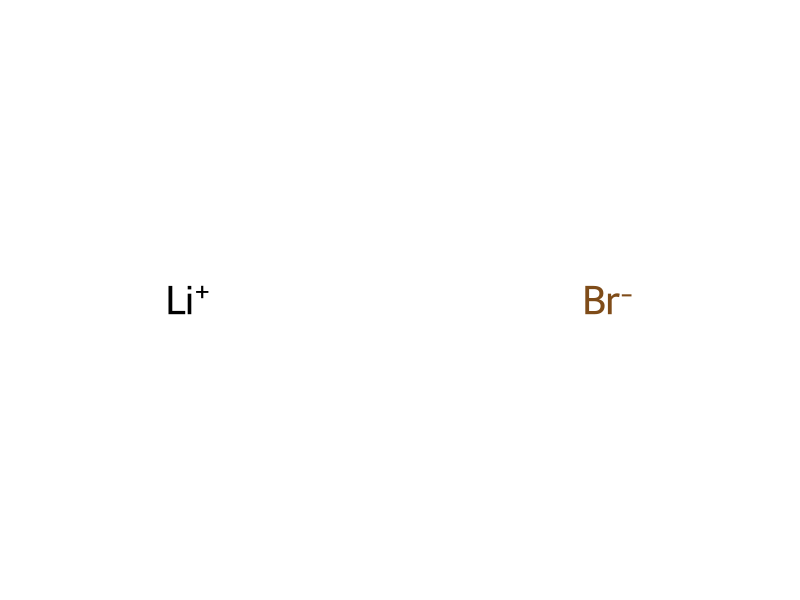
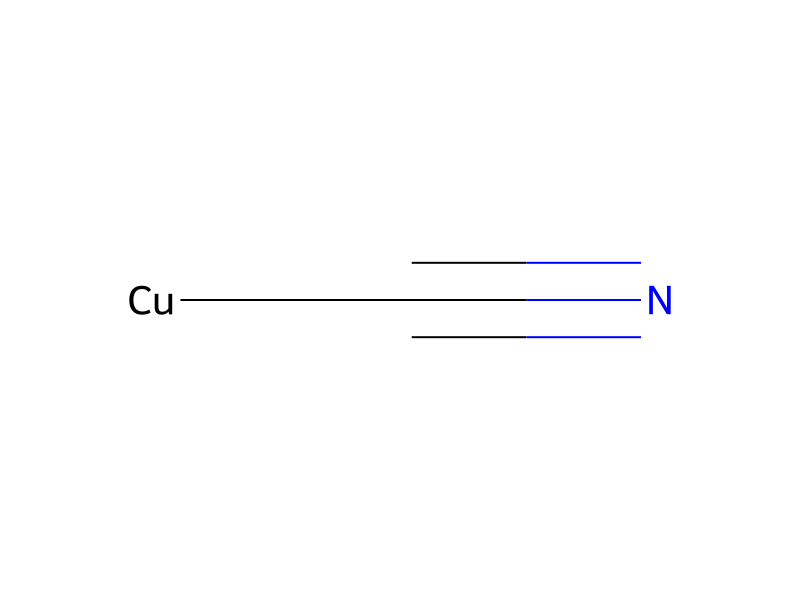
A mixture of 2-bromo-1-difluoromethoxy-3-nitro-benzene (1 g, 3.7 mmol), CuCN (0.40 g, 4.5 mmol) and LiBr (0.32 g, 3.7 mmol) in tetrahydrofuran (10 ml) are heated in a microwave oven at 200° C. for 40 minutes. The reaction mixture is cooled to ambient temperature, diluted with toluene and washed with aqueous sodium bromide (1M) and aqueous sodium hydrogen sulfite (saturated). The organic phase is dried over sodium sulfate and concentrated. The residue is purified by HPLC to give 2-difluoromethoxy-6-nitrobenzonitrile (0.67 g, 84% yield). 1H-NMR (CDCl3, 400 MHz): 8.20 (d, 1H), 7.85 (t, 1H), 7.75 (d, 1H), 6.75 (t, 1H) ppm.
Workup
- temperatureThe reaction mixture is cooled to ambient temperature
- washwashed with aqueous sodium bromide (1M) and aqueous sodium hydrogen sulfite (saturated)
- dry with materialThe organic phase is dried over sodium sulfate
- concentrationconcentrated
- customThe residue is purified by HPLC
Sources & evidence
- ORD record
- ord-47972b48f6ac4d3da12438dc0306f2c1
- Source dataset
- uspto-grants-2013_09
- Patent number
- US08524896B2
Linked notes
Loading…