Reaction equation

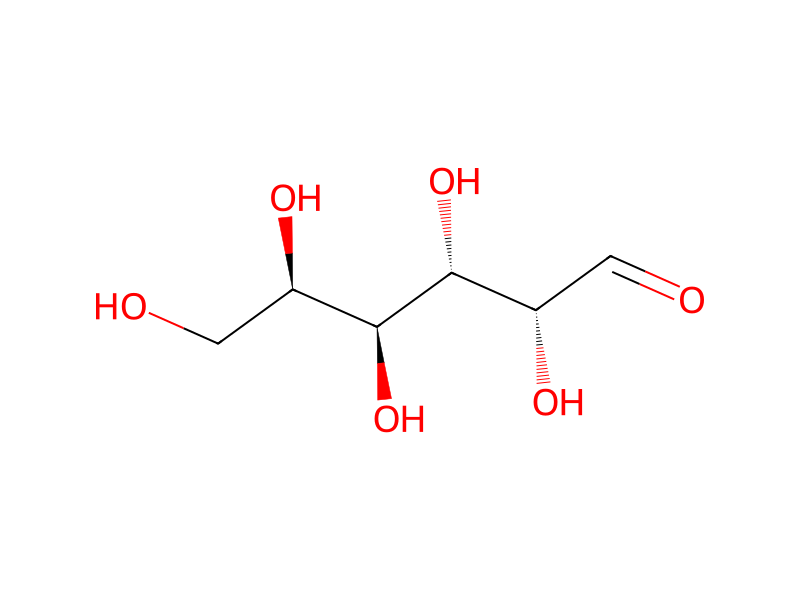
[CH3:1][C:2]([NH:4][CH:5]1[CH:10]([OH:11])[O:9][CH:8]([CH2:12][OH:13])[CH:7]([OH:14])[CH:6]1[OH:15])=[O:3].OO.[O:18]=[CH:19][C@@H:20]([C@H:22]([C@H:24]([C@@H:26]([CH2:28][OH:29])[OH:27])[OH:25])[OH:23])[OH:21]>>[C:2]([NH:4][C@@H:5]1[C@@H:6]([OH:15])[C@@H:7]([OH:14])[C@@H:8]([CH2:12][OH:13])[O:9][CH:10]1[OH:11])(=[O:3])[CH3:1].[O:18]=[CH:19][C@@H:20]([C@H:22]([C@H:24]([C@@H:26]([CH2:28][OH:29])[OH:27])[OH:25])[OH:23])[OH:21]Participants
5



Procedure
N-Acetylhexosamine dialdose may, for example, be manufactured by oxidation of the 6-position of N-acetylhexosamine either chemically or enzymatically. An example of the chemical oxidation is a Fenton method where oxidation is carried out with hydrogen peroxide in the presence of a ferrous salt while that of the enzymatic oxidation is an oxidation using galactose oxidase [EC 1.1.3.9; Cooper, et al.; The Journal of Biological Chemistry, volume 234, pages 445-448 (1959)]. Oxidation of N-acetyl-D-galactosamine with galactose oxidase gives N-acetylgalactosamine dialdose.
Sources & evidence
- ORD record
- ord-206abd35e2754908b10ae8763bb2799f
- Source dataset
- uspto-grants-2004_10
- Patent number
- US06803367B2
Linked notes
Loading…