Reaction equation

[OH-].[K+].Cl[C:4]1[C:13]2[C:8](=[CH:9][C:10]([O:16][CH3:17])=[C:11]([O:14][CH3:15])[CH:12]=2)[N:7]=[CH:6][CH:5]=1.[OH:18][C:19]1[CH:24]=[CH:23][CH:22]=[C:21]([OH:25])[CH:20]=1>>[CH3:15][O:14][C:11]1[CH:12]=[C:13]2[C:8](=[CH:9][C:10]=1[O:16][CH3:17])[N:7]=[CH:6][CH:5]=[C:4]2[O:18][C:19]1[CH:24]=[CH:23][CH:22]=[C:21]([OH:25])[CH:20]=1Participants
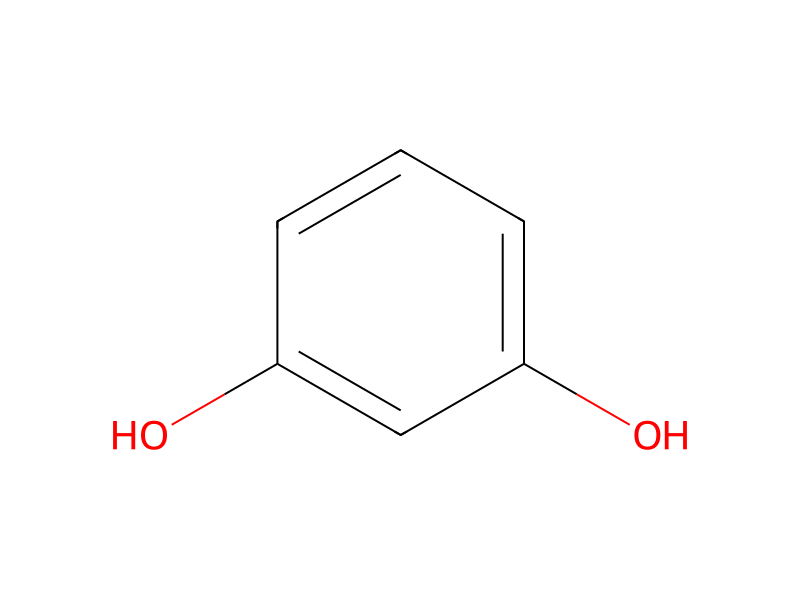



Conditions
- Temperature
- 140 °C
Procedure
Potassium hydroxide (14 mg, 0.25 mmol) and 4-chloro-6,7-dimethoxyquinoline (50 mg, 0.22 mmol), (prepared as described for the starting material in Example 2), were added to 1,3-dihydroxybenzene (1 g, 9 mmol) melted at 140° C. under argon. After stirring for 1 hour at 140° C., the mixture was partitioned between ethyl acetate and water and 2M hydrochloric acid was added to adjust the aqueous phase to pH4. The organic layer was washed with water, brine, dried (MgSO4) and the volatiles were removed by evaporation. The residue was purified by column chromatography eluting with methylene chloridelethyl acetate (6/4 increasing to 3/7). The purified product was triturated with ether, collected by filtration and dried under vacuum to give 6,7-dimethoxy-4-(3-hydroxyphenoxy)quinoline (51 mg 78%).
Workup
- customthe mixture was partitioned between ethyl acetate and water and 2M hydrochloric acid
- additionwas added
- washThe organic layer was washed with water, brine
- dry with materialdried (MgSO4)
- customthe volatiles were removed by evaporation
- customThe residue was purified by column chromatography
- washeluting with methylene chloridelethyl acetate (6/4 increasing to 3/7)
- customThe purified product was triturated with ether
- filtrationcollected by filtration
- customdried under vacuum
Sources & evidence
- ORD record
- ord-a594f7f6d2cb45568f635c8842159098
- Source dataset
- uspto-grants-2004_10
- Patent number
- US06809097B1
Linked notes
Loading…