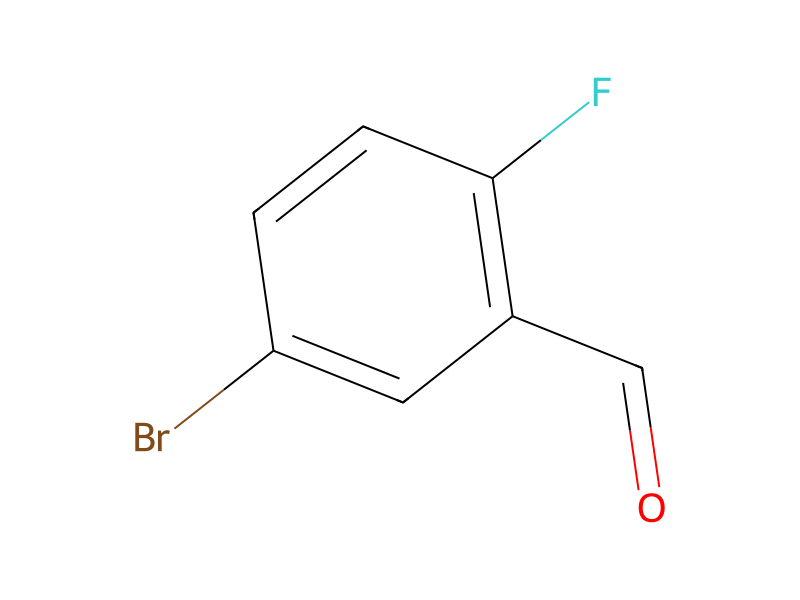
A mixture of 5-bromo-2-fluorobenzaldehyde (1.08 g, 5.32 mmol), 5-hydroxy-2,3-dihydrobenzothiophene (prepared as described in Synth. Commun. 1991, 21, 959-964) (808 mg, 5.31 mmol) and K2CO3 (1.47 g, 10.6 mmol) in DMF (5 mL) was heated at 90° C. for 16 h. After cooling to room temperature the mixture was partitioned between water (50 mL) and ether (50 mL), the aqueous layer being extracted with ether (50 mL). The combined organic extracts were washed with water (50 mL), dried (MgSO4) and evaporated. The residue was purified by column chromatography [SiO2; 9:1 (pentane/EtOAc)], then triturated with ether, to give the product (1.1 g, 62%) as a pale yellow solid; δH (CDCl3, 400 MHz) 3.28 (2H, t), 3.41 (2H, t), 6.78 (1H, d), 6.84 (1H, d), 6.92 (1H, s), 7.20 (1H, d), 7.58 (1H, d), 8.00 (1H, s), 10.43 (1H, s).