Reaction equation
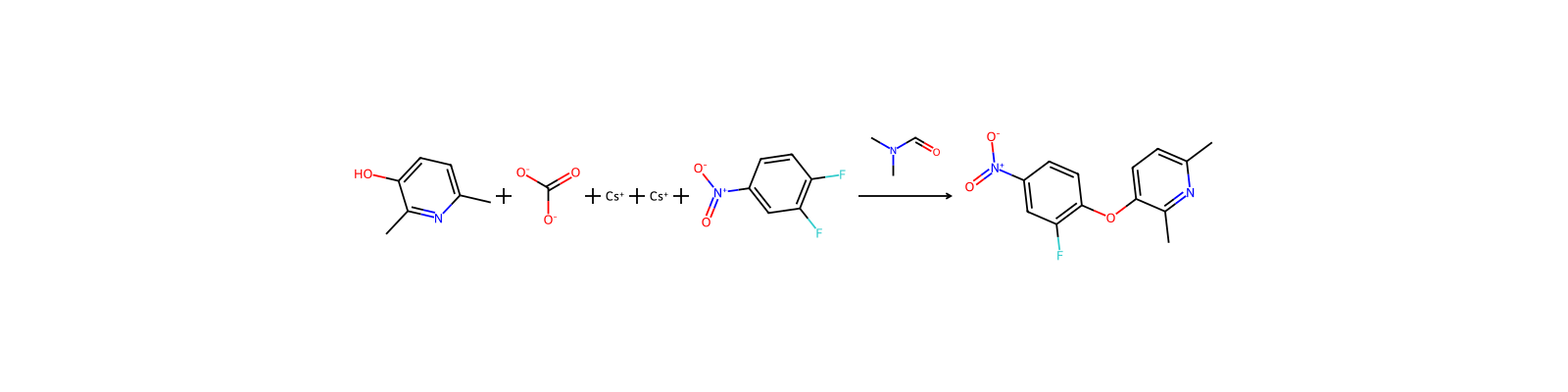
[CH3:1][C:2]1[C:7]([OH:8])=[CH:6][CH:5]=[C:4]([CH3:9])[N:3]=1.C(=O)([O-])[O-].[Cs+].[Cs+].[F:16][C:17]1[CH:18]=[C:19]([N+:24]([O-:26])=[O:25])[CH:20]=[CH:21][C:22]=1F>CN(C=O)C>[F:16][C:17]1[CH:18]=[C:19]([N+:24]([O-:26])=[O:25])[CH:20]=[CH:21][C:22]=1[O:8][C:7]1[C:2]([CH3:1])=[N:3][C:4]([CH3:9])=[CH:5][CH:6]=1Participants
5
Reactant 3

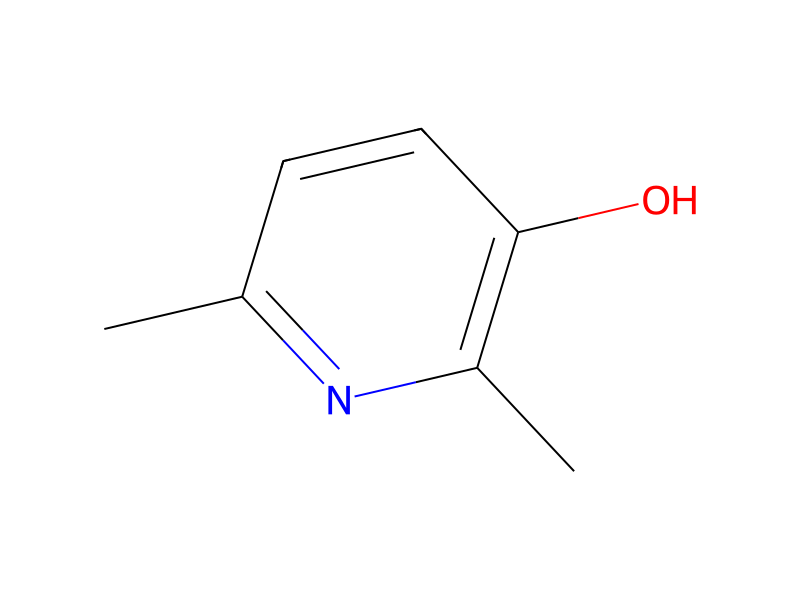

Product 1

Reagents, catalysts & solvents 1

Conditions
- Temperature
- 140 °C
Procedure
2,6-Dimethyl-pyridin-3-ol (3.0 g, 24.35 mmol) and cesium carbonate (15.87 g, 48.71 mmol) were added to a solution of 3,4-difluoronitrobenzene (3.87 g, 24.35 mmol) in DMF (30 ml). The mixture was heated at 140° C. for 2 hours. After cooling to room temperature it was filtered through diatomaceous earth and the solvent evaporated in vacuo. The crude product was purified by column chromatography (silica gel; 2% methanol/DCM as eluent) to yield intermediate D14 (5.88 g, 92%).
Workup
- temperatureAfter cooling to room temperature it
- filtrationwas filtered through diatomaceous earth
- customthe solvent evaporated in vacuo
- customThe crude product was purified by column chromatography (silica gel; 2% methanol/DCM as eluent)
- customto yield intermediate D14 (5.88 g, 92%)
Sources & evidence
- ORD record
- ord-d4df6e9c113040a08a2f20ae8c1a501d
- Source dataset
- uspto-grants-2014_06
- Patent number
- US08748621B2
Linked notes
Loading…