HomeMCPWorkbenchSkills
HomeWorkbenchNotificationsMe
llms.txt · MCP GuidePrivacy Policy · Terms of Service · Supportv1.8.0
  1. Home
  2. /Reaction

Ammonia → N-(5-nitro-2-methylphenyl)-4-(3-pyridinyl)-2-pyridineamine

HRID 40830
Notes
Print preview

Reaction equation

HRID 40830 reaction equation
[N:1]1[CH:6]=[CH:5][CH:4]=[C:3]([C:7]2[CH:12]=[CH:11][N:10]=[C:9]([NH2:13])[CH:8]=2)[CH:2]=1.C([O-])([O-])=O.[K+].[K+].Br[C:21]1[CH:26]=[C:25]([N+:27]([O-:29])=[O:28])[CH:24]=[CH:23][C:22]=1[CH3:30].CNCCNC.N.[Na+].[Cl-]>[Cu]I.O1CCOCC1>[CH3:30][C:22]1[CH:21]=[CH:26][C:25]([N+:27]([O-:29])=[O:28])=[CH:24][C:23]=1[NH:13][C:9]1[CH:8]=[C:7]([C:3]2[CH:2]=[N:1][CH:6]=[CH:5][CH:4]=2)[CH:12]=[CH:11][N:10]=1
ParticipantsProcedureWorkupSources & evidenceReaction notes

Participants

9

Reactant 6

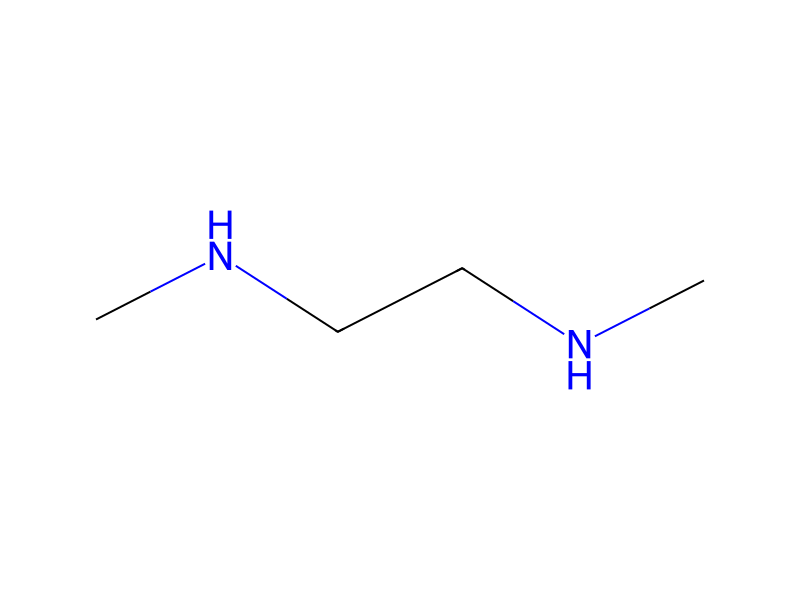
HCID 222AmmoniaHCID 5234Sodium ChlorideHCID 8070N,N'-DimethylethylenediamineHCID 11430Potassium CarbonateHCID 821892-Bromo-4-nitrotolueneHCID 167414844-(Pyridin-3-yl)pyridin-2-amine

Product 1

HCID 23073499
N-(5-nitro-2-methylphenyl)-4-(3-pyridinyl)-2-pyridineamine

Reagents, catalysts & solvents 2

HCID 24350Copper(1+) iodide; Copper(I) iodide; Cuprous iodide; Cuprous iodide (CuI)CatalystHCID 312751,4-DioxaneSolvent

Procedure

4-(Pyridine-3-yl)pyridine-2-amine (8.60 g, 0.05 mol), CuI (2.39 g, 0.0125 mmol), anhydrous K2CO3 (14.0 g, 0.1 mol), KI (2.08 g, 0.0125 mol) were added to a Schlenk-type three-neck flask fitted with a thermometer, magnetic stirbar, and septum. The flask was evacuated and back filled with N2 three times. Dioxane (250 mL) and 2-bromo-4-nitrotoluene (9.82 g, 0.045 mol) were added to the flask. Finally, N,N′-dimethylethylenediamine (1.10 g, 0.0125 mol) was added by syringe at room temperature with stirring. The reaction mixture was stirred at 110° C. under N2 for 24 hours and then cooled to room temperature. Ammonia (30%, 100 mL) and saturated NaCl (400 mL), were added to the reaction mixture which was then extracted with ethyl acetate (500 mL×3). The organic phase was dried over Na2SO4 and a yellow solid was obtained after the solvent was removed under reduced pressure. The crude product was purified by column chromatography (biotage: DMC/Methanol, 1-8%, 20 CV). The desired product was obtained as a yellow solid (8.3 g, yield: 60%); 1H NMR (500 MHz, CDCl3) δ 2.49 (s, 3H), 7.36 (m, 1H), 7.15 (br., 1H), 7.35 (d, 1H), 7.38 (d, 1H), 7.52 (m, 1H), 7.88 (d, 1H), 8.55 (d, 1H), 8.60 (d, 1H), 8.76 (d, 1H), 9.28 (s, 1H), 9.50 (s, 1H). LC-MS (m/z) calculated, 307.3, found, 308.3 [M+H]+.

Workup

  1. customfitted with a thermometer, magnetic stirbar, and septum
  2. customThe flask was evacuated
  3. additionback filled with N2 three times
  4. stirringThe reaction mixture was stirred at 110° C. under N2 for 24 hours
  5. extractionwas then extracted with ethyl acetate (500 mL×3)
  6. dry with materialThe organic phase was dried over Na2SO4
  7. customa yellow solid was obtained after the solvent
  8. customwas removed under reduced pressure
  9. customThe crude product was purified by column chromatography (biotage: DMC/Methanol, 1-8%, 20 CV)

Sources & evidence

ORD record
ord-379b60b8a8684e828e2a70b1029fb9f4
Source dataset
uspto-grants-2013_09
DOI
10.6084/m9.figshare.5104873.v1
Patent number
US08530492B2

Reaction notes

Loading…

On this pageParticipantsProcedureWorkupSources & evidenceReaction notes